
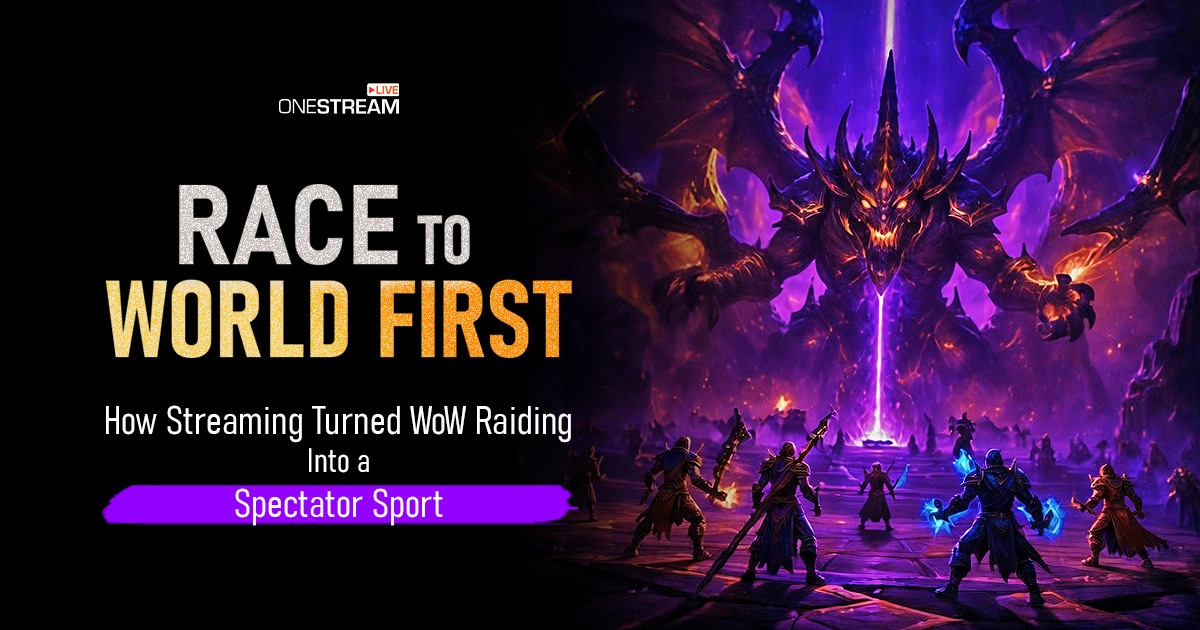
Competitive raiding in World of Warcraft was never meant to be watched. It was meant to be played. Elite guilds would vanish into a new raid tier for days. The rest of the community waited for forum posts and screenshots. That was it. Then Twitch arrived. Everything changed. Today, Race to World First events draw hundreds of thousands of concurrent viewers. Sponsors sign contracts. Guilds build media teams. Players become recognizable personalities with dedicated fanbases. What started as a niche pursuit became one of gaming’s most compelling live events.
Behind the broadcast, the preparation is just as intense. The ecosystem around these races is enormous. Players stock up on consumables and resources before progression day begins. Many serious raiders buy WoW gold for sale on trusted platforms to skip the farming grind entirely. Time is the scarcest resource during a world-first race. Every hour shifted toward strategy can change the outcome.
This is the story of how streaming transformed WoW raiding into a global spectator sport.
From Forum Posts to Live Drama: The History
Before Twitch, world-first races happened in silence. Guilds like Nihilum and SK Gaming competed fiercely through Burning Crusade and Wrath. Results appeared on forum threads. Screenshots served as proof. Commentary arrived days later in written recaps. The audience existed. The passion existed. The live setup did not.
Battle for Azeroth changed everything in 2018. Method and Red Bull helped bring the race into a live broadcast format during Uldir, and viewers could watch progression happen in real time. The drama was no longer reconstructed after the fact. It was experienced live.
Uldir delivered the moment that showed how big the Race to World First could become. Method’s World First G’huun kill was streamed to over 260,000 Twitch viewers, which proves that high-level WoW raiding could pull serious live attention.
Shadowlands pushed that attention further. Echo claimed the World First Mythic Sylvanas Windrunner kill in Sanctum of Domination after 169 pulls, and later races kept building on that audience. Sepulcher of the First Ones showed the scale again, with Echo’s broadcast reaching 9.64 million hours watched and 163,120 peak viewers.
Dragonflight, The War Within, and Midnight pushed production quality further. Modern Race to World First coverage now includes live streams, clips, VODs, leaderboards, raid comps, combat logs, and real-time community analysis. What used to be a hidden race between guilds is now a live event people can follow, study, and argue about in real time.
Why Race to World First Works as Spectator Content
Raid progression content should not work on stream. Attempts last hours. Wipes are frequent. Progress is measured in percentage points. A boss dropping from 4.3% to 3.1% health is genuinely tense to the right audience. That audience is larger than anyone predicted. Several factors explain why.
First, the stakes feel real. These are the best players in the world, hitting a wall designed to stop them. Failure is constant and visible. Viewers know they are watching a genuine struggle, not scripted entertainment.
Second, community participation is intense. Fans analyze logs in real time. Sites like Warcraft Logs publish damage breakdowns mid-race. Reddit threads dissect every tactical decision. The audience is not passive. It is an active analytical community.
Third, personalities drive retention. Players like Echo’s Scripe and Liquid’s Naowh have real followings. Viewers invest in individuals. That emotional connection sustains attention across 16-hour streaming days.
The Numbers Behind the Spectacle
The scale of Race to World First viewership deserves its own focus. These are not just random spikes from one viral moment. Each major race now brings in serious live attention across guild channels, player streams, community coverage, and recap content.
Echo’s Sepulcher of the First Ones broadcast shows how large the event had become. The race generated 9.64 million hours watched on Echo’s channel alone, with a peak of more than 163,000 viewers. That is a huge number for a raid race built inside a long-running MMO.
Liquid’s World First Queen Ansurek kill in The War Within kept that momentum going. The boss took 404 pulls before Liquid finally claimed the win, which gave viewers days of tension, analysis, and live reaction.
WoW also remains one of Twitch’s strongest long-running game categories. TwitchTracker recently listed World of Warcraft at number 13 by average concurrent viewers, while TwitchMetrics placed it at number 11 by viewer hours over the last 30 days.
That is the real story behind the numbers. Race to World First is not only a burst of hype around one boss kill. It is a repeatable live streaming event that brings players, guilds, analysts, sponsors, and fans into the same moment.
The Economic Layer Streaming Created
Race to World First did not just change how people watched WoW raiding. It also helped create a real economy around competitive raiding.
Sponsorships became part of that shift. In past Race to World First events, major guilds announced commercial partners around their broadcasts. Echo, for example, announced partners such as Red Bull, Twitch, Secretlab, Elgato, Displate, CurseForge, Starforge Systems, Fractal Design, and U.GG for its 2023 Race to World First coverage. Method has also worked with brands like Red Bull and Razer around race coverage and player setups.
Streaming revenue added another layer. During active race periods, viewers watch for long stretches, subscriptions rise, donation alerts appear during tense pulls, and sponsor logos get hours of screen time. A final pull is not just gameplay anymore. It is live entertainment with a business model around it.
Blizzard benefits too, even without fully controlling the event format. Race to World First brings WoW back into the wider gaming conversation, gives the game a major Twitch moment, and turns each raid tier into a community-driven marketing event.
Also Read: How to Become a Video Game Streamer
The Technology Making it Watchable
Modern Race to World First streams are no longer simple gameplay feeds. They are full live productions. WeakAuras and ElvUI power custom overlays that display raid data cleanly for broadcast. OBS plugins pull live combat log information into stream graphics automatically, so viewers can follow boss health, damage, healing, and mechanics without getting lost.
The best broadcasts do more than show the raid. They help viewers understand what is happening in real time. A clean layout, stable stream quality, clear audio, and smooth chat management all shape the viewing experience.
For teams that want to take that production further, OneStream Live helps bring the broadcast workflow into one place. You can go live, schedule pre-recorded content, and multistream your gameplay across different platforms, so more viewers can follow the race from wherever they already watch.
Production quality changes how people see the race. When the stream looks polished and the viewing experience feels smooth, the event starts to feel bigger than gameplay. It becomes something viewers can follow like a real live sport.
Read More: How to Live Stream Mobile Games with OneStream Live

What Comes Next
The future of Race to World First is live streaming. Viewers do not just want the final kill anymore. They want the wipes, reactions, strategy changes, and pressure as it happens.
That is why reach is becoming just as important as production. Fans now follow clips, recaps, live broadcasts, and community reactions across different platforms.
For events like this, OneStream Live helps you go live, schedule pre-recorded content, and multistream from one place, so every big moment has more chances to reach the right viewers.
WoW already has the drama, personalities, and loyal audience. Live streaming is what turns it into a real spectator sport.

Frequently Asked Questions
Live streaming changed Race to World First by turning private raid progress into a public event. Viewers can now watch wipes, strategy changes, team reactions, and final pulls in real time instead of waiting for screenshots or recap posts.
Race to World First does not follow the usual esports format. There is no fixed match time, no simple scoreboard, and no short round structure. The drama comes from long progress, repeated failure, live problem solving, and the race to be first.
A gaming event works well for live streaming when it has tension, clear progress, strong personalities, and moments viewers can react to. Race to World First works because every pull can bring the guild closer to a kill, even if the progress is only a small percentage.
Gaming creators can make long streams easier to watch with clean overlays, clear audio, live chat, recap segments, highlight clips, and simple explanations for new viewers. The goal is to help people understand what is happening without deep game knowledge.
OneStream Live helps gaming creators and event teams go live, schedule pre-recorded content, and multistream across platforms from one place. This helps big gaming moments reach more viewers before, during, and after the live event.
OneStream Live is a cloud-based live streaming solution to create, schedule, and multistream professional-looking live streams across 45+ social media platforms and the web simultaneously. For content-related queries and feedback, write to us at [email protected]. You’re also welcome to Write for Us!