
Gaming has officially outgrown most other forms of online environments. The global video game industry generated $188.8 billion in revenue in 2025 and is projected to hit approximately $205 billion in 2026. It surpassed the annual revenues of the film and recorded music industries with 3.6 billion active players across every platform. Sitting at the center of that boom is live streaming: a medium that has turned bedroom gamers into full-time creators, brand partners, and public figures.
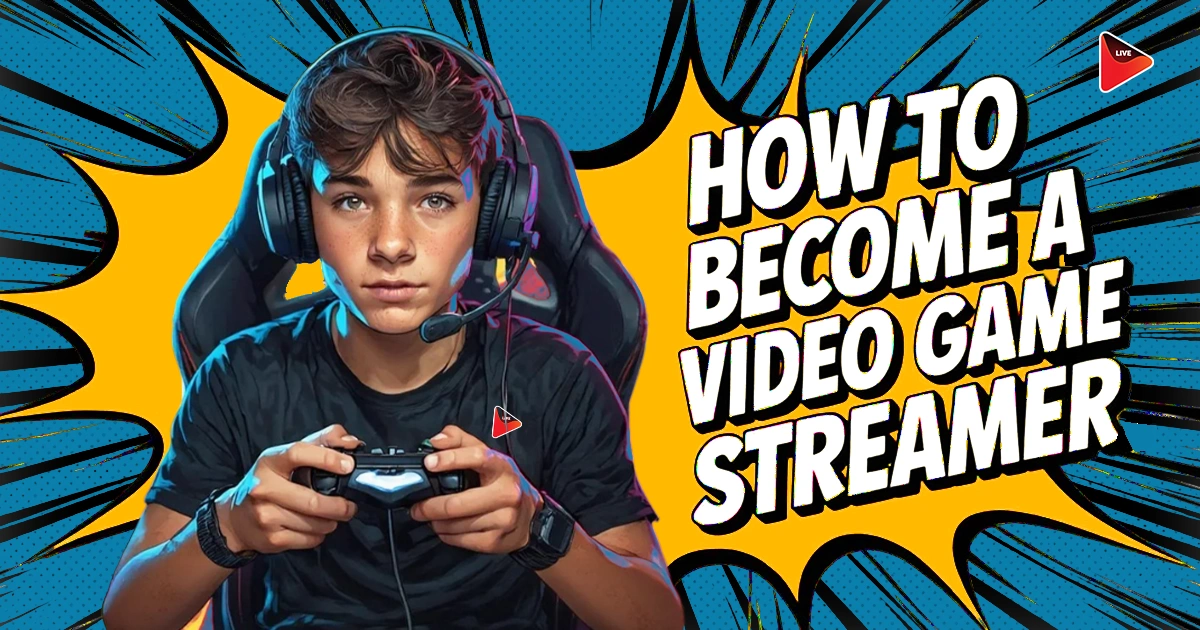
While the opportunity here is certainly massive, it also has tough competition. In this guide, we’ll cover everything important on how to become a video game streamer.
What is a Live Streamer
A live streamer is someone who broadcasts real-time video content, like gameplays, to an online audience through platforms like Twitch, YouTube Gaming, or Kick. Unlike pre-recorded videos on YouTube, live streaming is interactive. Viewers type in chat, ask questions, react to moments, and build a relationship with the creator in real time. The professional streamers aren’t just good at games; they’re entertainers, community managers, and personal brands all rolled into one.
Should You Start a Streaming Career?
So, should you start? Ask yourself three questions: Do you genuinely enjoy the games you’d stream? Can you talk and engage naturally while playing? And are you willing to treat it like a part-time job for the first year with little to no income?
If your answer is “yes” to all three of these questions, then the marketing timing couldn’t be better. The audience is bigger, monetization tools are more accessible, and platforms are actively competing for new creator talent.
How to Become a Video Game Streamer: 5 Important Steps for Beginners
The game streaming landscape is highly competitive, and breaking into this niche requires a strong foundation. Here’s how to become a streamer in this category:
Step 1: Find Your Niche and Build a Streaming Persona
This is what most beginners skip, and it’s the primary reason most fail. Viewers don’t just tune in for games; they tune in for people. They follow a particular game streamer because of his energy, the way he keeps everyone engaged. Some are liked for their humor, some for their skills, and some for their unique personality. This is backed by the fact that half of the most-watched games on Twitch are over 10 years old, so game streaming was never about broadcasting new titles; it was always about the streamer.
That’s exactly why you need to decide your persona before you get into this. You can do this by asking yourself these questions:
- Are you a high-skill competitive player who coaches viewers through decisions?
- A horror game reactor whose genuine fear is the entertainment?
- A chaotic variety streamer whose banter is the main event?
Define this before you go live because a streamer without a clear identity is just background noise. Once you’ve had the answer, start building your visual and verbal brand accordingly. These elements include:
- Your username (keep it short, memorable, and consistent across platforms)
- Your stream overlay style
- Your color palette
- Your tone of voice
Step 2: Build a Minimum Viable Setup
Just like we discussed, becoming a video game streamer isn’t about streaming the latest, resource-intensive titles, so you don’t need a high-end gaming rig to start broadcasting. Start with the streaming essentials: a gaming PC and quality microphone. You may compromise on video quality a little, but never on audio quality because viewers leave immediately if audio is poor. Here’s what you need to start streaming games:
- PC: Intel Core i7 or AMD Ryzen 7 processor, NVIDIA RTX 3060 or equivalent GPU, 16GB RAM minimum.
- Microphone: A USB condenser mic (Blue Yeti Nano or similar) is sufficient to start. Skip XLR until you have a consistent, returning audience.
- Webcam: Optional in the first month, but a 1080p camera adds the human connection that builds loyalty.
- Lighting (If You’re Not Skipping Webcam): A basic ring light or a single softbox makes a dramatic visual difference.
Step 3: Go Live and Stay Consistent
Consistency beats intensity every time. Streaming four days a week on a fixed schedule is better than going live randomly and then disappearing. Your streaming schedule is a promise to your audience, you break it, you will see your numbers go down.
However, staying consistent, specifically when you’re treating it as a part-time thing, can be challenging. While there’s no real substitute for consistency, there is a workaround that many smart streamers use: they pre-record their gameplay and broadcast it as if it were live. They use streaming solutions like OneStream Live, which allows you to broadcast your pre-recorded gameplays.
How Smart Streamers Use Pre-Recorded Gameplays?
Here are some examples:
- On a busy day, they upload a previously recorded gameplay to stay consistent and maintain momentum.
- Away from home: They bulk-upload their gameplays to OneStream Live’s cloud storage and keep streaming even when they’re not at their PC.
Step 4: Grow Beyond the Stream
Lastly, the job doesn’t end when the stream goes offline. Ever come across those short, engaging game clips on Instagram or TikTok? That’s exactly what professional streamers do. They repurpose their streams for different platforms to extend their reach and drive followers back to their streaming channels.
Which Platforms are Best for Video Game Streamers?
Understanding where your target viewers are most active is the single most important thing you can do before hitting live. We’ve done the research and here’s our breakdown of the best platforms for video game streamers in 2026:
1. Twitch
Twitch remains the gamer’s home. Casual gameplays, Esports tournaments, Pro Players, everyone streams on Twitch. It has over 240 million monthly active users as of 2026, with 35 million logging in daily, and hosts approximately 45.49 million hours of live content in January 2026 alone.
What is Twitch Best for?
It is a gaming-first, chat-driven, and deeply invested community of hobbyists. This makes Twitch perfect for building a loyal fanbase.
Trade-off
Discoverability is the trade-off for a Twitch Streamer. Its algorithm is comparatively difficult for new channels to gain traction at the start.
2. YouTube Gaming
YouTube is a fast-growing platform, and it has an edge over Twitch in terms of “discoverability.” YouTube Gaming recorded its best year ever in 2025, wrapping it up with 8.8 billion hours watched, which was a 12% annual gain.
What is YouTube Gaming Best For?
YouTube’s core advantage is that your streams don’t disappear. They’re searchable, which means when your live session is over, your content still stands a chance to drive viewers.
Trade-off
Live community culture on YouTube is noticeably thinner than on Twitch. Chat engagement is comparatively lower, and building a real-time interactive community takes longer here than on dedicated gaming platforms.
3. Kick
Kick is a name that every new streamer in 2026 should know about. It crossed 1 billion hours watched in Q2 2026 and achieved 112% year-over-year growth. Most of it is driven by its creator-friendly 95/5 revenue split. This means streamers get to keep 95 cents of every dollar they earn.
What is Kick Best For?
Want early monetization? Choose Kick. The generous revenue split is another reason to start streaming on Twitch.
Trade-off
Kick’s total audience is still significantly smaller than Twitch or YouTube. Growing a channel here requires patience and active promotion from outside the platform.
4. TikTok Live
TikTok Live is the wildcard of 2026 streaming picture, and it’s just too big to ignore. TikTok Live grew 14.9% to 9.2 billion hours watched in Q3 2025. It accounts for 31.2% of the overall live streaming marketing share.
What is TikTok Live Best For?
TikTok Live isn’t new, and it’s not a streaming home base; it’s a discovery engine. The mobile-native format and algorithm-driven feed are two main advantages of this. It pushes your streams in front of completely new audiences with no existing following required.
Trade-off
Retention is the weakness here. TikTok viewers mostly house Gen-Z, the age group with a comparatively shorter attention span. So yes, gathering a loyal returning stream of watchers is significantly harder here than on Twitch or YouTube.
The Solution? Stream on All Platforms
Every platform above has a real trade-off that can’t be ignored. Twitch builds a community but buries new channels, YouTube rewards long-term content but has thin live engagement, Kick monetizes fast but has a smaller audience, TikTok reaches millions but retains no one. So what are smart streamers doing considering all this? They don’t pick one platform and hope for the best; they stream everywhere at once.
Multistreaming tools like OneStream Live make this possible with just a few taps. Using OBS to stream your gameplay? No worries, OneStream Live supports external encoders. Your OBS pushes the stream to OneStream Live, which then sends your streams to TikTok, Twitch, YouTube, Kick, and 40 other platforms simultaneously.
Through this, you’re taking the unique advantage of all the platforms at once. You’re getting Twitch’s community, YouTube’s discoverability, Kick’s monetization, and TikTok’s reach, all from a single stream.
Is Gaming Streaming Worth It in 2026?
Do you love playing games? Yes. Do you want to start earning from your hobby? Yes. However, if you’re chasing a shortcut, then you might become easily disappointed. Streaming requires effort, consistency, and, most importantly, patience. While the landscape of streaming in 2026 is tough, streaming smart is the way to go.
Multistreaming starts your journey not just on one platform but everywhere your target audience is. This means more visibility, faster audience growth, and more opportunities to grow because you’re not relying on a single platform to get discovered. Don’t get locked into a single algorithm; use OneStream Live to stream to 45+ platforms simultaneously.

FAQs
To start streaming video games in 2026, you’ll need a gaming PC or console, a reliable internet connection, a microphone, a camera, and streaming software like OBS.
To grow your audience, focus on consistent streaming, engaging with viewers, collaborating with other streamers, and promoting your content on social media platforms.
No, you don’t need to be an expert gamer, but having a unique personality and entertaining content can help you stand out and attract viewers.
You can monetize through ads, donations, sponsorships, affiliate marketing, and subscriptions once you reach platforms like Twitch or YouTube Partner status.
Choose games you enjoy playing, have a good following, and align with your personal brand to attract a dedicated audience while considering current trends.
OneStream Live is a cloud-based live streaming solution to create, schedule, and multistream professional-looking live streams across 45+ social media platforms and the web simultaneously. For content-related queries and feedback, write to us at [email protected]. You’re also welcome to Write for Us!