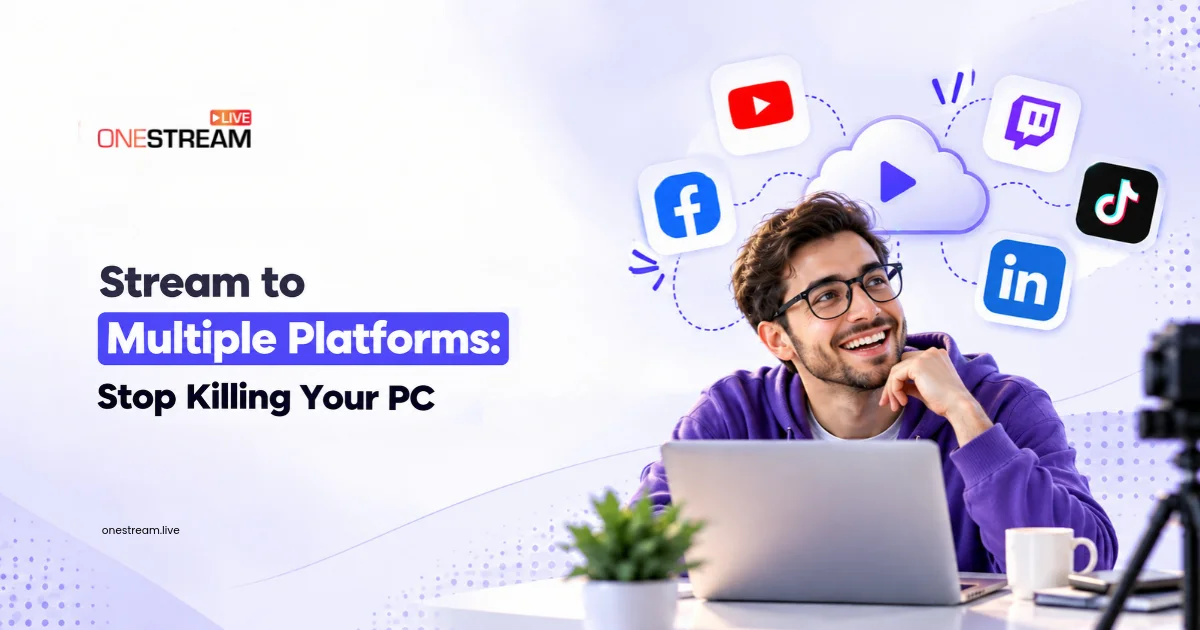
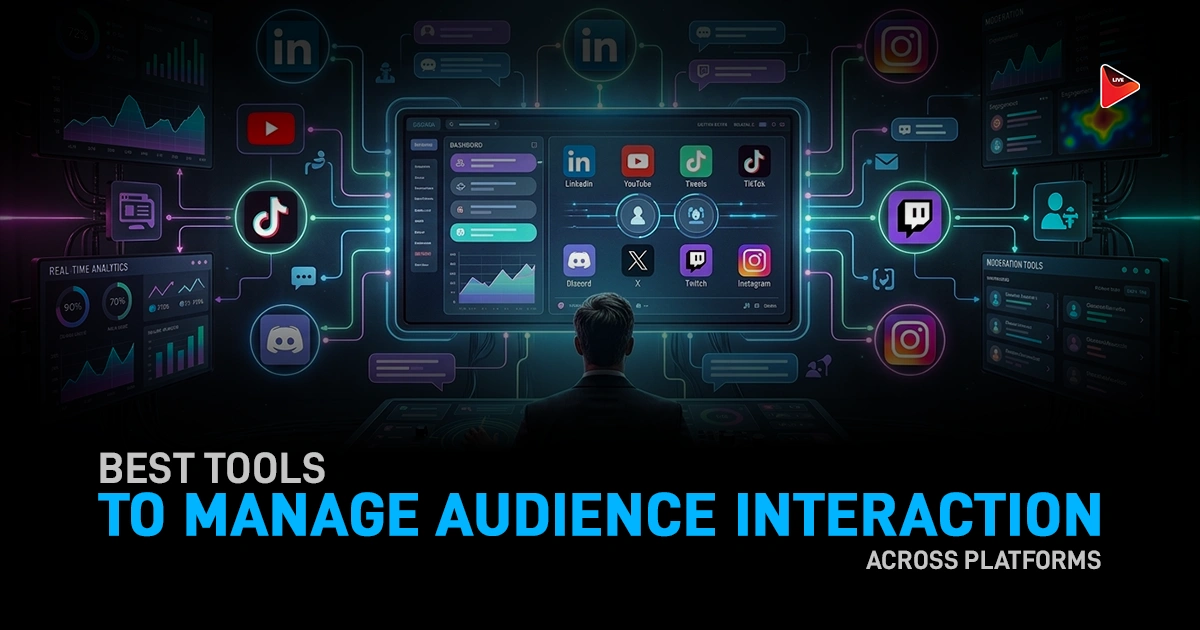
Managing an audience used to be simple. One platform. One crowd. Done. But today’s creators, marketers, and brands operate across YouTube, Twitch, Instagram, TikTok, LinkedIn, and a dozen other spaces simultaneously. Audience interaction tools have become essential to manage conversations across these platforms. The challenge is not just being present. It is staying connected without losing your focus.
Audience interaction has become the backbone of modern digital communication. According to Sprout Social, 73% of consumers will switch to a competitor if a brand does not respond on social media. That shift shows how important timely responses have become.
The Problem With Juggling Multiple Streams
Multistreaming sounds efficient at first. One stream reaches many platforms at the same time. OneStream Live makes this easy to set up.
The real challenge starts when the stream goes live. Every platform has its own inbox. Its own comment section. Its own algorithm rewarding fast responses. The differences between platforms are sometimes even too great. For example, CallMeChat and LinkedIn are completely different services, but they both provide a gateway to interacting with potentially interesting or useful people. CallMeChat lets you talk to new people online. What about? It’s a video chat with unlimited topics: from politics to culture to business.
Miss a comment on your live stream? That viewer might never return. Ignore a question on LinkedIn? A potential client walks away. The cost of scattered communication is real—and it compounds daily.
Tools for Better Audience Interaction Across Platforms
Managing audience interaction across platforms can quickly become overwhelming. Messages, comments, and mentions are spread across different tools and dashboards.
Below are audience interaction tools that help you bring everything together and respond without missing important conversations.
1. OneStream Live Unified Chat
Multistreaming becomes harder when you have to watch chats from Facebook, YouTube, Instagram, and Twitch at the same time. Each platform moves at a different speed, and it is easy to miss important messages.
OneStream Live solves this by bringing all chats into one screen. You can read and reply to messages without switching between tabs. This makes it easier to stay focused during live streams.
You can also highlight important comments and questions on the screen. This improves live stream audience interaction and helps viewers feel heard in real time.
Read More: Unified Live Stream Chat – All Your Chats in One Place
2. Hootsuite Unified Inbox
Hootsuite is one of the oldest names in social media management, and it still delivers. It pulls messages, comments, and mentions from multiple platforms into a single dashboard.
Teams can assign conversations, tag messages, and reply without switching tools. This keeps communication organized and easy to manage.
Pricing starts around $99/month. It is not cheap, but for teams handling many accounts, it quickly becomes worth the cost.
3. Sprout Social Smart Inbox
Sprout Social focuses on teams that handle a high volume of messages. It offers a Smart Inbox that highlights important conversations and helps you respond faster.
Managers can track response times and see how quickly their team handles messages. This helps improve consistency across all platforms.
Studies show the average brand response time on social media can take several hours, while most users expect replies within 24 hours or sooner. Sprout Social helps reduce that gap. Faster replies build trust and keep your audience engaged.
4. ManyChat Automation
Not every interaction needs a human response immediately. ManyChat automates messaging on Instagram, Facebook Messenger, and WhatsApp. Set up flows that greet new followers, answer FAQs, or guide users toward a product page.
It saves time. It also makes your audience feel heard even when you’re offline. That perception matters more than most people realize.
5. Social Listening with Brandwatch and Modash
Sometimes interaction management means knowing what people are saying before they say it to you directly. Brandwatch monitors brand mentions, hashtags, and keywords across the web in real time.
Modash focuses specifically on influencer and creator communities, tracking how audiences talk about campaigns. Both tools are built for teams that treat communication as strategy, not just customer service.
6. Discord Community Platform
Discord started as a gaming chat platform. Today, it’s where brands, creators, educators, and businesses build tight-knit communities. It supports text, voice, video, and threaded conversations — all within custom servers you control.
The technology is flexible enough for a 10-person team and scalable enough for 100,000-member communities. Many creators use Discord as their primary communication hub, pushing streams and updates there first.
Read More: How to Engage the Maximum Audience During a Live Stream?
AI-Powered Tools: The Next Frontier
AI is changing how brands handle audience interaction across platforms. Tools like Tidio, Intercom, and even native AI features inside Meta Business Suite are using artificial intelligence to handle audience messages faster. Sentiment analysis detects frustrated users. Auto-replies handle repetitive questions. Escalation rules pass complex issues to human agents.
These tools can sort messages, detect user intent, and identify frustrated users through sentiment analysis. They can also handle repetitive questions instantly, which reduces the pressure on human teams. More complex conversations are passed to human agents when needed, so nothing important gets ignored.
This shift is already happening. A 2024 report by Gartner estimated that by 2026, 75% of customer service interactions would be handled without a human agent. Recent data shows that over 80% of customer service teams now use AI in some form. Many report faster response times and better user experience.
This shift is not temporary. Industry reports suggest that a large share of customer interactions will soon be handled without human involvement. AI is becoming a core part of communication strategy, not just a support feature.
The key is balance. AI handles speed and scale, while human teams handle context and relationships. Together, they create a more responsive and reliable audience interaction system.
How to Choose the Right Tools for Audience Interaction
There is no single tool that works for everyone. A solo creator on Twitch has different needs than a marketing team managing multiple brand accounts.
Start by identifying your biggest challenge. It could be scattered inboxes, slow response times, or missed mentions. Choose one tool that solves that specific problem.
Keep your setup simple in the beginning. Add more tools only when your needs grow.
Final Thought
Great audience interaction is not about responding to every single message. It is about making your audience feel like they are part of something.
The right tools do not replace genuine communication. They create space for more meaningful connections. Choose wisely, set up thoughtfully, and let technology handle the heavy work so your voice stays human.
If you want to manage multistreaming and chat in one place, you can sign up for OneStream Live and get started easily.

FAQs About Audience Interaction
Audience interaction is how you connect with your audience through messages, comments, and live chats across platforms. It includes responding to questions, engaging in conversations, and making your audience feel heard.
Live stream audience interaction refers to engaging with viewers in real time during a live session. It includes replying to chat messages, answering questions, and highlighting comments.
Audience interaction helps build trust and keeps people engaged. When you respond to messages and comments, your audience feels heard and more connected to your brand.
You can use tools that bring messages from different platforms into one place. This helps you track conversations and respond faster without missing important messages.
Tools with unified chat features work best for live streaming. OneStream Live unified chat lets you read and respond to messages from multiple platforms on one screen. This makes it easier to stay engaged with your audience in real time.
OneStream Live is a cloud-based live streaming solution to create, schedule, and multistream professional-looking live streams across 45+ social media platforms and the web simultaneously. For content-related queries and feedback, write to us at [email protected]. You’re also welcome to Write for Us!