
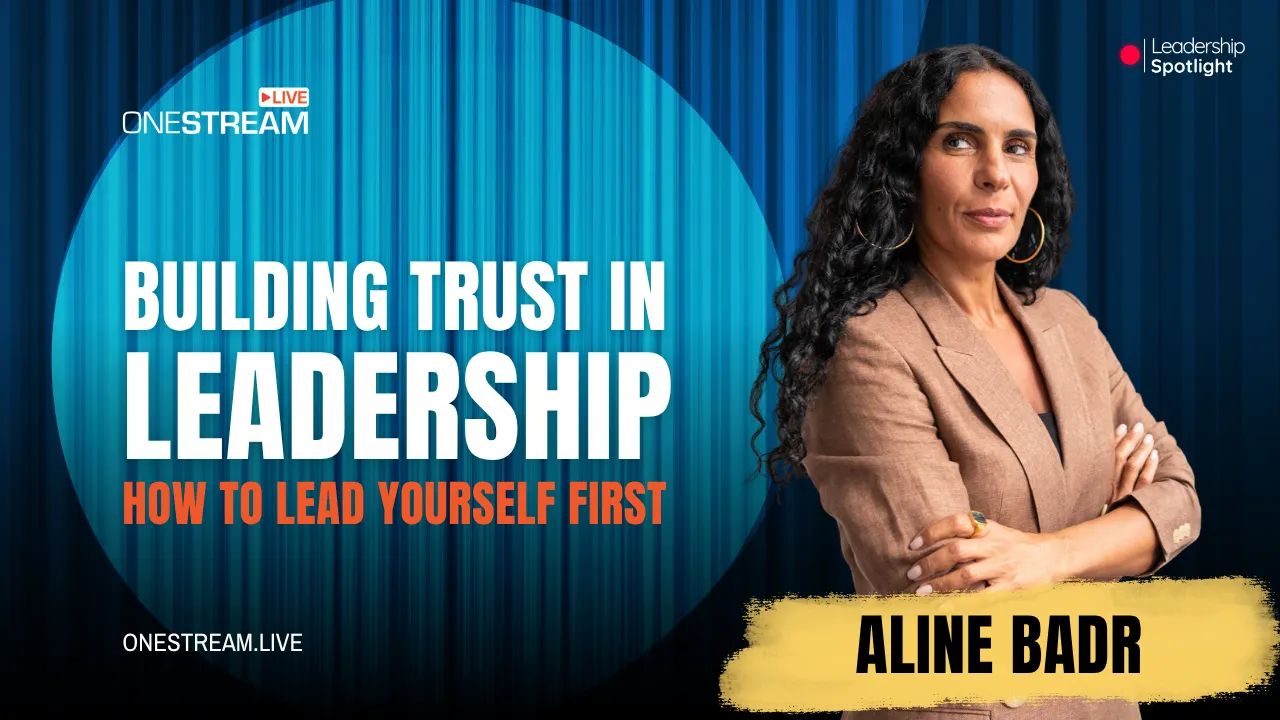
Leadership Spotlight Episode 8 with Aline Badr
68% of employees don’t trust their leaders. This number is huge, and this isn’t a minor problem; it’s a leadership in crisis. And according to Aline Badr, global executive coach, reputation advisor, and author of the upcoming book: Building Reputation People Believe In, the solution starts in one place most leaders avoid looking: inward.
In our latest Leadership Spotlight conversation, Aline shared over 30 years of insight working with leaders across 5 countries and 4 languages. Read on to uncover everything she shared with us about building trust in leadership.
The Trust Crisis: Why Leaders Struggle
The number: 68% of employees don’t trust their leaders, raises a question every leader asks: why?
Aline’s research points to a simple but uncomfortable truth: leaders are quick to point outward at problems before they look inward at themselves.
“It’s so much easier to look at everybody else on our team and what they can’t do versus what it is that we are contributing to the problem itself,” Aline explains. “Because we are always contributing to the problem.”
This shift from external blame to internal accountability is exactly where the trust begins. That’s because trust is earned when people see that you’re in alignment with yourself. When leaders demonstrate self-awareness, acknowledge their roles in challenges, and work on their own growth, the team notices and trust follows.
How to Build Trust As a Leader: The 3-Part Alignment Formula for Trust
Aline’s approach to building trust in leadership centers on alignment: aligning who you are, how you show up, and how others perceive you.
“If you can align these three, that’s how you gain trust,” she says.
Part 1: Know Who You Are
The foundation of self-leadership is understanding your values. Not the values your company posts on a wall. Not the values society expects. Your values.
“That’s the first chapter in my book,” she shares. “Are we living the values that are ours? Or are we living values that are society’s, cultural values, or somebody else’s?”
When you don’t live aligned with your true values, people feel misalignment. They sense it in your presence, decisions, and in your leadership. For them, that’s a “confused leader,” and no one trusts a leader who is confused or overwhelmed. Conversely, if you’re confident about your vision, you know what you’re doing, people start feeling your confidence, your calm, and your sense of direction and clarity.
So here are the first steps to get your alignment right:
- Identify your core values
- Understand your purpose in your current role
- Ask yourself: Am I thinking only about what I want, or am I considering what others need?
- Assess whether you’re contributing to problems or helping your team move forward
Part 2: Understand How You're Showing Up
Yes, clarity about your values is important, but clarity? It changes nothing.
“It’s like reading a book and putting it on your shelf and just saying that you read it, but you’re not implementing anything,” Aline says.
You must translate clarity into behavior. And that requires examining how you actually show up with people.
Unconscious behaviors that break trust:
- Micromanaging
- Distancing yourself from the team
- Avoiding conflict
- Making everything about you
The worst part? Most leaders do this on a daily basis without actually realizing it.
And that’s why Aline explains: “We have to really understand what’s happening in our unconscious behavior that is contributing to that lack of trust inside organizations.”
Part 3: Understand Others' Perceptions of You
Others’ perception of you in your business does matter.
“A brand is you telling the world who you are. A reputation is people telling you who you are.”
What most leaders focus on is: maintain a perfect LinkedIn profile, curating the public image and controlling the narrative. But this all goes in vain if your reputation doesn’t have “trust” in it. And reputation is what others say about you when you’re not in the room, not what they feel after looking at your LinkedIn profile.
So Building visibility isn’t just about posting online. It’s about being visible inside your organization.
Questions to ask yourself:
- Are you telling people who you are?
- Do they know what matters to you, what your values are, what your purpose is?
- Have you shared your leadership journey, including what you’re still working on and what you need help with?
This kind of visibility which is vulnerable, honest and human builds credibility in ways polished branding never can.
Trust Across Cultures: Different Doors, Same Destination
Aline’s multicultural experience (Lebanon, Canada, the Caribbean, France, Spain) has given her unique insight into how trust is built differently around the world.
“In the East, a handshake is trust. In the West, perhaps, I want to see results before I can trust you,” she observes.
Different cultures enter trust through different doors. But once you’re in, the destination is the same: people need to feel seen, heard, and given the space to explain themselves.
“We have to listen. We have to ask questions. We have to become curious. We have to really engage from a place of a beginner’s mind,” she says. “We can’t just come into different places in the world with our idea of what trust is.”
This applies not just across countries, but across departments, generations, and individual relationships within teams.
Final Words from Aline Badr
Before we wrapped up, Aline shared one core value she wanted to leave with every leader watching:
Separate intent from impact.
“It’s not just that your intention is good,” she says. “That’s wonderful. That’s a great start. But we really have to move into the space of how is this landing? What’s the impact of my word here? What do they feel when I say what I say or do what I say?”
Good intentions don’t build trust, impact does.
You can mean well and still hurt people. You can have the best intentions and still break trust. What matters is not just what you meant to communicate, but what the other person actually received.
FAQs
Trust in leadership is the confidence employees have that their leaders are honest, consistent, capable, and act in the team’s best interest.
Trust improves communication, employee engagement, collaboration, and overall team performance.
Leaders can build trust by being transparent, accountable, consistent, and listening to their teams.
Micromanagement, poor communication, lack of accountability, dishonesty, and ignoring employee concerns often damage trust.
When leaders understand their values, behaviors, and impact on others, they lead with authenticity, which strengthens trust.
OneStream Live is a cloud-based live streaming solution to create, schedule, and multistream professional-looking live streams across 45+ social media platforms and the web simultaneously. For content-related queries and feedback, write to us at [email protected]. You’re also welcome to Write for Us!