
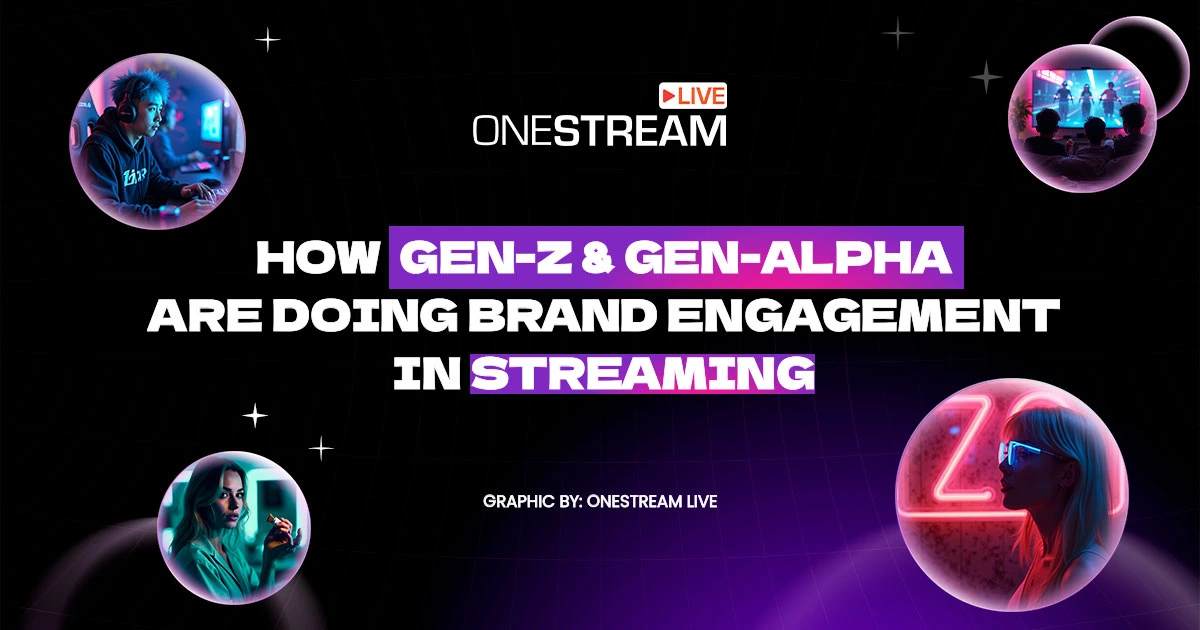
Brand engagement isn’t dead. But if you’re still measuring it in likes and impressions, Gen Z and Gen Alpha have already ghosted you.
They skip ads, scroll past polished campaigns, and tune out anything that sounds like a press release. The generations that once gathered around TV sets now gather around ring lights and live chats.
They don’t care about your mission statement. They care whether your brand can show up live, stay real in a vertical frame, and talk with them instead of at them. Streaming is their native language: spontaneous, unscripted, and always two way.
This guide shows you who these audiences are, how they use streaming platforms, and the exact strategies, metrics, and tools that turn passive viewers into a loyal community. Let’s talk about brand engagement in their world.
Key Takeaways:
- Brand engagement in streaming is the real time, two way relationship a brand builds with viewers through live chat, polls, Q&As, and community, not one way ads.
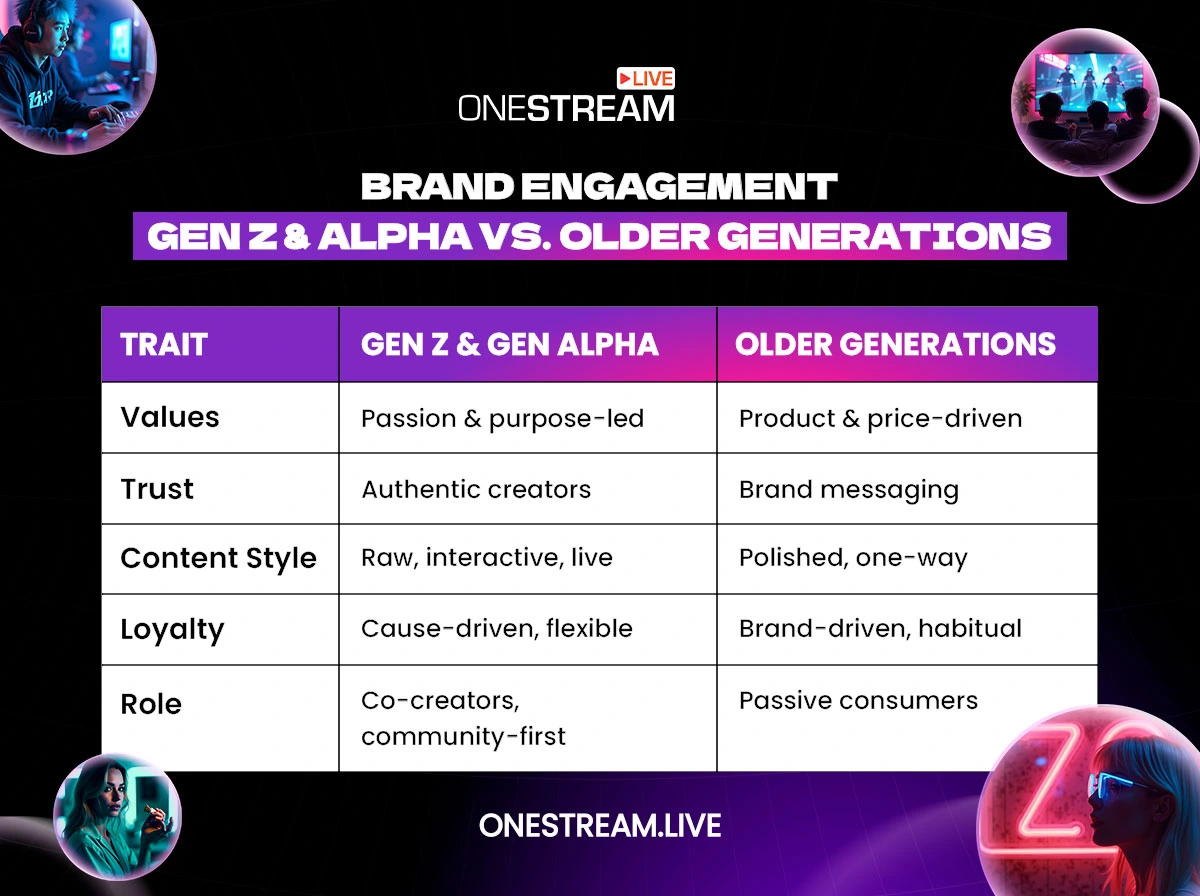
- Gen Z (born 1997 to 2012) and Gen Alpha (born 2010 to 2024) trust creators and unscripted live content more than polished brand advertising.
- Gen Z’s global spending power is projected to reach $12 trillion by 2030, and Gen Alpha already influences over $250 billion in US household spending.
- The strongest brand engagement strategy for young audiences combines authenticity, creator partnerships, interactive formats, and a mobile first presence on several platforms.
- Measure live brand engagement with watch time, chat activity, poll participation, and returning viewers, not likes alone.
What is Brand Engagement and Why Does Streaming Change It?
Brand engagement is the relationship and two way interaction between a brand and its audience. Traditionally, that meant people watching ads or joining a loyalty program. In streaming, brand engagement becomes an ongoing, real time conversation where viewers chat, react, vote, and even shape the content as it happens.
How streaming changes the game:
- Streaming turns viewers into participants: A TV commercial talks at people. A live stream lets them chat, react, and influence what happens next. On Twitch, a viewer asks a question or cracks a joke, and the streamer answers on the spot. That immediacy is the gold standard of brand engagement in 2026.
- Community beats commodity: On a live stream, content isn’t just consumed; it’s shared and discussed. A young viewer might skip a short ad in seconds, then stay for an hour long live Q&A with a founder or creator they like. Live video blurs the line between content and conversation, and that’s exactly where Gen Z and Gen Alpha want brands to be.
Who Are Gen Z and Gen Alpha?
Gen Z covers people born from about 1997 to 2012, and Gen Alpha covers kids born from 2010 to 2024. In 2026, the oldest Gen Zers turn 29 and the oldest Gen Alphas turn 16, so you’re reaching young professionals, teens, and kids at the same time.
| Trait | Gen Z | Gen Alpha |
|---|---|---|
| Born | 1997 to 2012 | 2010 to 2024 |
| Age in 2026 | About 14 to 29 | Toddlers to 16 |
| Top brand discovery channel | Instagram and TikTok | YouTube |
| Favorite formats | Short vertical video and live streams | YouTube videos, Shorts, and gaming |
| Buying power | Projected $12 trillion globally by 2030 | Influences $250 billion+ in US household spending |
| What wins them over | Authenticity and two way conversation | Gamified, creative, hands on experiences |
Why Should Brands Care About Gen Z and Gen Alpha Spending Power?
Because they’re already your customers, or soon will be. NielsenIQ and World Data Lab project that Gen Z’s global spending power will reach $12 trillion by 2030, potentially making Gen Z the wealthiest generation in every region of the world.
Gen Alpha isn’t far behind. A Teneo study of 1,000 Gen Alpha kids and their parents found this group already influences over $250 billion in US household spending across food, fashion, and leisure.
These young consumers are forming brand loyalties (or aversions) right now, and those preferences stick into adulthood. Brands that earn their engagement early can win lifelong fans.
Gen Z consumer behavior also sets the pace for everyone else. What feels cool to a 16 year old today often goes mainstream tomorrow.
How Do Gen Z and Gen Alpha Use Social Media and Streaming?
Both generations live on video first platforms to socialize, discover products, and learn new skills. Gen Z social media usage centers on TikTok, YouTube, and Instagram Reels, where short vertical video and live streams beat static posts.
Gen Alpha is even more video centric. YouTube is practically their search engine. A Razorfish study found that 51% of Gen Alpha first hear about brands through YouTube videos, while Gen Z leans more on social platforms like Instagram and TikTok.
Live video is now mainstream for young adults too. Research from the University of Liverpool Management School reports that 63% of 18 to 34 year olds regularly watch online livestreams, and that highly live content holds attention 10 to 20 times longer than recorded media.
Here’s how they engage on these platforms:
- Interactive viewing: They don’t just watch streams; they chat, comment, and sometimes join on screen, and they expect the host to respond. Watching a stream feels more like hanging out than watching TV.
- Multiplatform juggling: A Gen Z teen might play a game, watch a YouTube tutorial on a second screen, and chat with friends on Discord at the same time. Attention is fragmented, so brands need to show up in several places at once, which is exactly what multistreaming makes possible.
- Creators over brands: Both generations trust individual creators more than corporate brand accounts. They’ll follow a favorite YouTuber or Twitch streamer closely but may never follow the brand behind a product they use.
How to Increase Brand Engagement with Gen Z and Gen Alpha: 6 Strategies
To increase brand engagement with Gen Z and Gen Alpha, show up live, talk with them, and let them shape the experience. The six strategies below form a practical brand engagement strategy for streaming, whether you’re marketing to Gen Z, Gen Alpha, or both.
1. Be Authentic and Conversational
Young audiences can spot a phony a mile away, so drop the scripted corporate spiel. On stream, talk like you’re on a video call with a friend, not reading a press release.
Let your hosts be themselves, even if that means laughing, stumbling over a word, or reacting honestly to comments. If a viewer asks a tough question like “Is your product sustainable?”, don’t dodge it with buzzwords. Try: “Good question. We’re not perfect, but here’s what we’re doing.”
Show the real people behind your brand in a live Q&A. Honest answers, even about bad news, earn more trust than fake optimism. Think less “presentation” and more “chat by the campfire.”
2. Partner with Creators Gen Z Trusts
Creators are the bridge between brands and young audiences, which is why creator partnerships sit at the center of most Gen Z marketing strategies. Streamers, YouTubers, and TikTokers already have the trust and attention you want.
Live partnerships pay off. The same University of Liverpool research notes that 76% of Twitch users view brands more positively when those brands support their favorite streamers’ careers and communities.
Pick creators whose niche and values match yours, and favor long term partnerships over one off sponsored posts. Gen Z scrolls past anything that feels like a purely transactional #ad. A Twitch artist who genuinely loves your drawing tablet will sell it better than any scripted ad read.
3. Let Viewers Interact and Create with You
Gen Z and Gen Alpha absolutely want to interact with brands, as long as it’s fun and worth their time. Streaming gives you tools traditional media can’t: polls, quizzes, Q&As, shout outs, games, and contests, all live.
Streaming a product launch? Run a live poll like “Which color should we drop next?” and let viewers decide. Gen Alpha especially loves gamified experiences, so smart Gen Alpha marketing borrows from games with mini challenges, leaderboards, and rewards.
Then invite fans to create with you. Host a fan art showcase or feature the best fan videos on stream. Gen Alpha doesn’t just buy brands; they help build them, so give them a way in.
4. Go Video First Across Multiple Platforms
Be where your audience already watches: YouTube, Twitch, TikTok LIVE, and Instagram Live. Then tailor the format to each one. One of the clearest Gen Z marketing trends is short vertical video, so use TikTok LIVE for quick interactive sessions and YouTube or Twitch for longer shows and replays.
Optimize for mobile, too. Most of these viewers watch on phones, so keep text and graphics readable on a small screen and run some streams in 9:16 portrait mode. Then think beyond the live moment. Clip highlights into Shorts, Reels, and Stories so algorithm driven feeds can carry your stream to new viewers.
5. Build a Community (Fandom) Around Your Brand
Both generations want to belong to communities, just like the fandoms they build around games, artists, and creators. Give your audience ways to connect with each other, not just with you.
Start with a home base: a Discord server, a subreddit, or a branded Custom Website with live chat where fans can gather between streams. During streams, prompt the chat to talk to each other: “Where’s everyone tuning in from?” Shout out regular chatters and reward loyal fans with badges or member perks on Twitch and YouTube.
Lean into fandom culture, too. One of the best brand engagement examples is Stanley, whose tumblers sparked a collector culture where fans showed off every new color. A monthly hangout stream or an insider club for regulars can create that same sense of belonging.
6. Align with Causes Your Audience Cares About
Social causes strongly shape how Gen Z and Gen Alpha engage. These generations care about sustainability, diversity, mental health, and social justice, and they prefer brands that act on those values.
On stream, that could mean a charity livestream, a gaming marathon for a cause, or a live talk with experts about what your company is actually doing. Involve your community and be transparent about the results.
Just skip the performative stuff. A hashtag in your stream title once a year won’t cut it. Young viewers reward consistent commitment, not one time gestures.
How to Measure Brand Engagement in Live Streams
Measure brand engagement in live streams by tracking how deeply people participate, not just how many showed up. Likes and impressions tell you who passed by; watch time, chat activity, and return visits tell you who actually cared. The University of Liverpool researchers suggest pairing classic metrics like peak viewers and watch time with deeper signals such as positive chat interactions, subscriptions, and donations.
| Metric | What it tells you | Good sign |
|---|---|---|
| Peak and average viewers | How many people showed up and stayed | Viewers holding steady after the first 10 minutes |
| Average watch time | Whether your content holds attention | Watch time growing from stream to stream |
| Chat messages per minute | How actively viewers participate | Viewers chatting with each other, not just with you |
| Poll and Q&A participation | Whether viewers want to shape the content | A rising share of viewers voting or asking |
| Returning viewers and new followers | Whether a community is forming | The same names showing up every week |
| Clicks and QR code scans | Whether engagement turns into action | Spikes during product moments |
1
Set one goal per stream. Decide before you go live whether you want reach, conversation, or sales.
2
Pick three metrics that match the goal. For conversation, track chat activity, poll votes, and watch time.
3
Compare platforms side by side. Note where your audience chats most and double down there.
4
Review and adjust after every stream. Turn your best moments into clips and repeat the formats that worked.
How Can OneStream Live Help Brands Connect with Gen Z and Gen Alpha?
The right tools remove the technical hurdles so you can focus on the conversation. OneStream Live, a cloud based live streaming platform, helps brands reach young audiences wherever they watch. Here’s how.
1. Stream Everywhere at Once
Gen Z and Gen Alpha are spread across platforms, so don’t pick just one. OneStream Live multistreams a single broadcast to 45+ social platforms and the web at the same time, so every viewer finds you on the app they already use.
You can also embed your stream on any website with Stream Players, like a landing page or blog post, to reach viewers who aren’t on the big social apps.
2. Go Vertical and Mobile
Vertical video rules on mobile platforms like TikTok and Instagram. With OneStream Live Studio, you can switch to portrait streaming and produce a stream that fills the phone screen and feels native to those apps.
Need to go live on the move? The OneStream Live mobile app lets you stream straight from your phone.
Download the OneStream Live Mobile App


3. Turn Viewers into Participants
Studio is built for interaction. Invite up to 16 guests into your live stream to host a creator panel or a fan hangout, with no complicated setup.
Unified Chat brings messages from supported platforms, including YouTube, Twitch, Facebook, LinkedIn, and Kick, into one window so you can reply to everyone in real time. Screen and media sharing let you react to memes or review fan content live.
Selling on stream? Live Sales puts shoppable product cards with a price and a QR code on screen, so viewers can buy in the moment instead of hunting for a link.
4. Stay Consistent with Scheduled Streams
You can’t be live every night, but your audience still expects you. With OneStream Live, you can schedule recorded videos to stream as live and plan them up to 60 days ahead.
Record a great session when it suits you, then set it to air when your audience is online. To viewers, it plays as a live stream, and you can still jump into the chat while it runs.
Have you ever wondered how to increase brand engagement when you can’t always be on camera? This is one answer.
5. Keep Every Stream On Brand
Your look should stay consistent wherever you stream. In Studio, add your logos, overlays, banners, and custom backgrounds.
For a fully branded experience, a Custom Website hosts your stream on your own domain with your colors, your player, and a call to action button like “Shop Now” or “Sign Up.” A brand called Acme, for example, could stream at live.acme.com and turn engaged viewers into customers on the spot.
Final Takeaway
Gen Z and Gen Alpha are rewriting what brand engagement means. They want brands to step off the billboard and into the chat: to entertain them, listen to them, and create with them.
Three things matter most. Show up live and be authentic, partner with the creators they already trust, and measure participation instead of just views. With live video and the right tools, brands of any size can build real relationships with these audiences.
So, are you ready to hit “Go Live” and talk with the next generation? The brands that show up consistently will win their hearts and their screen time. Happy streaming!
Frequently Asked Questions
Is 2012 Gen Z or Gen Alpha?
Most researchers place 2012 in Gen Z. NielsenIQ, for example, defines Gen Z as people born from 1997 to 2012. Many Gen Alpha studies start that generation in 2010, though, so kids born between 2010 and 2012 sit in an overlap. For marketing, their media habits matter more than the exact birth year cutoff.
Why is brand engagement important?
Brand engagement matters because engaged audiences trust you, come back, and recommend you to friends. For Gen Z and Gen Alpha, who skip ads and tune out polished campaigns, engagement is often the only way a brand gets noticed at all. Live streams build it fast through real time chat, polls, and creator partnerships.
How do Gen Z and Gen Alpha discover brands through streaming?
Gen Z and Gen Alpha mostly discover brands through the creators they watch. When a streamer uses, wears, or mentions a product naturally during a live stream, it feels like a recommendation from a friend. Gen Alpha leans heavily on YouTube for brand discovery, while Gen Z finds brands across TikTok, Instagram, YouTube, and Twitch.
Why don’t traditional ads work on Gen Z and Gen Alpha?
Traditional ads struggle with Gen Z and Gen Alpha because these audiences grew up skipping them. Many use ad blockers, pay for ad free subscriptions, and scroll past anything that interrupts their feed. They value control and authenticity, so they respond far better to creators, live conversations, and content they can interact with.
How can brands increase engagement during a live stream?
Brands can increase engagement during a live stream by turning viewers into participants. Run live polls, answer questions in real time, give chat shout outs, bring creators or fans on screen, and offer exclusive deals for live viewers only. Then reply on every platform you stream to so nobody feels ignored.
OneStream Live is a cloud-based live streaming solution to create, schedule, and multistream professional-looking live streams across 45+ social media platforms and the web simultaneously. For content-related queries and feedback, write to us at [email protected]. If you have a story to share about your live streaming experience with OneStream Live, we would be glad to feature it. You're also welcome to Write for Us!