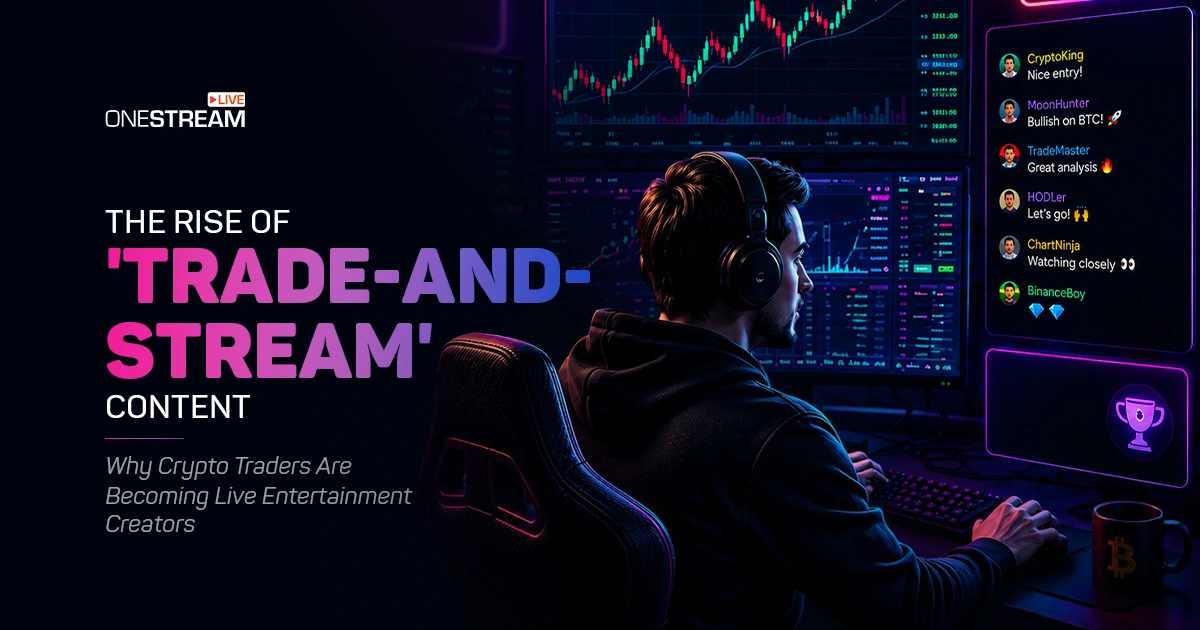
Crypto trading is, in many ways, similar to forex trading, and it’s therefore something traders do on their own with intense focus. However, Telegram groups and chats became common, and traders shared the knowledge and used it to improve their skills. This shift eventually gave rise to live trading content, which has since taken over YouTube and other video platforms.
Recently, a new trend has changed trading, and it seems to be a long-term development. Live trading content has been dominating YouTube and other video platforms. In a way, it’s similar to gamers who stream their content live. Viewers aren’t watching these videos only because of predictions; they see them as entertainment.
Crypto fits perfectly with livestream culture because the market never closes. Volatility creates drama, and the narrative changes hourly as traders react to news, sudden rallies, and liquidations. Therefore, many traders are becoming online personalities rather than analysts.
From Trading Desk to Streaming Setup: How the Culture Changed
Crypto content has changed and evolved over the past few years. During the 2017 ICO boom, most creators focused on educational YouTube videos explaining blockchain projects and token sales. Once the public became familiar with the concepts and understood the market, the content shifted to Twitter analysts, Discord groups, and newsletter writers who built large audiences around market commentary.
Now, in 2026, crypto live streaming has become the dominant format for many creators. The crypto markets move too fast for the typical content cycle; instead, they require constant attention from viewers. Streaming is perfect for it. A 15-minute YouTube video may be outdated by the time it’s edited and posted.
The audience values transparency, and, in a way, streaming the whole process provides that. Watching a trader place positions live feels more authentic than reading polished social media threads after the fact. This is especially true for streamers willing to explain their positions and defend them.
Gaming culture has influenced the transition, and at this point, the stream looks a lot like real-time gameplay. This can change, however, as content creators mature and new trends emerge in the market.
Why Crypto Works So Well as Live Entertainment
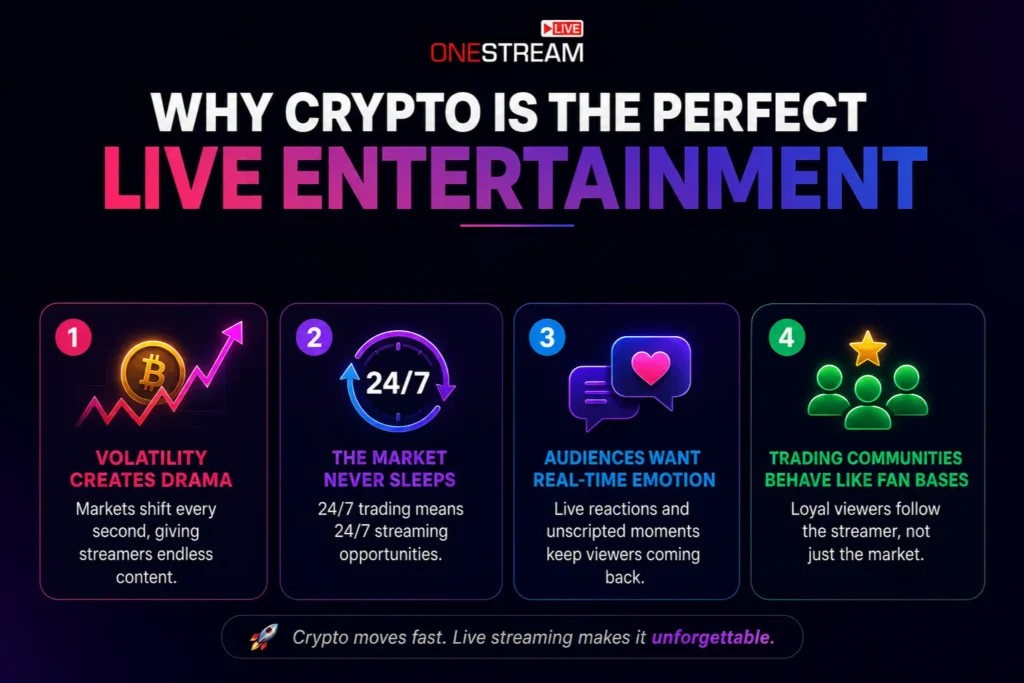
Volatility Creates Drama
Crypto markets are volatile, and sometimes, they can change on a dime. This is a perfect piece of content for the live-streaming crowd, which can follow every twist and turn, especially if the streamer sells the narrative.
Traders celebrate huge wins, panic during rapid selloffs, and react emotionally to unexpected volatility. The viewers will get emotionally invested, and every stream could be a potential for chaos or a huge win.
The Market Never Sleeps
Cryptocurrency exchanges operate 24/7 because there are no centralized institutions with set work hours. Unlike stock traders, crypto creators never have to wait for opening bells or weekday trading hours. It works well with continuous streaming and a global audience that turns out from different locations around the world at different times.
Some creators even organize streams around major economic announcements or token unlock events that happen outside normal business hours.
Audiences Want Real-Time Emotion
The modern internet audience wants unscripted, authentic content. The world of 24/7 streaming is a window into the lives and days of people from different walks of life, and it’s uncut and real, as much as internet content can be. With viewers saturated by curated, edited content, streams offer a sense of novelty, and OneStream Live’s 24/7 live streaming feature is built exactly for this.
All other media quickly get commercialized; it happened with vlogs and TikTok creators, but live streams still have the raw appeal that the viewers cannot get elsewhere.
Trading Communities Behave Like Fanbases
Trading communities have turned into fan bases, and loyal viewers turn out for every stream regardless of profit or the currencies being traded.
Creating such a bond with the audience isn’t something any streamer can achieve. It’s talent, and therefore something that statistical algorithms can’t always explain.
The Business Model Behind Trade-and-Stream Content
Platform Monetization
The simplest way to generate income as a streamer is to monetize the platform that you’re using. The platforms have payment models for their users that are based on the number of viewers or subscriptions. The streamers can also use donations and affiliate programs to supplement that income.
There are strict rules about what constitutes a view and who’s eligible to apply for a program. Some platforms already ban crypto traders from streaming, but others are lagging behind the trend.
Read More: How to Monetize Live Streams with Crypto Payments
Live Trading as Audience Acquisition
Many creators use livestreaming primarily as a way to build audiences for larger business ecosystems. The stream funnels the viewers towards other methods of making a profit. Those could be newsletters, subscriptions, paid trading groups, educational courses, or sponsored exchange partnerships.
The traders who plan to use this business model need to act as both market commentators and media entrepreneurs. The key to making a profit this way is to be honest and transparent about the ecosystem and the stream’s real purpose. The stream itself should still provide valuable insight and entertainment.
The "Clipping Economy"
One of the biggest drivers of growth is the rise of short-form clipping culture. The streams can last for hours, and in today’s attention economy, they need to be marketed via short clips posted on TikTok and Instagram.
It provides another source of income if it generates enough views, but it also drives the viewers toward the stream itself. This clipping economy rewards emotional, entertaining content far more than slow, analytical education.
Hybrid Creator-Trader Careers
As the industry grows, many crypto personalities now spend as much time managing communities and producing content as they do actually trading. Streams also hire social media managers, editors, moderators, and clip creators to keep the media side of the business going.
The streamers are therefore becoming media brands, often as a main source of income, more important than trading.
Why Platforms Are Encouraging the Trend
The platforms approve of livestreaming trading content because it increases engagement and often attracts new users. Viewers stay connected for long periods during volatile market conditions, especially during major Bitcoin moves or meme coin frenzies. Long watch time is also good for marketing.
Trading content also encourages the viewers to participate, comment, and vote. This is especially true during market changes, when viewers debate the trader’s decisions or comment on breaking news in real time. It builds the platform and helps with affiliate marketing.
Crypto creators are particularly valuable because they often stream for many hours every day. There’s always another event, a price change, or news development that streamers can comment on and use for engagement. Platforms are looking for content creators who can provide such a dedicated audience.
The Risks: Hype, Performance Pressure, and Regulation
The Pressure to Entertain
One of the biggest risks for traders is that maintaining an audience and making a steady profit from trading can sometimes be at odds with one another. The streamers are looking for drama and want to entertain their audience. Sometimes, trading isn’t suited to this purpose, and the streamers need to make a call.
Finfluencer Regulation
The concept is so new that it’s not yet regulated, but regulatory agencies have been aware of financial influencers and are setting the rules. Authorities in multiple countries have raised concerns about undisclosed sponsorships, misleading trading claims, and unrealistic promises of fast profits. These will limit what traders can do in a stream, but they won’t affect the stream’s popularity. Experts such as those at CCN have been covering the rise in regulatory efforts that are changing the industry for some time. Now that cryptos are widely accepted, they are also more regulated.
Also Read: How to Host Safe Crypto Webinars: Dos and Don’ts Guide
Parasocial Trading Communities
Another major issue is the rise of parasocial investing behavior. Viewers may feel they know traders after following their content and may trust their judgment about investing. This is dangerous, as streamers aren’t licensed to provide such advice, and they may be in a conflict of interest.
Burnout and Always-On Streaming
The nonstop nature of crypto trading is even more pronounced for streamers. In the long run, such burnout could lead the streamer to make poor decisions and affect their trading finances. Public profit-and-loss visibility, audience expectations, and constant volatility can also have such an effect.
The Future of Crypto Content: Media Personalities Instead of Analysts
The future of crypto content is moving towards streaming and the online attention economy. It’s also focused on raw, unfiltered content made by creators who are trying to entertain rather than analyze. This approach is attracting viewers but also carries a variety of risks for both potential traders and streamers.
The streamer’s personality also plays a big role in attracting viewers, and many develop a parasocial relationship with their favorite content creators. It also poses a risk, as it may lead viewers to copy the trades of their favorite creators.
Most importantly, communication skills may become more valuable than trading accuracy alone. The creators who succeed in the long term will be those who can distinguish themselves and provide content with a personal twist. Live trading is no longer just about the numbers; it’s about the story you tell while trading them.
This will also mean that regulators will pay closer attention to the content-creation part of the economy. For traders ready to make that leap, OneStream Live gives them the tools to go live, grow an audience, and build their brand on their own terms.

Frequently Asked Questions
General crypto trading streams are allowed on YouTube. Twitch, however, banned live broadcasts of crypto gambling sites. Regular live trading content sits in a different category and is largely permitted, though platform rules continue to evolve.
No. Streamers are not licensed financial advisors, and regulators in multiple countries are increasingly cracking down on undisclosed sponsorships and misleading profit claims. Finfluencer rules are tightening, and streamers can face legal consequences for making specific investment recommendations without proper disclosure.
Most earn through a mix of platform monetization, viewer donations, subscriptions, affiliate partnerships with exchanges, paid trading groups, and sponsored content. Many also repurpose stream clips into short-form content on TikTok and Instagram for additional reach and income.
The crypto market moves too fast for pre-recorded content. An edited video can be outdated before it’s even published. Live trading lets creators react to market moves in real time, which is more transparent and more engaging for viewers.
YouTube remains the most popular for reach. Kick has emerged as a more crypto-friendly alternative. Multistreaming tools like OneStream Live let traders broadcast to multiple platforms simultaneously, maximizing audience without extra effort.
OneStream Live is a cloud-based live streaming solution to create, schedule, and multistream professional-looking live streams across 45+ social media platforms and the web simultaneously. For content-related queries and feedback, write to us at [email protected]. You’re also welcome to Write for Us!