
The podcasting world has never been bigger or more competitive. The worldwide podcast listeners reached 619.2 million in 2026, a 6.01% year-over-year increase. Yet with over 4.5 million podcasts in existence and roughly 27,000 new shows launching daily means simply having a microphone isn’t enough for podcasters. That’s why podcast hosting platforms exist; they help you grow, manage, distribute, and scale your content effectively.
Your hosting platform is the invisible engine powering your RSS feed, analytics, distribution, and monetization. The wrong choice limits the growth, and the right one? Yes, you guessed it right. So with a bunch of options available out there, how do you actually pick the right one?
We’ve done the research, and we have handpicked podcasting solutions based on their unique features, pricing, ease of use, and more. Read on to find out which one is right for you.
- Your podcast hosting platform directly shapes how you grow, earn and reach listeners.
- Free platforms like Spotify for Creators work well for beginners but come with revenue share trade-offs.
- Video podcast support is no longer optional as audience demand for visual content keeps rising.
- The best platform for you depends on your publishing volume, team size and monetization goals.
- Tools like OneStream Live extend your reach beyond hosting by streaming your show across 45+ platforms at once
How to Choose a Podcast Hosting Platform (Features to Look for)
To choose the right podcast hosting platform, you need to ensure it has key features like distribution, analytics, storage/upload model, video support, monetization, pricing transparency, and AI tooling.
- Distribution: All major hosts promise to submit your RSS feed to core directories like Apple Podcasts, Spotify, and Amazon Music. But you need to gauge how automated and fast this process is.
- Analytics: Some give you basic numbers while others provide you with the whole picture of your performance. Make sure it includes important things like performance, listener trends, and audience insights.
- Storage/Upload model: Hours-based cap (Buzzsprout) Vs. unlimited (Podbean, RSS.com).
- Video support: Video podcasts can be 50-70% more engaging than audio-only, making them a growing differentiator in 2026.
- Monetization: Revenue share vs. keeping 100% of sponsorships.
- Pricing Transparency: Hidden add-ons vs. all-inclusive plans.
- AI tooling: 61% of podcasters plan to integrate AI into their workflows by 2026, so platform-native AI features are worth weighing seriously.
Also Read: How To Publish a Podcast in 2026: A Guide for Beginners
10 Best Platforms for Podcast Hosting
Now that we know what to look for, let’s look at the best podcast hosting platforms in 2026.
1. Buzzsprout
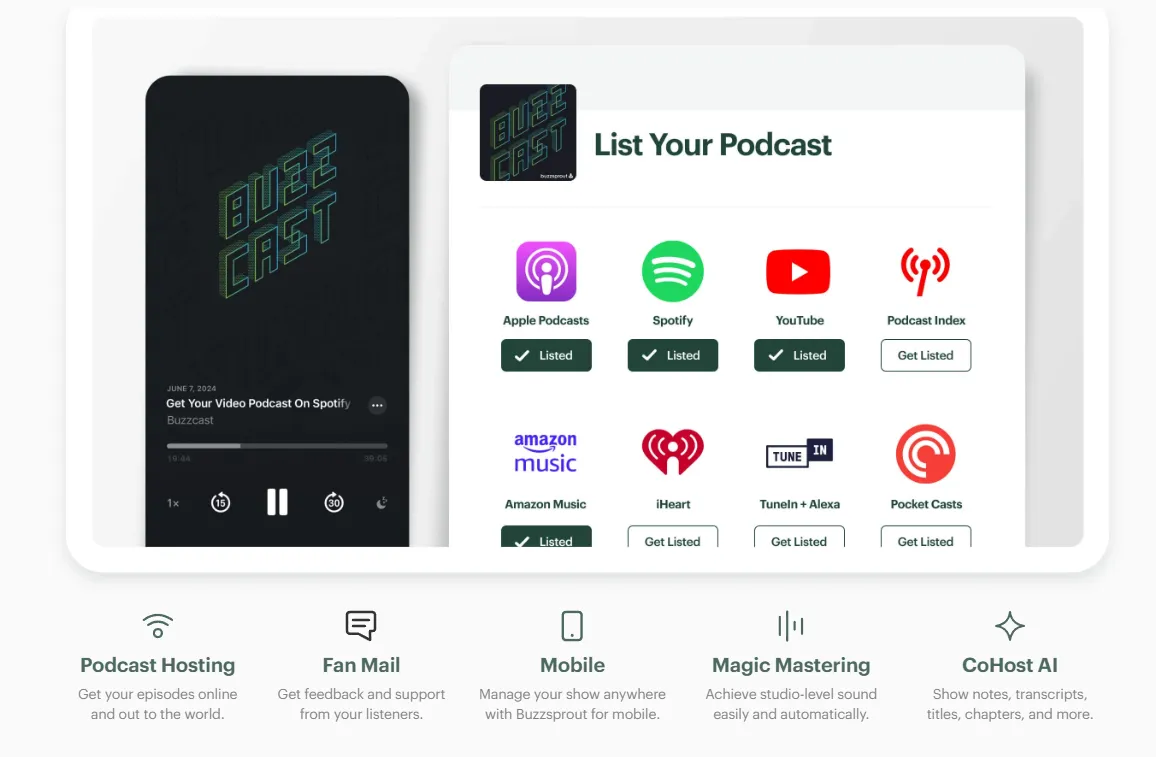
Best for: Solo podcasters publishing weekly audio shows.
Pricing: Free plans available and paid monthly plans starting from $19 to $79.
Buzzsprout earned its reputation through an intuitive interface and being among the most reliable podcast distribution platforms. It also provides useful analytics to help you grow and has AI features like Magic Mastering and Co-Host AI as optional add-ons in the paid plans.
The key limitation is that Buzzsprout is strictly an audio host. Upload a video file, and it strips it to audio. This could be a drawback for creators who are eyeing YouTube growth or Spotify’s video podcast format.
2. Transistor
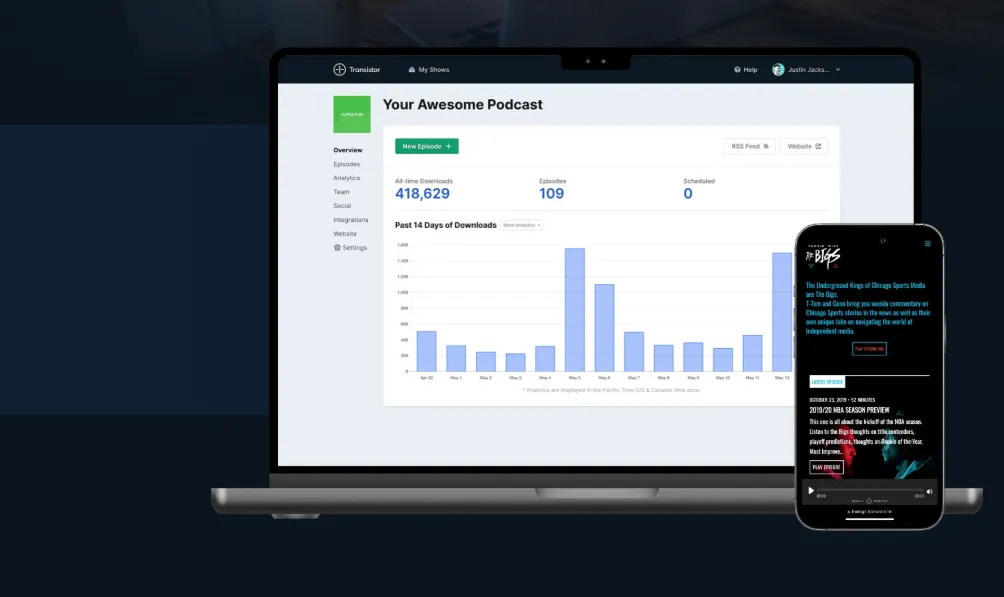
Best for: Agencies, networks, businesses running multiple shows.
Pricing: Free trial available, paid monthly plans start from $19 to $99.
With Transistor, you can host unlimited public or private podcasts under one account. This alone makes this stand out, and there are some handy features too. It has built-in AI Transcription at $1/hour. Transistor is also known for its human-only chat support, which makes it a differentiator in the category where support quality varies wildly.
3. Captivate
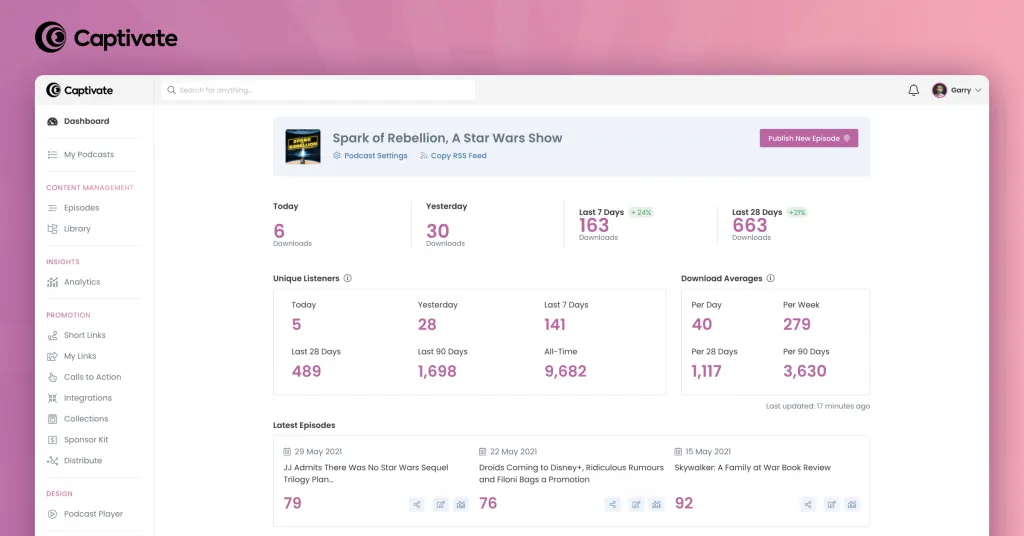
Best for: Established independent creators scaling to a media brand.
Pricing: Free trial available, pricing is often cited at around $19 for monthly plans.
Looking for a platform with the best podcast upload service? Then Captivate is what you need. It takes a download-based pricing model with unlimited uploads included with every upload. So you don’t have to worry about the hourly caps penalizing you.
Compared to Transistor, Captivate tends to be a more affordable option for unlocking powerful features at lower download volumes. And if you take the numbers seriously, cherry on top, it has IAB-certified analytics.
4. Beamly
Best for: Podcasters who want to build a business around their show
Pricing: plans start at $18/month; there’s a 14-day trial.
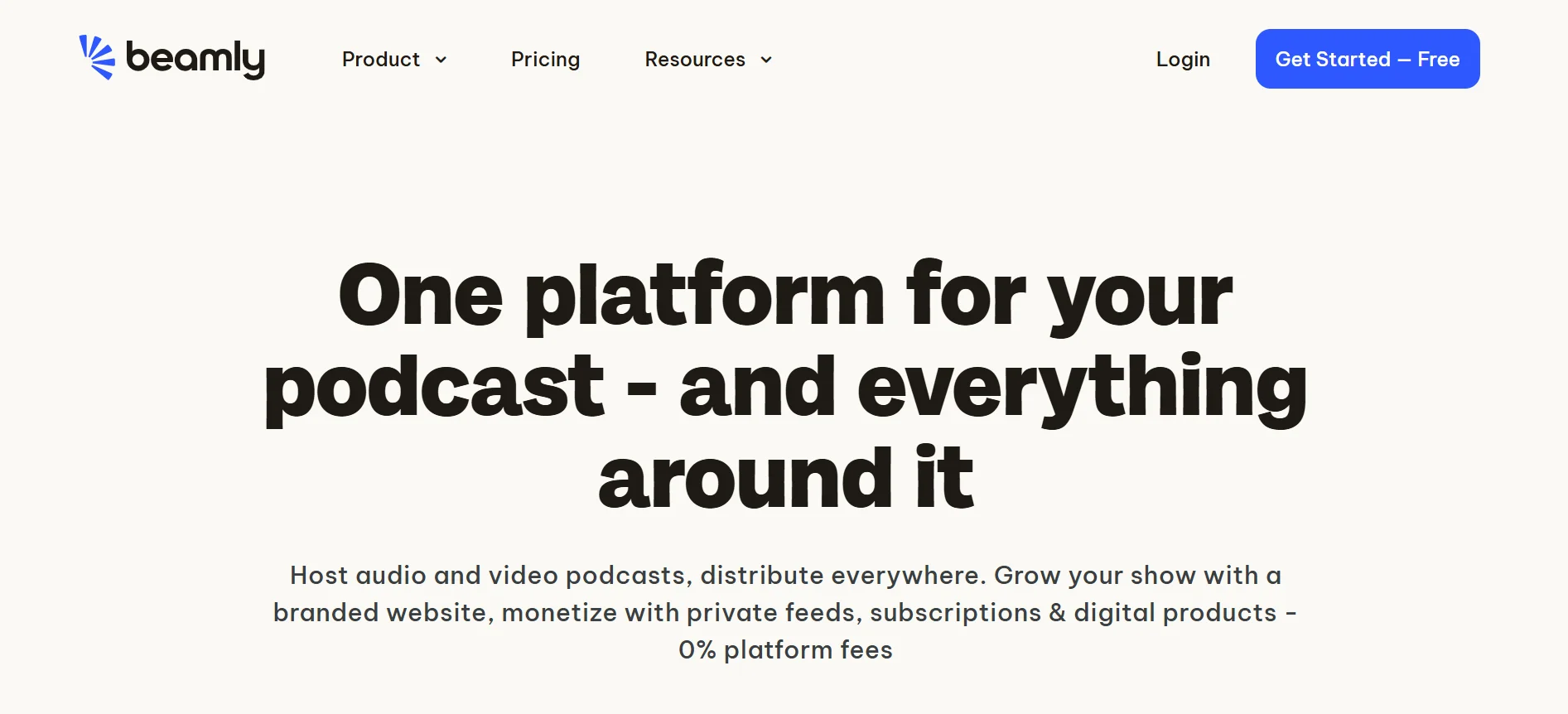
Beamly bundles podcast hosting (or RSS sync if you’re already hosted elsewhere), one-click distribution to Apple Podcasts, Spotify, and the other major platforms, and a branded website with your own domain, all in one dashboard. Paid plans add private feeds, paid memberships, and digital product sales, and Beamly takes 0% of what you earn on any of it.
The $18/month Starter plan covers hosting, the website, and up to three free products. When upgrading to the $30 Creator plan, you get access to video hosting, monetization, and private feeds.
If owning your audience and revenue matters more to you than starting for free, Beamly is worth the money. If you’d rather test things out at zero cost first, keep reading.
5. Podbean
Best for: Frequent publishers and podcasters wanting an all-in-one platform at a low price point.
Pricing: Free plans available, paid monthly plans start from $17 to $129.
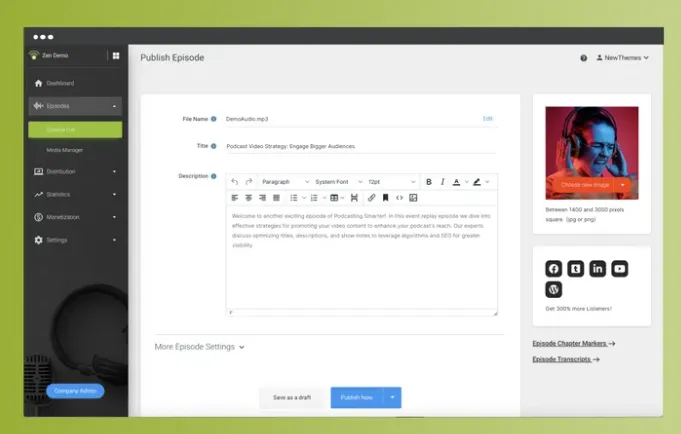
Podbean offers some of the best bang-for-buck in this space. It has AI that handles noise reduction, transcriptions, and filler word removal natively and social auto-sharing. This pushes new episodes to Facebook, YouTube, and more automatically, making it one of the best podcast publishing platforms.
It also has an integrated advertising marketplace that adds a monetization layer that most other platforms often gate behind high-paid plans. If you publish frequently and want something all-in-one, then Podbean delivers.
6. RSS.com
Best for: Creators serious about monetization, independence, and ownership.
Pricing: Free plan and monthly paid plans starting from $15.99 and $24.99.
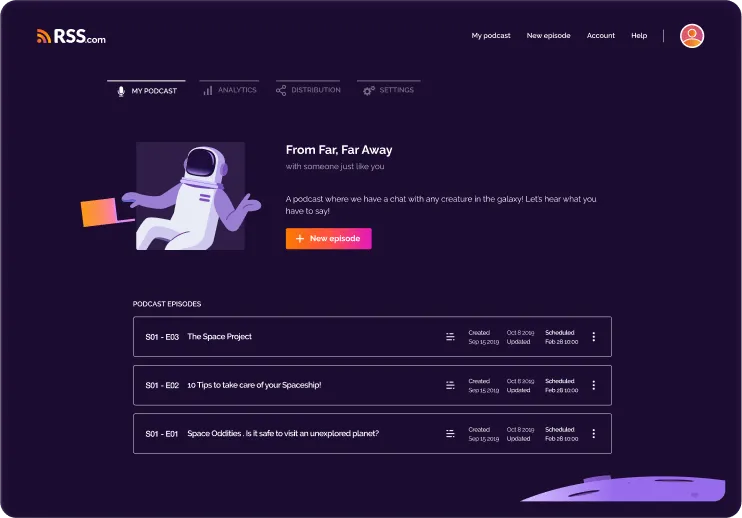
RSS.com’s differentiator is what it includes by default. Automatic distribution to the top directories is baked into all paid plans. This is something its competitors like Buzzsprout don’t offer without manual setup. You also get your episode transcriptions across the board with no add-on fees.
But why podcasters actually consider this: you get to keep 100% of your sponsorship revenue. This gives it an edge over Spotify’s 50% revenue share model. It offers transparent pricing, and it’s the strong choice for creators who want to own their monetization from day one.
Also Read: What Is RSS and How to Start a Podcast on YouTube in 2025
7. Riverside
Best for: Video podcasters, interview-format shows, creators repurposing content across platforms.
Pricing: Free trial and paid monthly plans starting from $29 to $99.
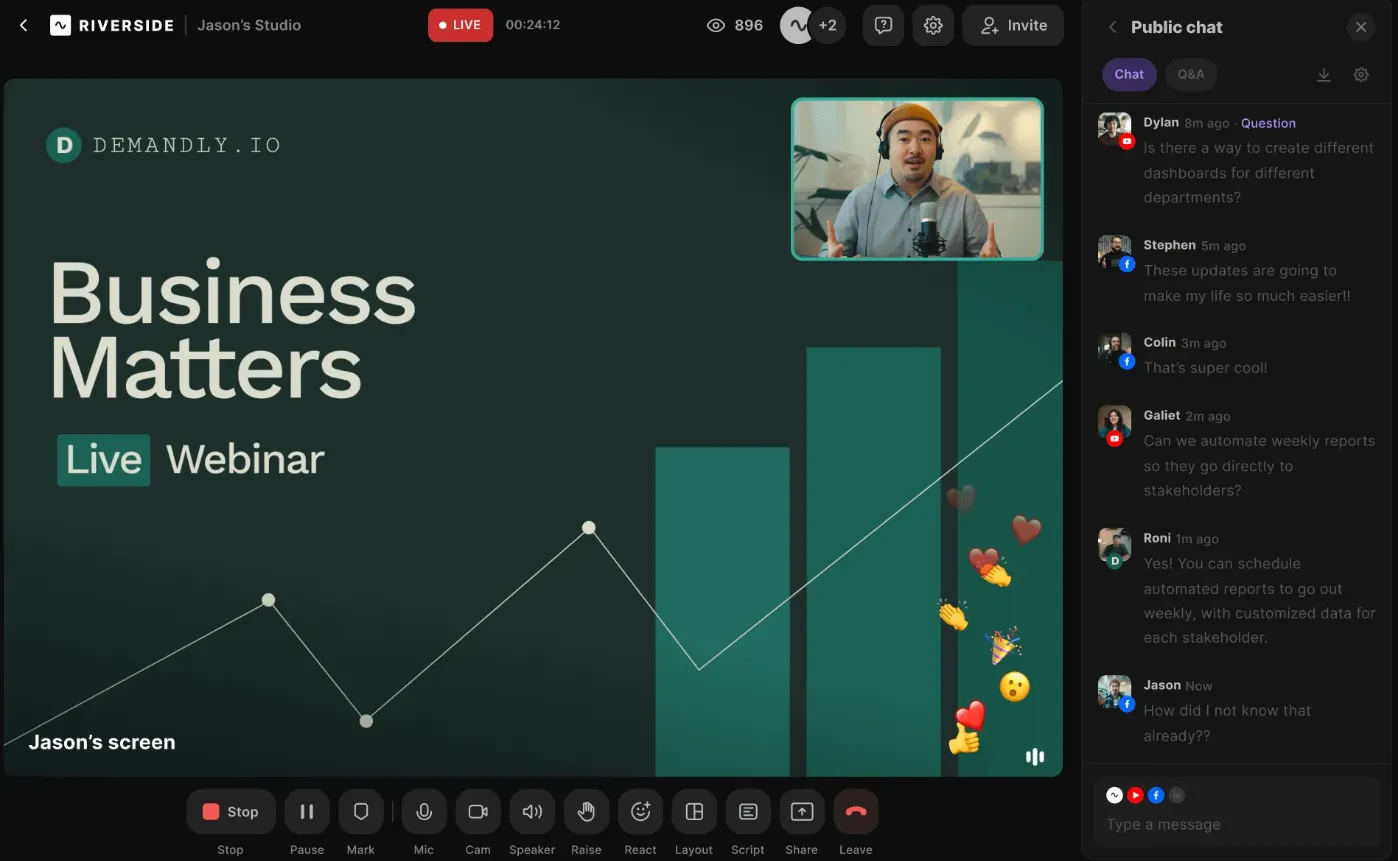
Riverside is the best podcasting host for creators who want to eliminate the tool-switching. It almost does everything: it records, edits, repurposes, and hosts a video in a single workflow. Along with this, you have the AI assistant working alongside you; the AI Co Creators generates show notes, thumbnails, transcripts, and promotional clips automatically.
If your workflow currently uses one tool for recording, another for editing, and another for hosting, Riverside can definitely make your life easy. Specifically, if you’re a video podcaster, this is a complete single-platform solution in the list.
8. Libsyn
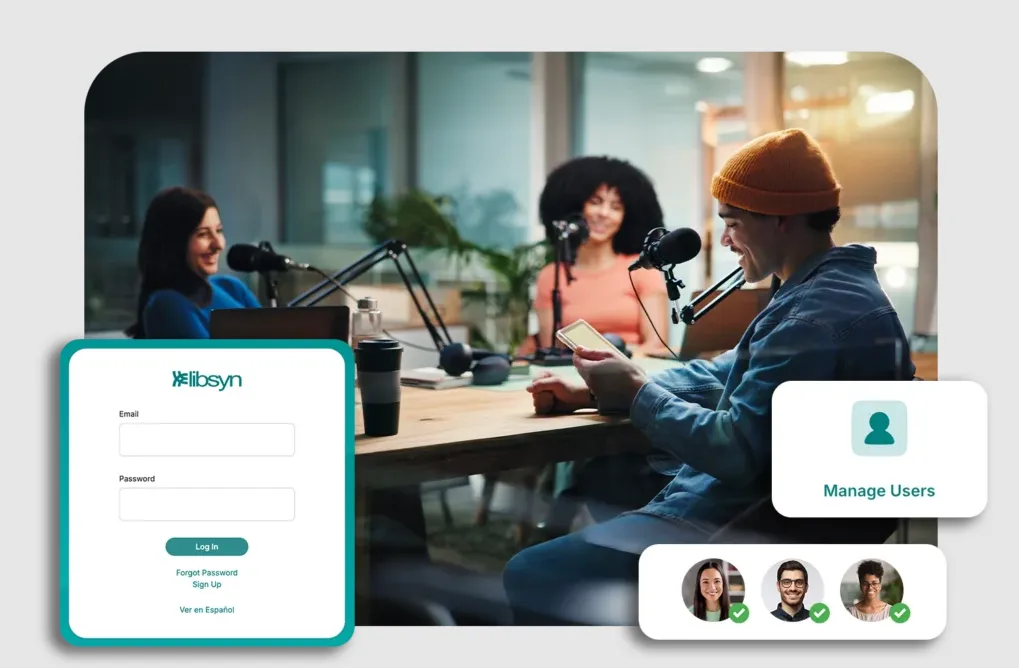
Best for: Legacy shows, broadcasters, and enterprises with established large audiences.
Pricing: Free trial and paid monthly plans starting from $12 to $150 (the cheapest podcast host in the list)
Libsyn is one of the oldest platforms in podcasting, and it carries a reputation for reliability that its new rivals are still building. The upload model here is hour-limited, which makes it a good choice for low-volume professional shows with large and consistent audiences rather than higher frequencies.
You get advanced monetization tools, including Dynamic Ad Insertion (DAI) and the Libsyn Ad Marketplace. Combined with this is the IAB-certified analytics that makes it the enterprise choice in this category.
9. RedCircle
Best for: Creators who want to monetize early without a large upfront hosting cost.
Pricing: Free trial and paid monthly plans starting from $19.99 to $119.99.
RedCircle’s pitch is simple: start free and monetize right away. There are no storage or monetization limits; this makes it ideal for those creators who want revenue tools from episode one rather than as a paid upgrade.
This platform’s podcast hosting services include dynamic ad insertion, a cross-promotion network, listener tipping and subscriptions, and host-read ad matching. The revenue share model means your costs scale with your earnings rather than hitting you with a flat monthly fee.
10. Castos
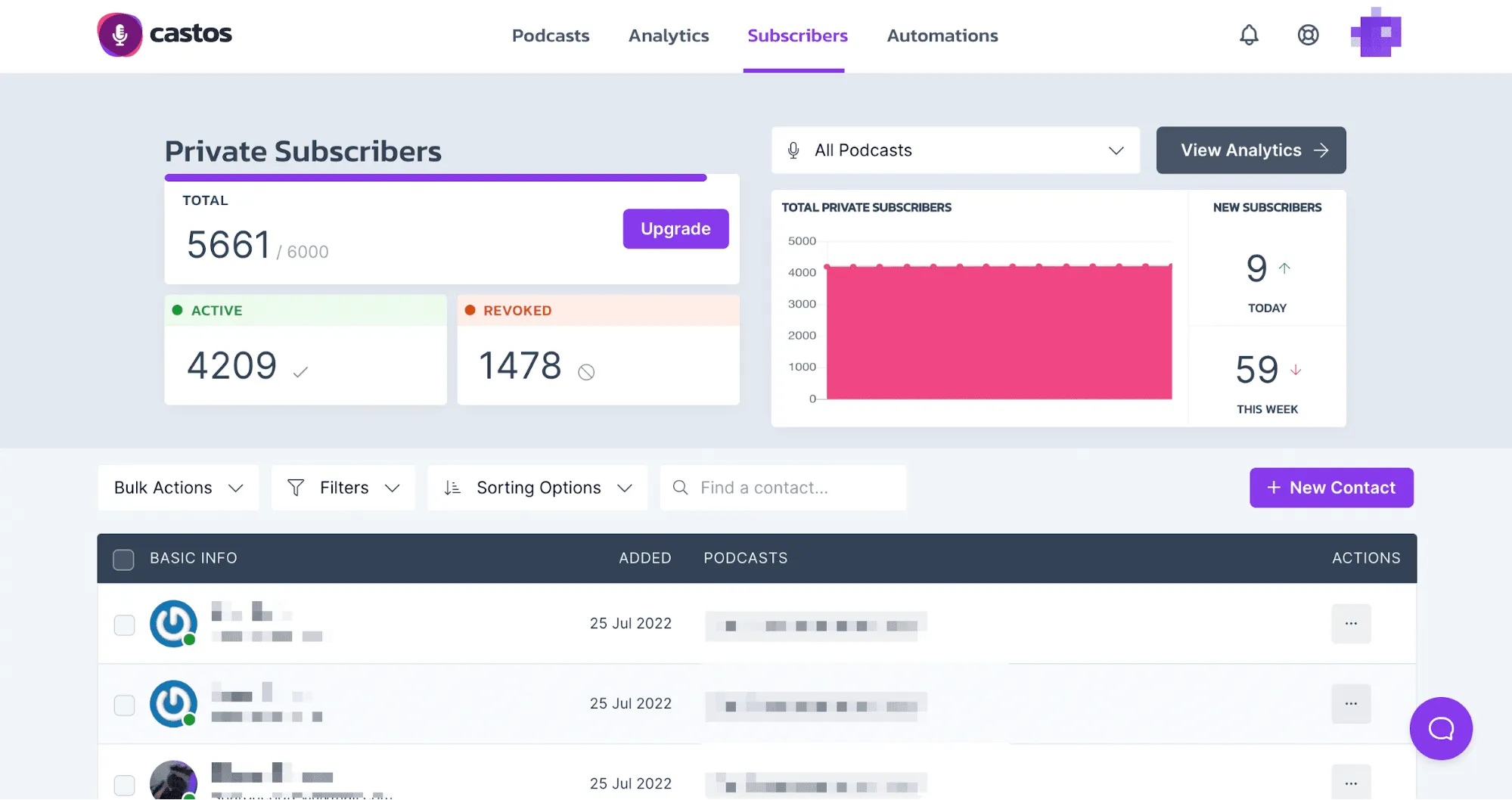
Best for: Bloggers, content marketers, and website-first creators who run WordPress sites.
Pricing: Free trial and paid monthly plan starting from $19 to $99.
Castos is built around one ecosystem: WordPress. Its native integration via the Seriously Simple Podcasting plugin makes it the best option for bloggers and content marketers. If you already operate on WordPress and want your podcast to live alongside your existing site, then Castos is your best bet.
You get unlimited storage and downloads on all paid plans, private podcasting, video support, automatic YouTube publishing, and unlimited transcriptions. Higher plans unlock video and advanced analytics.
Top Podcast Hosting Platforms: Comparison Table
Now that we’ve covered the top options, let’s compare the leading podcast hosting platforms side by side.
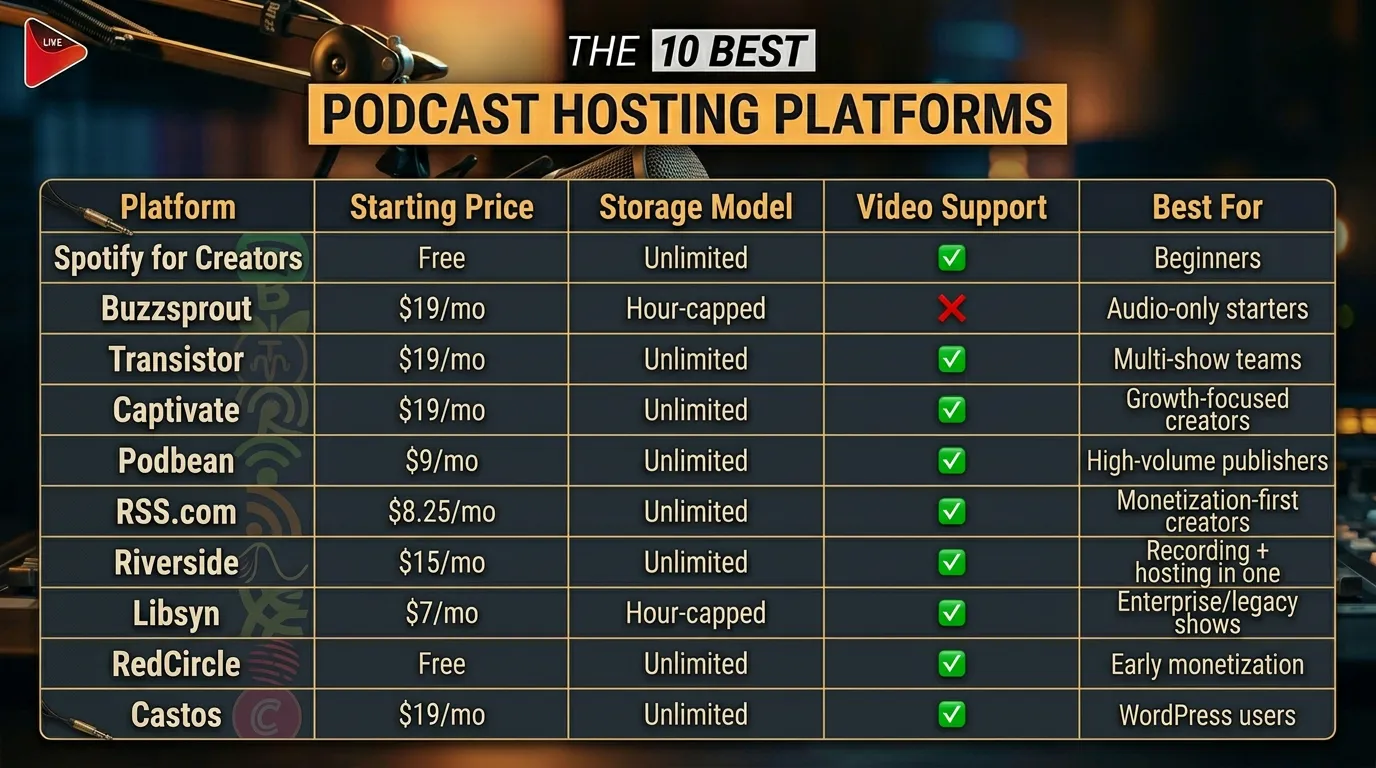
How OneStream Live Amplifies Your Podcast Reach
OneStream Live occupies a different category from the platforms above. While it’s not a podcast hosting platform, it’s a multistreaming solution that lets you broadcast your live or simulcast your pre-recorded episodes across 45+ destinations simultaneously. For podcasters, this adds value because rather than publishing an episode and manually repurposing it across platforms, OneStream Live turns distribution into one step. Here’s why podcasters use OneStream Live:
- Streams to 45+ platforms at once, including YouTube, Facebook, LinkedIn, and X
- Supports both live podcast broadcasting and pre-recorded simulcasting
- One workflow distribution instead of manually posting across platforms
- Built-in Live Studio with guest invites, branded overlays, and screen sharing
- Scheduled streaming for pre-recorded episodes to maintain a consistent publishing cadence
- Unified chat dashboard to manage comments from all platforms in one place
Also Read: 5 Reasons You Should Use OneStream Live for Your Podcast Streaming
Final Words on Podcast Hosting Platforms
With podcast listeners increasing every year, the opportunity in podcasting has never been larger, but your platform is your foundation. The best podcasting host doesn’t just store your files; it shapes how you grow, how you earn, and how far your voice reaches. Revisit your goals, use the comparison table above, and pick the host that grows with you, not against you.
Frequently Asked Questions
What should I look for in a podcast hosting platform?
You should look for reliable uptime, analytics, monetization options, distribution reach, and ease of use
Can I switch podcast hosting platforms without losing subscribers?
Yes, you can migrate to a new host by keeping your RSS feed consistent so listeners don’t lose access.
Do podcast hosting platforms help with distribution to major apps?
Most hosting platforms automatically distribute your show to major directories such as Apple Podcasts, Spotify, and Google Podcasts.
Are there free podcast hosting options worth considering in 2026?
Some free hosts exist, but they typically have limitations compared with paid plans.
Will a better hosting platform improve my podcast’s growth?
A stronger platform can boost growth by offering better analytics, monetization, and distribution tools.
OneStream Live is a cloud-based live streaming solution to create, schedule, and multistream professional-looking live streams across 45+ social media platforms and the web simultaneously. For content-related queries and feedback, write to us at [email protected]. If you have a story to share about your live streaming experience with OneStream Live, we would be glad to feature it. You’re also welcome to Write for Us!