

Everyone wants to sell digital products and honestly, why wouldn’t they? No inventory, no shipping, no ceiling. Just you, your ideas, and a global audience one click away.
The options are endless: eBooks, templates, online courses and virtual products. But so is the competition.
So, how do you cut through it? How do you figure out what digital products to sell, where to sell digital products, and most importantly, how to make them profitable?
Because posting a PDF on Etsy and praying for traffic isn’t a successful business model. It’s a hope spiral.
This guide is your antidote to mediocrity. If you’ve built something worth buying, this is how you get it in front of people ready to pay. Let’s get started!
- Discover digital products to sell that are profitable in 2025
- Learn how to sell digital products with real strategies
- Choose smart platforms: your own site vs marketplaces like Etsy
- Use live streaming and email marketing to promote your product
- Boost sales with bundles, freebies, and affiliate partnerships
- Get more reach with OneStream Live’s multistreaming tools
What Are Digital Products?
Digital products (also called virtual products) are intangible items delivered over the internet. Examples include eBooks, online courses, software, music, and graphics.
You can’t touch them, but you can download or access them online. The digital product market is huge. It exceeds $600 billion globally as of mid-decade, and it is growing fast with consumer demand.
What Are the Best Digital Products to Sell in 2025?
There are many kinds of digital products to sell. For example, eBooks and online courses are top sellers. Membership communities, software apps, and subscriptions also do very well. The possibilities are endless. Below are some digital product ideas to sell online:
- Ebooks & Guides: Write an eBook or PDF guide on a topic you know well. These are popular because they are easy to download and read on any device.
- Online Courses & Webinars: Teach a skill or share knowledge through video lessons. The e-learning market is booming and according to predictions, it could reach 6 billion users by 2029. People love learning online at their own pace.
- Software & Apps: Develop a software tool, mobile app, or plugin that solves a problem for the users. The demand is high for useful software (the software market keeps growing at ~5% a year). Turning a website into mobile app can also improve accessibility and user experience as more buyers prefer mobile-first solutions.
- Design Templates & Graphics: Sell digital art, stock photos, website themes, or printable templates. Many creators offer social media templates and planners as digital marketing products for businesses.
- Music & Audio Content: Create stock music tracks, sound effects, or audiobooks. Podcasters and video creators often buy audio assets for their projects.
- Memberships & Subscriptions: Offer a paid community or membership site. Subscribers might get exclusive content, ongoing lessons, or digital resources each month.
These are just some digital products to sell. The most profitable digital products are those that provide real value or solve a problem for your audience. Think about your skills and what your target customers need.
How to Sell Digital Products Step-by-Step
Not sure how to start selling digital products? Here is a simple roadmap:
- Make a quality digital product.
Focus on creating digital products to sell that provide clear value. Your product must solve a problem or fulfill a desire for your audience. Quality is what gets remembered. - Choose where to sell it.
Decide where to sell digital products on your own website or an online marketplace. Each option has pros and cons (we’ll discuss these below). Pick the platform that fits your needs. - Set a fair price.
Research what similar digital items to sell cost. Price your product to reflect its value, but stay competitive with the market. You can always adjust pricing or offer discounts later. - Create a compelling listing.
Write a clear description and highlight benefits of your products. Include screenshots or previews. Good copy and visuals will help persuade buyers. - Promote your product online.
Simply listing a product is not enough. You need to market it. The product marketing can be done through social media, email, and other tactics (like the ones below) to drive traffic and sales.
Creative Ways to Sell Digital Products Online
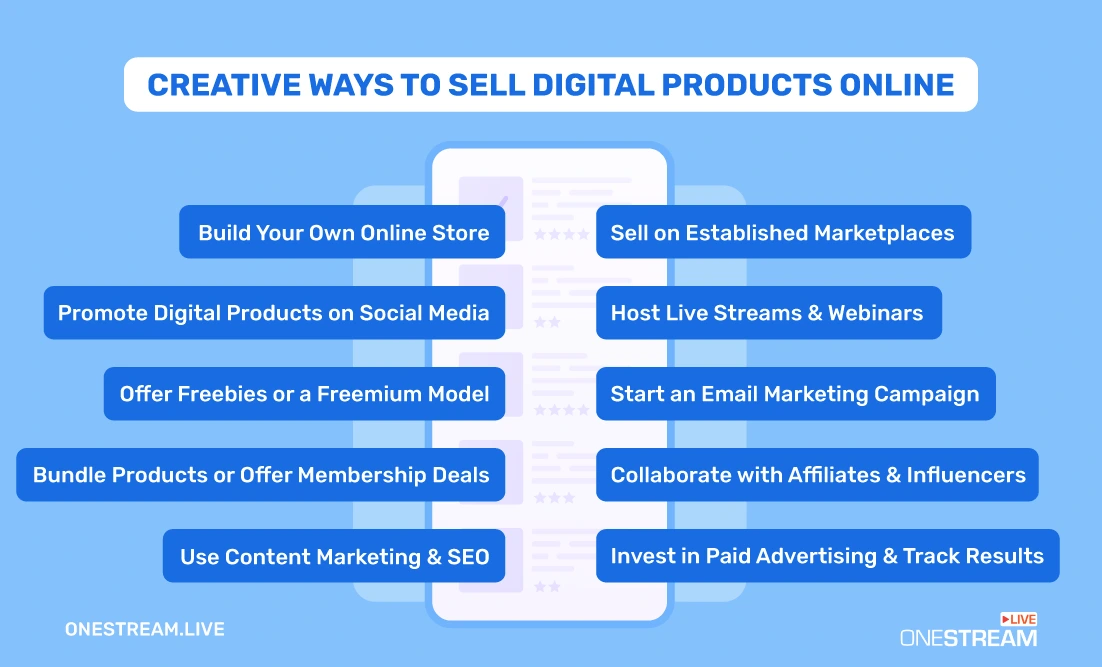
With the basics covered, let’s explore 10 creative ways to sell digital products online. Use these tactics to reach more customers and increase your sales.
1. Build Your Own Online Store
One great way to sell digital products online is by building your own website or online store. This gives you full control over your branding, pricing, and customer experience. When deciding where to sell digital products, a personal site is often the smartest long-term move.
You also keep more of the profit as there will be no marketplace fees eating into your margins. With easy tools like Shopify, Gumroad, or WordPress plugins, it’s never been easier to create and sell digital products directly.
Another perk? Your site becomes a hub for your brand community.
You can collect emails, customize the look and feel, and even offer exclusive deals or bundles. Many creators who learn how to sell on Etsy eventually run their own site too.
Over half of Etsy sellers now sell across multiple platforms. This kind of multi-channel setup helps you reach wider audiences while keeping more control.
Just remember: with your own store, you’ll need to bring in the traffic through SEO, social media, and content marketing. But once it’s running, your website can become your single most valuable asset in building a sustainable digital product business.
2. Sell on Established Marketplaces
Online marketplaces are an easy way to tap into large audiences. There are many established sites like Etsy, Amazon, Udemy, and Envato that attract millions of buyers searching for digital goods. Listing your product on these platforms can bring quick exposure.
Etsy alone had 91 million active buyers in 2024. That’s serious reach. But with over 6.6 million sellers competing for attention, you’ll need more than just a cute thumbnail. Understanding how to sell on Etsy is super important to be successful in this marketplace.
Choose a marketplace that fits your product type. For example, Etsy is popular for printables, graphics, and planners; Udemy or Skillshare work well for online courses; Amazon is ideal for eBooks; and Creative Market or Envato are great for design assets and templates.
Optimize your product listing with relevant keywords and good visuals so buyers can find you. Marketplaces often have search algorithms, so treat your listing like an SEO project.
Encourage happy customers to leave reviews and good ratings that will build trust and lead to more sales. Selling on marketplaces is a quick way to start, and you can always expand to your own site later (or vice versa).
3. Promote Digital Products on Social Media
If you are doing anything online, you can not ignore social media. Social media is the most powerful channel to promote your product online.
In fact, one in three consumers discover new products on social platforms. This means your potential customers are scrolling Facebook, Instagram, TikTok, YouTube, or LinkedIn every day.
Create business accounts on the platforms where your target audience hangs out. Share engaging content that relates to your digital product. Keep in mind that people come to social media for entertainment, so not just sales posts, but useful tips, behind-the-scenes looks, or success stories.
For example, if you sell digital art, post short design tips or time-lapse videos of your work. If you offer a marketing eBook, share bite-sized marketing advice or infographics.
Be consistent and interact with your followers. It is very important to connect with the followers so answer comments and questions promptly.
Building a genuine community around your brand will lead to trust and interest in your product. You can also use features like Instagram/Facebook Stories, YouTube tutorials, or TikTok demos to showcase your product’s value in action.
4. Host Live Streams and Webinars
Live interaction can dramatically improve sales for digital products. Live video is highly engaging.
For example, Facebook Live videos drive 3× more engagement than regular videos. It’s no surprise 86% of marketers use live video as a marketing tool now. You can use this trend by hosting live streams or webinars to promote your digital products.
Host a live demo of your product, run a tutorial session, or schedule a Q&A to engage with your audience and answer their questions in real time. This will create a personal connection with potential customers.
They can see the face behind the product and get immediate answers to their concerns. Live webinars are especially effective for selling higher-priced items like extensive online courses or software. You might provide a free mini-workshop and then offer your product at the end with a special discount for viewers.
To maximize your reach, try multistreaming your live sessions on multiple platforms at once. You can do that easily using OneStream Live.
You can broadcast your live or pre-recorded video to over 45 social media platforms simultaneously. In other words, you can go live on Facebook, YouTube, Twitter, and more all at the same time, without juggling devices. You can even schedule pre-recorded video demos to play as “Live” events, so you engage audiences in different time zones.

During live streams, be sure to interact with viewers (be active and greet them, answer chats) and clearly mention how to buy your product (share the link or offer). The real-time urgency and authenticity of live video can significantly boost conversions for digital products.
5. Offer Freebies or a Freemium Model
People love free stuff. Offering something for free is a creative way to attract customers and eventually drive paid sales. It could be a free sample or a “lite” version of your product.
For example, if you have software or an app, provide a free tier with basic features (freemium model) and entice users to upgrade for advanced features. Creators of digital art might give away a couple of free templates or design assets as a taste.
Freebies serve as lead magnets as they let people try your content with no risk. In return, you can ask for an email address (building your list) or gently prompt for feedback.
Once someone has your free sample and sees the value, they will be more likely to buy the full product. This technique builds trust and goodwill.
You’re demonstrating your expertise and generosity upfront. Just make sure that your free content is truly high quality. It should impress users so they think, “If the free version is this good, the paid one must be great!”
Another approach is hosting a free webinar or live mini-class (as mentioned above) that naturally leads into your paid product. Essentially, give a little value for free, to get a lot of value later.
This strategy helps convert skeptics into customers and also generates word-of-mouth (people often share great free resources with friends). It’s a win-win: the audience gets something useful at no cost, and you gain visibility and warm leads for your digital product.
6. Start an Email Marketing Campaign
Email is one of the most powerful marketing tools for selling digital products. It might not be as flashy as social media, but it works.
In fact, businesses earn around $36 for every $1 spent on email marketing, which is a huge return on investment. Building an email list allows you to reach interested people directly in their inbox, a space they check daily.
Begin by adding email signup forms on your website or landing pages. Offer an incentive for subscribing (for example, the freebies we discussed above, like “Get a free guide and updates”).
As your list grows, send valuable content regularly: tips, how-to articles, news, or personal stories related to your niche. This keeps your subscribers engaged and establishes you as an expert.
Read Blog on The New Email Marketing Hack & Grow Your Mailing List
Avoid only sending sales pitches. The rule of thumb is to give value in most emails and occasionally promote your product.
When you are ready to launch or promote a digital product, your email subscribers will be the warmest audience. You can send a dedicated email about your new eBook/course/app with a special offer or discount just for them.
Because they’ve grown to trust you through your emails, they are far more likely to buy. You can also set up automated email sequences (for example, a welcome series for new subscribers that eventually pitches a product).
Make sure your emails are short, friendly, and have a clear call-to-action when you’re selling something. Personalize them if possible (most email tools let you insert the subscriber’s name, etc.).
For sellers conducting discovery calls or product demos, tools like Sybill can automatically generate personalized follow-up emails based on what each prospect actually discussed and cared about during your conversation, which saves hours of manual email crafting.
Also, segment your list by interest or behavior so buyers can get different emails than prospects, for instance. Email marketing, done right, can drive a significant portion of your digital product sales. And unlike social media algorithms, you control the message and reach with email.
7. Bundle Products or Offer Membership Deals
Everyone loves a good deal. So, bundling your digital products is a clever way to increase sales value.
If you have multiple related products, you can offer them as a package at a discounted price. For example, if you’ve created digital products to sell, like three Photoshop template packs individually, bundle them into a “Master Pack” for, say, 20% less than buying each separately.
Customers feel they’re getting more for their money, and you benefit by selling more items in one go. Bundles can also introduce buyers to your other products they might not have considered initially.
Another creative approach is to launch a membership or subscription for your digital content. Instead of a one-time sale, customers pay a recurring fee (monthly or yearly) to access a library of content or new updates. This model works well for things like stock asset libraries, ongoing coaching content, or community access.
When using these methods, highlight the extra value. “Get X and Y together and save 30%,” or “Join the membership for exclusive content plus all future updates free.”
These incentives push indecisive customers to purchase. Just be careful not to bundle things that don’t logically go together because the combo should make sense and truly help the buyer. Furthermore, make sure that your pricing still preserves your profit margin.
8. Collaborate with Affiliates and Influencers
Why not let others help sell your digital product? Affiliate marketing and influencer partnerships are fantastic ways to reach new audiences. With an affiliate program, you give people a special referral link and pay them a commission for each sale they bring in.
Many bloggers, YouTubers, or niche experts love promoting useful digital products that align with their audience’s interests (especially if they earn a cut). Setting up affiliates is usually easy, and there are platforms that track clicks and sales for you.
Offer a fair commission (for digital products, it can be anywhere from 20% to 50% since margins are high) to motivate affiliates. It is essentially a win-win, so you get more sales, and your affiliates earn passive income.
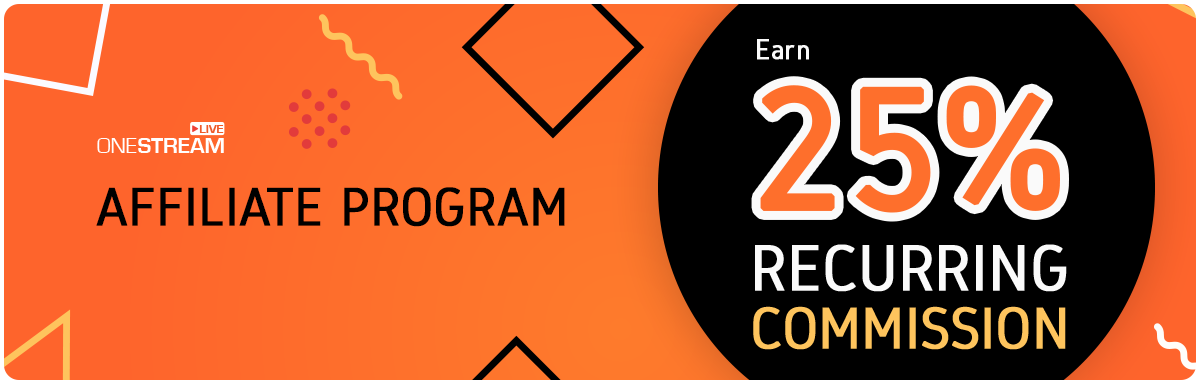
You can earn a 25% recurring commission on every referral purchase when you join the OneStream Live Affiliate Program.
Influencer marketing is another effective approach. Find influencers or popular creators in your niche who have a following that matches your target market.
Read Blog on How to Find Influencers for Live Streaming Collabs?
This could be a YouTuber, Instagram personality, or blogger. Reach out to them to review or mention your digital product.
You might give them free access or negotiate a flat fee. Because consumers trust influencer recommendations more than traditional ads (over 90% do), a genuine endorsement can skyrocket interest in your product.
Always research and choose partners who have a trusted reputation and a relevant audience. A small, engaged audience is often better than a huge but indifferent one.
9. Utilize Content Marketing and SEO
Relevant and good content is very important for attracting customers organically. Content marketing means creating useful, relevant content (like blog posts, articles, videos, or podcasts) that draws people in and builds trust.
SEO ensures the visibility of content on Google and other search engines. Together, these are powerful for selling digital products, because many potential buyers start by searching for information or solutions online.
If your content answers their questions, they are more likely to find you and eventually buy your product. Start a blog on your website and publish articles around your niche of the product.
For example, if you sell digital marketing templates, you can write blog posts on topics like “10 Tips to Improve Your Social Media Graphics” or “How to Save Time with Marketing Templates.” These topics will attract readers who are likely interested in what you offer.
Make sure to naturally incorporate relevant keywords (e.g., “web marketing products” and “digital marketing templates”) so that search engines rank your content. Furthermore, address common questions (think of queries like “what are digital products” or “how to sell digital products” and provide clear answers, which can even get your content featured in snippets or voice search results.)
Don’t just stick to text. Create how-to videos on YouTube and include links to your product in the description, or design infographics that people can easily share on Pinterest.
Diversifying content helps you capture different audiences. Over time, as you publish valuable content, your site will gain authority (Google trusts it) and you’ll see more organic traffic. Content marketing is a slower burn compared to paid ads, but the effects are long-lasting and cost-effective.
Many buyers will research before purchasing. If they keep finding your content and advice during their research, they’ll trust you when it’s time to buy.
Finally, use analytics tools (Google Analytics or similar) to see which content draws the most traffic and where conversions happen. (These web marketing products help you track and refine your strategy.)
What’s the Best GDPR-Compliant Google Analytics Alternative for SaaS Creators in 2025? Find Out!
By monitoring, you can adjust your content topics and SEO tactics to better funnel readers toward your product pages.
10. Invest in Paid Advertising (And Analyze Results)
Sometimes the fastest way to boost sales is to put some budget into advertising. Paid ads can immediately get your digital product in front of the right people.
Two main avenues are search ads and social media ads. With search ads (like Google Ads), you bid on keywords so that when people search those terms, your product appears at the top as a sponsored result.
This is great for targeting intent . For example, if someone searches “best digital products to sell” or “buy workout eBook,” you can show up right when they’re looking to buy.
Social media ads (Facebook, Instagram, YouTube, etc.) allow you to target by demographics and interests. You can run image or video ads that appear in users’ feeds. These help reach people who might not be actively searching but are likely interested based on their profile or behavior.
Learn All About Dynamic Ad Insertion for Live Streamers
Paid advertising can be highly effective. About 76% of people have purchased a product after seeing it advertised on social media, which shows the influence of a well-placed ad. You can start with a modest budget and test different ad creatives and messages.
Also consider retargeting ads: these show your ads to people who visited your website or landing page but didn’t purchase. A gentle reminder can bring them back to buy (“Still interested? Here’s 10% off to complete your purchase!”).
Throughout your advertising efforts, keep an eye on key metrics: cost per click, conversion rate, cost per acquisition, etc. This data will tell you your return on investment.
FAQs about Selling Digital Products Online
Online courses and software tools are among the most profitable digital products due to high demand and low delivery costs.
You can sell digital products by creating a product, setting up an online store or using marketplaces, and promoting it through content or ads.
No, you don’t need an LLC to sell digital products, but having one can protect your assets and improve credibility.
Yes, you can sell for free using platforms like Gumroad (basic plan), Payhip, or through Google Drive and social media with manual payments.
You can promote digital products through email newsletters, affiliate partnerships, lead magnets, content marketing, and community-building on platforms like Discord or Reddit.
Yes, bundling related digital products can boost perceived value, increase average order size, and help you stand out in crowded niches.
Let's Conclude
You don’t need to be a marketing guru or have a million followers to successfully sell digital products online. What you do need is a thoughtful strategy that fits your voice, truly speaks to your target audience, and provides real value at every step.
You have the freedom to create something once and sell it worldwide, as many times as you want. The key to success is using smart, creative strategies to promote and deliver your product.
A multi-faceted approach works best. Build your own store, use social platforms, connect through live streams, and stay in touch with your audience through email.
Remember to always provide value, build trust with your audience, and keep learning from your marketing analytics. With consistent effort and the inventive tactics outlined above, you can turn your digital creations into a thriving online business. Start applying these ideas, experiment to see what works best for your niche, and watch your digital product sales grow!
OneStream Live is a cloud-based live streaming solution to create, schedule, and multistream professional-looking live streams across 45+ social media platforms and the web simultaneously. For content-related queries and feedback, write to us at [email protected]. You’re also welcome to Write for Us!