
Twitch is no longer just a place for gamers. It has grown into a full-blown marketing channel, one that is reported to reach around 35 million daily active users. That is exactly why Twitch Marketing has become harder to ignore in 2026. Brands, indie creators, and corporate giants are all fighting for a slice of that attention.
So how do you actually stand out? Here is a practical, no-fluff guide to building a Twitch marketing strategy that works in 2026.
Twitch Marketing works best when you start with one clear goal before going live.
Twitch is not only for gaming anymore. Brands can reach audiences in music, lifestyle, tech, food, education, and more.
A strong Twitch strategy needs the right audience, a clear channel identity, and a regular content schedule.
Chat, Channel Points, subscriptions, and raids help turn viewers into an active community.
Brands should track real results, not just views. Clicks, conversions, followers, and subscriber retention show what is actually working.
One Twitch stream can become many pieces of content. You can turn it into clips, Reels, YouTube videos, and even pre-recorded live streams.
Why Twitch Still Matters
The numbers don’t lie. Twitch streams collectively rack up around 1.2 billion hours of content watched every single month. That is not a niche audience. That is a massive, active community.
What makes it different from YouTube or Instagram? Live interaction. Viewers talk back. They donate, they subscribe, they react in real time. That dynamic creates trust, and trust converts.
Read Later: How to Verify Twitch Account for Live Streaming
How to Build a Twitch Marketing Strategy That Works
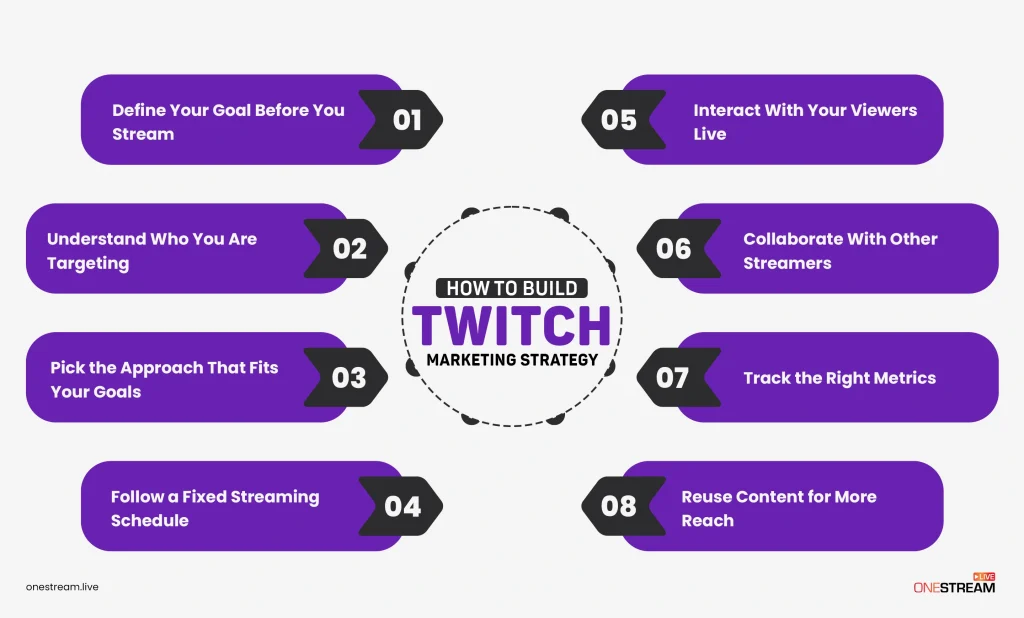
A strong Twitch Marketing strategy starts before you go live. You need to know who you are trying to reach, what you want from the stream, and how each piece of content supports that goal.
1. Define Your Goal Before You Stream a Single Frame
Start with one question: what do you actually want? Brand awareness? Product sales? Community building around a service? The answer shapes everything else.
Don’t try to do all three at once. Pick the primary goal, build your content around it, and measure it religiously.
2. Know Who Watches Twitch in 2026
The platform’s audience has grown beyond gaming. A large part of Twitch is still young, with recent reports showing that around 72% to 73% of users are aged 34 or under. But the audience is not limited to one type of viewer anymore. Categories like Just Chatting, music, creative content, and food streams have helped bring in new communities, too.
Find your niche before you target it. Streaming into the void without understanding your audience is a fast path to zero growth.
3. Choose the Right Type of Twitch Presence
You have three options: become a streamer yourself, partner with existing streamers, or run paid advertising through Twitch’s ad platform. Each has a different cost-to-reach ratio.
Partnering with mid-tier streamers (10,000–100,000 followers) often gives the best ROI. They have loyal, tight-knit audiences, and they charge far less than top-tier names.
4. Protect Your Privacy and Your Audience's
Every Twitch user should take online security seriously. Doxxing, stream sniping, and data exposure are real risks on live platforms, especially as your channel grows.
Using a VPN service while streaming protects your IP address and keeps your location private. A high-level active VPN, like VeePN, also helps avoid ISP throttling, which can directly harm your stream quality. If you haven’t secured your connection yet, get VeePN protection: it’s one of the simplest steps you can take to stream safely in 2026.
5. Build a Content Calendar Around Live Events
Consistency is everything on Twitch. The algorithm rewards streamers who go live on a regular schedule, and audiences build habits around creators they trust.
Plan streams around product launches, gaming release dates, community milestones, or industry events. Spontaneous content has its place, but a calendar keeps momentum going.
6. Craft a Channel Identity That People Remember
Your channel needs three things: a recognizable name, a visual identity (logo, overlays, panels), and a clear “reason to be here.” Generic branding gets scrolled past.
Think about what makes your stream feel like a place rather than just a broadcast. Music, recurring segments, inside jokes with regulars, these are the things that make people come back.
7. Use Chat as a Marketing Tool, Not an Afterthought
The chat window is where the community lives on Twitch. Brands that ignore it are leaving a direct feedback channel completely untapped.
Ask questions. Run polls. Respond to names. Even a simple “shoutout to [username] for the sub” builds the kind of loyalty that no ad spend can replicate.
8. Use Channel Points and Subscriptions
Channel Points let viewers redeem rewards, a subtle but powerful engagement mechanic. Design rewards that promote your product or service naturally. “Redeem for a shoutout” or “Redeem to pick the next game” keeps viewers active and invested.
Subscription tiers are also worth structuring carefully. Offer genuine value at each level. Viewers who pay monthly become your most vocal advocates.
9. Collaborate With Other Streamers
Co-streaming and raids are among the most organic growth tools on the platform. When a streamer ends their session and raids your channel with their audience, that’s free exposure from a trusted source.
Build real relationships in your niche. Comment on streams, show up in communities and offer genuine value before you ask for anything back.
10 Track Metrics That Actually Tell You Something
Twitch’s native analytics give you average concurrent viewers, peak viewers, follower growth, and chat activity. These are your baseline metrics.
But don’t stop there. Track click-through rates on any links you share, conversion rates from affiliate codes, and subscriber retention month over month. Raw view counts are vanity — conversion data is truth.
11. Run Paid Twitch Ads Strategically
Twitch offers display ads, video ads, and homepage takeovers. Video ads run before streams and during natural breaks; they’re skippable after five seconds, so your hook needs to land immediately.
Target by game category, viewer location, and device type. Don’t spread the budget thin across everything. Test one audience segment at a time and scale what works.
12. Repurpose Your Twitch Content Everywhere
Live content shouldn’t die the moment the stream ends. Clip highlights for TikTok and Instagram Reels. Turn long-form VODs into YouTube videos. Quote memorable chat moments for Twitter.
One stream can generate a week of short-form content. That’s the multiplier that most Twitch marketers miss completely.
Pro Tip: Repurposing does not only mean short clips. You can use OneStream Live to turn pre-recorded content into a live stream and broadcast it across multiple platforms.
13. Review What Works and Drop What Doesn't
A good Twitch Marketing strategy is never finished. Review performance weekly. Drop content formats that get low engagement. Double down on what brings in new followers or converts viewers into customers.
The platform changes. Algorithms shift. Audience tastes evolve. The brands and creators who win are the ones who treat their strategy like a living document, not a one-time plan.
Conclusion
Twitch Marketing works best when you stop treating live streams like one-time content. You need a clear goal, a real understanding of your audience, and a reason for people to keep coming back.
The best strategy is simple. Show up consistently, test what works, improve what does not, and turn every stream into more than one piece of content.
Ready to get more from your live content? Use OneStream Live to go live, schedule pre-recorded videos, and multistream across platforms from one place. Keep showing up, reach more viewers, and make every stream work harder.

Frequently Asked Questions
Twitch Marketing is the use of Twitch streams, creators, ads, chat, and live content to promote a brand, product, or community. It works because people are not just watching content. They are reacting, asking questions, and talking with creators in real time.
No. Twitch started with gaming, but it is not only for gaming anymore. Brands in music, tech, education, lifestyle, food, entertainment, and creative fields can also use Twitch to reach active online communities.
Start with one clear goal. Decide if you want brand awareness, sales, community growth, or creator partnerships. Once the goal is clear, it becomes easier to choose your content, schedule, streamer partners, and metrics.
Brands grow faster when they stay consistent, understand their audience, and use chat as part of the experience. Repurposing streams into short clips, YouTube videos, and social posts also helps one live session reach more people.
Yes. Pre-recorded content can still support your Twitch Marketing strategy. You can use OneStream Live to schedule pre-recorded videos as live streams and multistream them across platforms, so your content keeps reaching people without needing a new live session every time.
OneStream Live is a cloud-based live streaming solution to create, schedule, and multistream professional-looking live streams across 45+ social media platforms and the web simultaneously. For content-related queries and feedback, write to us at [email protected]. You’re also welcome to Write for Us!