A live stream is tricky. When you are broadcasting, there are active concurrent viewers commenting in the chat, sharing thoughts, and asking questions. However, all that magic disappears once the stream ends. Interaction drops off, and only some return the next time you go live. So long-term growth is determined not by view count but by the ability to keep the audience engaged. The issue is how to bridge that gap between initial attention and long-term viewer retention.
Among the easiest and most efficient ways to extend the impact of live streams are downloadable resources, like well-structured PDFs. These materials help viewers access key insights long after the broadcast ends and apply what they have learned within different content types. Multi-platform streaming and consistent messaging across channels can shift a one-time stream to a long-lasting asset. But before moving to how it works, it is important to explore viewer retention in the context of live streaming.
What Viewer Retention Really Means in Live Streaming
The viewer retention meaning will vary from industry to industry. In a live streaming context, it’s about the percentage of viewers who stay engaged over time. Many people still misconsider that the number of those clicking on the broadcast is much more important.
The truth is, retention reflects how long viewers watch and whether they return overall. Attention during live streams is a fragile thing. Someone might join out of curiosity but leave in minutes if the content fails to resonate with them. That is why it is critical to know the difference between live stream engagement and sustained audience retention. The first shows how actively viewers participate during the broadcast, which is linked to comments, reactions, polls, or questions. The second measures long-term value, namely the time they stay and whether they come back for future streams.
Streaming platforms typically evaluate retention with:
- Watch time
- Drop-off points
- Average retention rate
The average retention rate represents the percentage of the stream people watch on average. For example, if viewers watch 30 minutes out of a 60-minute stream, the average retention rate is 50%.
What is a good retention rate in live streaming? There is no universal number, but general calculations are:
- 30–40% is common for longer streams
- 50%+ usually signals strong pacing and structure
- Shorter streams tend to achieve higher video retention
Live streams behave differently from edited videos, including pauses, tangents, and unpredictable moments. This explains why understanding patterns often matters more than raw percentages.
Marketing research from HubSpot also highlights that retention metrics such as watch time and drop-off points are key signs of performance and audience engagement. Retention goes beyond counting views. It gives you clarity on whether your content actually keeps people interested.
Why Most Live Streams Struggle With Audience Retention
Many live streams start strong but lose viewers steadily throughout the broadcast. Even if the content has the highest quality, information overload could spoil everything. Creators often share excessive information too quickly, so viewers struggle to follow the discussion and naturally quit.
Another problem making waves is poor structure. Visual elements are decisive in content comprehension. So when viewers don’t see clear sections or transitions, they get lost in the conversation. Live streams also frequently overlook the opportunity for recaps and reinforcement. Even if a person learns valuable insights, they are easy to forget when streams lack summaries. Then comes the most significant issue of all, and this is disappearing content. The moment the stream ends, it simply vanishes into the platform archive, leaving viewers without a follow-up.
Keep in mind that live content is ephemeral unless supported by materials, because even brilliant insights fade quickly without the proper, structured approach. Retention requires reinforcement beyond the broadcast. It is about helping viewers remember and apply what they learned in real life.
Read More: The Invisible Audience: Why View Counts Lie and What to Do About It
Downloadable Resources as a Retention Layer
Downloadable resources are more than just usability. They add a structural layer to your live stream, acting like a bridge between the broadcasted content and the viewer’s ongoing learning or simplified workflow. A downloadable PDF can transform a one-hour discussion into a practical reference guide. Viewers don’t have to catch every word said since it is possible to check the highlights anytime.
These PDFs can include:
- Key takeaways from the stream
- Actionable checklists
- Templates or worksheets
- Frameworks explained during the session
- Additional links or references
These elements help extend the life of the content well beyond the original broadcast. PDFs are particularly effective because they enable consistent formatting from any device with offline access whenever needed. You can expect options of professional presentation and seamless sharing across platforms, too.
A well-designed resource guide gives viewers a reason to stay engaged with your content. That way, they don’t passively consume the stream and gain something tangible that they can use further. Downloadable resources, in this scenario, become vital retention infrastructure rather than an extra bonus.
Structuring a Downloadable PDF for Long-Term Viewer Retention
If you think that downloadable resources are a magic pill for a good retention rate, this is not the case. Not all materials could engage the audience. The matter lies in the structure of the document.
A PDF should feel like a practical guide, not just a collection of notes.
Clear Section Hierarchy
Strong documents are those that users can navigate with no effort. A typical structure might include:
- Title page with the stream topic
- Key takeaways summary
- Expanded explanations of core ideas
- Practical action steps
- Additional resource links
This hierarchy lets viewers quickly scan the content and revisit specific insights later.
Logical Flow
The navigation, whichever great it is, won’t perform without a logical flow. Your downloadable PDF should follow the same narrative arc as the live stream. If the stream introduced a concept, explained it, and then demonstrated how to apply it, the document has to reflect that progression.
Maintaining this logical order strengthens audience retention because viewers can reconnect the document with what they watched. The key rule here is to avoid transcript-style formatting. Walls of text make the document feel overwhelming and discourage reading already at the beginning.
Cohesive File Assembly
The issue of workflow fragmentation appears after the stream ends. Many discover that slides are exported separately, speaker notes exist in a different file, and worksheets are stored independently. This creates massive confusion for viewers.
A better approach is to combine everything into a single structured guide. If your recap materials are spread across multiple exports or slide decks, using a tool that lets you combine PDF files into a single cohesive downloadable document before sharing with your audience can significantly enhance viewer retention.
Alternatively, creators can use a flip book online to turn these static PDFs into interactive, visually engaging guides that are easy to navigate and more appealing for viewers to explore after the stream.
Integrating Downloadables Into Your Live Stream Strategy
Creating a resource guide is only the first stepping stone. If you target high retention views, it needs to become a strategic part of the stream itself.
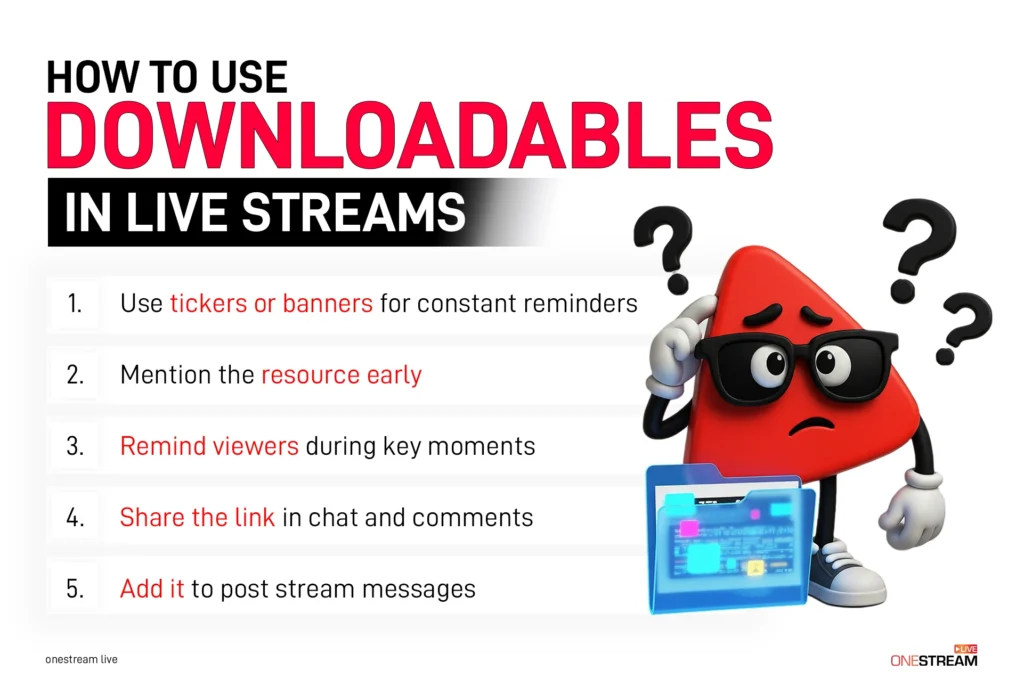
You can start with the mention of the downloadable resource early in the broadcast. This signals to viewers that something meaningful will await them later on. It is also important to remind the audience about the resource when discussing key points. For example, you might say, ‘This framework will be included in the downloadable guide.’
Then take care of trouble-free access to the resource:
- Share the link in the chat
- Pin the link in comments
- Add download to post-stream emails
- Post it in community channels
You can also use tickers or banners through OneStream Live Studio to show a simple message like “Download the guide from the link below.” This keeps reminding viewers without interrupting the stream.
With OneStream Live, you can multistream to 45+ social media platforms and the web at the same time. This makes it easier to share the same download link and message everywhere, so viewers on different platforms get equal access to your resource.
Aligned downloadable resources strengthen video retention across platforms, reinforce brand identity, and simplify content workflows associated with a single document use for all audiences.
Measuring the Impact of Downloadable Resources on Retention
While introducing downloadable resources, you expect measurable results in performance metrics. The easiest way to see the progress is to benchmark watch time data before and after implementing structured PDFs. The increased viewing duration can point to improved live stream engagement.
The next step is monitoring changes in repeat viewership. If people are more likely to return for future broadcasts, it often indicates stronger audience retention. Download analytics, especially tracking clicks, can help you determine whether viewers actually use the provided materials. You should also assess the dynamics of the average retention rate over time for a complete picture. If viewers know they will get structured resources, they may stay longer to fully understand the context behind the document.
The results will vary, of course, but many creators observe reduced drop-off rates and raised post-stream retention views after reinforcement with structured downloadable content.
Also Read: How Smart QR Codes Keep Audience Engaged
Common Mistakes That Reduce Resource Impact
Even well-assembled downloadable resources can fall flat. If you want to see growing retention metrics, you should be aware of the common friction downloadables can create. Mistakes that every creator has experienced at least once:
- Sending viewers multiple scattered files instead of one structured guide
- PDFs that are too large to download without hassle
- Documents overloaded with transcript text
- No clear summary section
- Poor mobile readability
- Overly dense text
- Missing a clear call-to-action within the PDF
Each of these problems affects usability, resulting in low viewer retention. The goal is to make sure your resource is easy to digest, download, and access from any device.
Conclusion
Attention during a live stream fascinates, but it is temporary. Much more important is what happens after. Real growth happens when viewers stay connected to your content over time. That is audience retention, and structured downloadable PDFs are one of the best ways to support it.
Creators who integrate these downloadables into their live streams reinforce key insights, provide practical value, and keep audiences engaged longer across platforms.
OneStream Live makes it easier to stream to multiple platforms at once and share your downloadable resources consistently with every audience.

Frequently Asked Questions
A good retention rate varies based on stream length and format. Many live streams fall between 30 and 40%. Those that are above 50% usually indicate strong structure and pacing.
Start with a structured approach and interaction with viewers. Then incorporate recaps and offer downloadable resources that reinforce the content further in.
This happens because viewers forget the main ideas or can’t access the content after the stream ends.
Yes. A clearly outlined downloadable PDF helps viewers revisit insights and apply what they learned, influencing both video retention and repeat engagement.
You can combine slides, worksheets, and notes into a single resource guide by using tools with the option of merging PDF files before distributing the document.
OneStream Live is a cloud-based live streaming solution to create, schedule, and multistream professional-looking live streams across 45+ social media platforms and the web simultaneously. For content-related queries and feedback, write to us at [email protected]. You’re also welcome to Write for Us!