
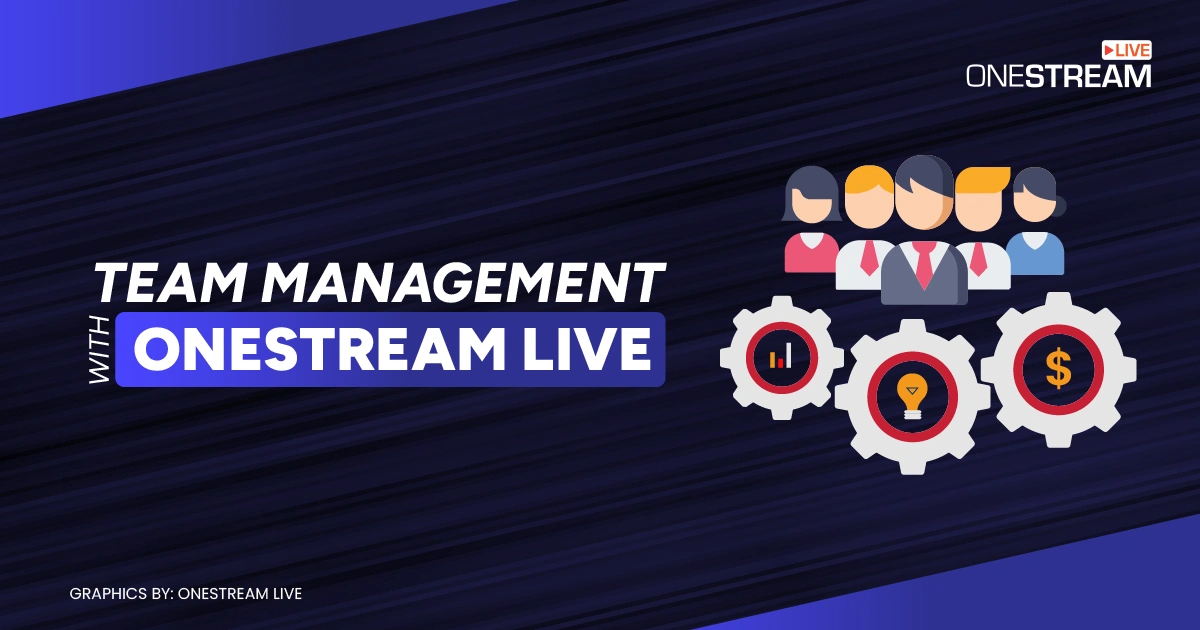
Do you want to focus on your live shows rather than the work of uploading and scheduling every video yourself? The Team Management feature exists for exactly that.
It lets you bring other people into your OneStream Live account and give each of them a clear level of access. They get their own login. You keep your passwords, your billing and your control over who is on the team.
- The Team Management feature lets other people work inside your OneStream Live account without ever holding your social account passwords.
- There are two roles. Admins run almost everything, and Cohosts help run the show itself.
- Neither role can touch billing, subscriptions or the team list. That stays with the owner.
- Invites go out by email, sit as Pending until accepted, and take up one of your seats.
- Roles can be changed later, and removing someone cuts their access straight away.
What is the Team Management Feature?
The Team Management feature is useful when you want someone else to upload videos and run streams for you, but do not want to hand over your credentials.
The person who owns the account is the team owner. Everyone you invite becomes a team member with a role attached. That role decides what they can open, change and broadcast.
Your team lives under Management, then My Team, in the left sidebar. The page shows every member, their role, when they were last active and the date they joined. A counter above the list tracks how many of your seats are in use.
The number of seats depends on your subscription plan. You can also rename the team using the pencil beside its name.
Team Management works in both directions. When somebody invites you into their team, that team shows up in the Other Teams section on the same page, along with the role you were given and the date you joined. You can step away at any point using the Leave option.
Different Types of Team Members
OneStream Live offers two roles, and you pick one for each person as you invite them.
Admin
Admins can perform all actions except managing billing, adding or removing team members, and changing the account owner. This is the role for someone you trust to run the account day to day.
Cohost
Cohosts can edit scheduled events. For Studio events, they can also manage on-screen elements like graphics, banners, guests and comments. This is the role for someone who helps during the show rather than someone who sets it up.
|
Area |
Admin |
Cohost |
|---|---|---|
Streams |
Create, delete, start or stop broadcasts |
Modify existing events only |
Social Platforms |
Connect or disconnect |
No access |
Custom Websites |
Create, modify or delete |
No access |
Stream Players |
Create, modify or delete |
No access |
Stream Keys |
Create, modify or delete |
No access |
Studio |
Upload media, manage attendees and layouts |
Attendees and layouts only |
Live Chat |
Reply to live comments |
Reply to live comments |
My Content |
Full access to all assets |
No access |
Billing and team management |
No access |
No access |
Billing, subscriptions and the team list stay with the owner alone. No role can access them.
How Does the Team Management Feature Work?
Everything happens on one page. Adding people, changing what they can do, and taking access away are all handled from My Team, and none of it takes more than a few clicks.
How to Add a Team Member
Adding someone takes under a minute. You will need their email address and a decision on which role fits them. Follow the steps below.
1
Log in to OneStream Live. On the dashboard, open My Team under Management in the left sidebar.
2
Click Invite Team Member. The counter beside the button shows how many seats are left.
3
Click Invite Team Member. The counter beside the button shows how many seats are left.
4
Enter the person’s email address.
5
Choose Admin or Cohost.
6
Click Invite User. The invitation shows as Pending on the team list until they accept it. Once they do, their name, last active date and join date fill in.
How to Change a Team Member's Role
Hover over the role beside their name, then click the pencil that appears. Pick the new role and it applies right away.
How to Remove a Team Member
Click Remove on the person’s row and confirm. To clear out several people at once, tick the checkboxes on the left and use Remove at the top of the list.
Removing someone cuts their access to your account immediately. They can only get back in if you invite them again.
Pros of Using the Team Management Feature
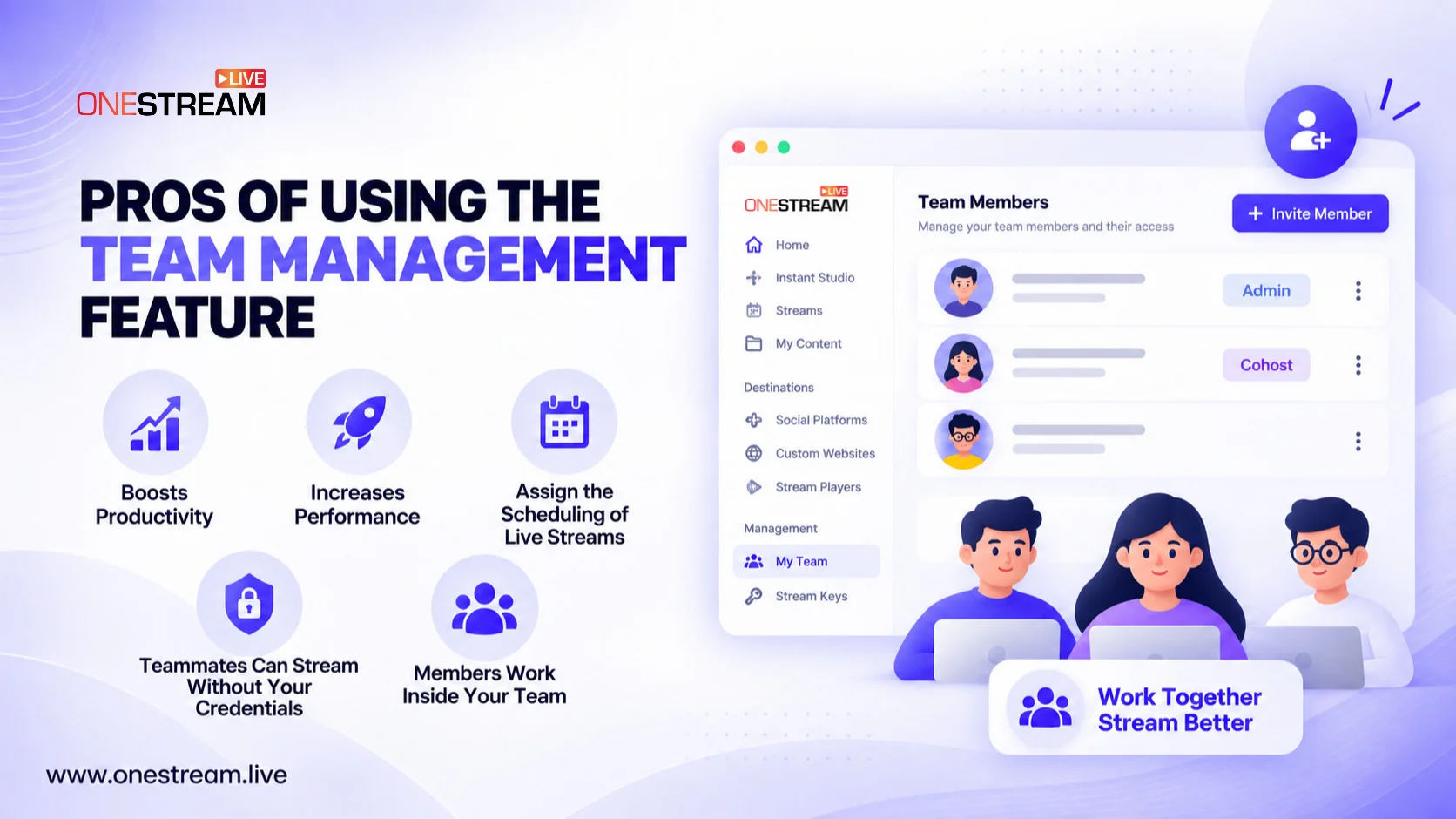
The point of all this is not the invite screen. It is what changes once other people can do the work with you.
Boosts Productivity
Long hours of uploading and scheduling videos stop landing on one person. Tasks get spread across the team, and members can cover for each other when somebody falls behind. The show still goes out on time.
Increases Performance
Once you hand off scheduling, you get your attention back. You can put that time into show quality and running the event itself.
Assign the Scheduling of Live Streams
Your team can upload videos, schedule streams and manage events while you concentrate on delivering the show. An Admin can handle the whole pipeline. A Cohost can step in on the day and keep the on-screen side running.
Teammates Can Stream Without Your Credentials
Sharing social account passwords is the part most streamers dread. Team Management removes the need. Your team connects to nothing directly, and access ends the moment you remove them.
Members Work Inside Your Team
A team member does not need to bring their own paid setup. They work within your team, under the role you assigned, using the plan you already pay for.
Final Word
A good team management strategy helps everyone involved work better and deliver more. The Team Management feature turns that idea into something practical, since you can hand over real work without handing over real risk.
Two roles cover most setups. Admins run the account, Cohosts run the show, and the owner keeps billing and team control. Set the roles once, and the rest of it stays out of your way.
OneStream Live is an all-in-one solution that supports live streaming to 45+ social platforms and the web at the same time, through pre-recorded streaming, through any encoder and straight from OneStream Live Studio.
Ready to stop doing it all yourself? Open My Team, send an invite, and pick the role that fits.
Frequently Asked Questions
What is the difference between an Admin and a Cohost?
An Admin runs the account and can create, delete, start and stop broadcasts, connect social platforms and manage all your content. A Cohost works on the show itself, editing scheduled events and handling on-screen elements during Studio events.
Can a team member see my billing information?
No. Billing, subscriptions and team management sit outside both roles. Only the account owner can access them.
Do team members need their own OneStream Live account?
Yes. Invitations go out by email, and each person signs in with their own login. That is the whole point, since nobody ends up sharing a password.
Can a Cohost start or stop a live broadcast?
No. Cohosts can modify existing events but cannot create, delete, start or stop broadcasts. That belongs to Admins and the owner.
Can I be a member of someone else's team?
Yes. Any team you have been invited into appears under Other Teams on your own Team Management page, with your role listed beside it. You can leave a team from there whenever you want.
OneStream Live is a cloud-based live streaming solution to create, schedule, and multistream professional-looking live streams across 45+ social media platforms and the web simultaneously. For content-related queries and feedback, write to us at [email protected]. If you have a story to share about your live streaming experience with OneStream Live, we would be glad to feature it. You’re also welcome to Write for Us!