
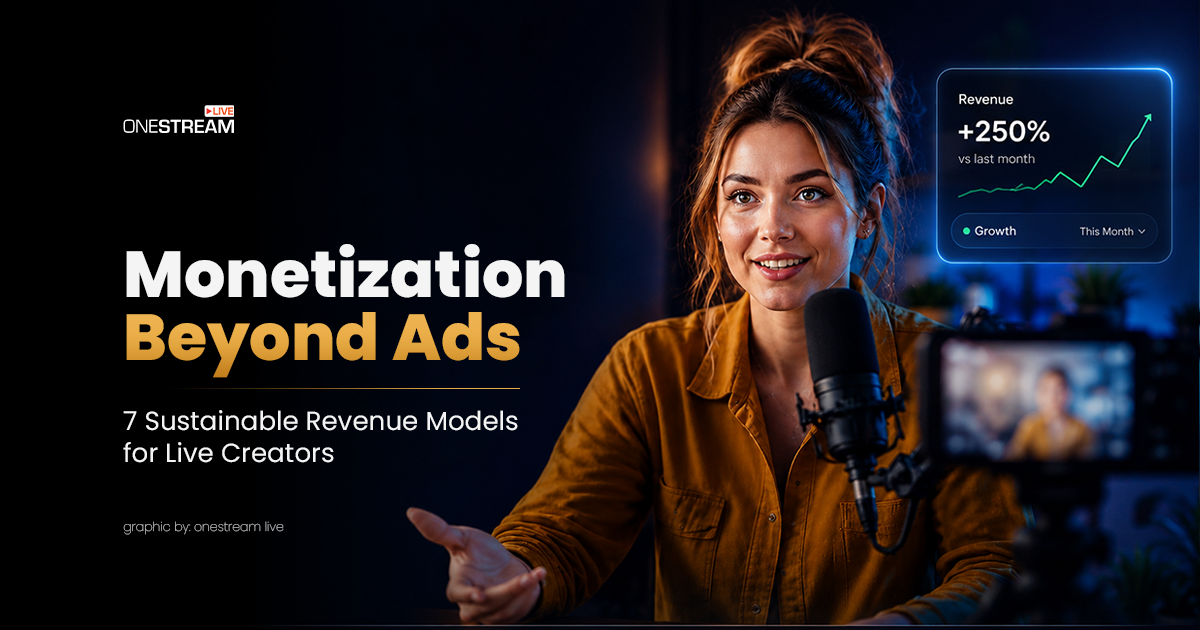
Ask a creator from five years ago how they made money, and the answer was almost always the same. Post content, grow a following, and earn through ads. That playbook still exists, but it is no longer enough. The creators building real, lasting income today are operating very differently.
Because Ad revenue has always been inconsistent. Some months are good. Some are not. Creators cannot decide how ad rates are set or how often their content gets shown; based on this, the earnings can be unpredictable. The upside is that a growing number of creators have figured out a better way. We spent time researching exactly how this is happening and put together seven models that are delivering results for content creators right now. This blog breaks down how do content creators make money in 2026, and our whitepaper covers complete data and practical details on how each model works.
Creator Economy Statistics 2026
- The creator economy is heading toward $480 billion by 2027, and almost none of that growth is coming through ad revenue.
- Between 2023 and 2024, the global creator economy grew by approximately 60.8%, showing rapid expansion.
- The global affiliate marketing industry is valued at $18.5 billion and is on track to reach $31.7 billion by 2031
- More than two million creators are now pulling in six-figure annual incomes directly from their content.
- The creator economy is on track to reach $1,345.54 billion by 2033, growing at a compound annual rate of 23%.
- Individual creators were responsible for nearly 60 cents of every dollar generated in the market in 2024.
So how much do content creators make when they move beyond ads? More than most people would guess, because the possibilities are endless.
How to Make Money From Content Creation
Most creators start in the same place: great content, a growing audience, and the assumption that ad revenue will eventually kick in and make it all worthwhile. For a small number of people, it does. For most, it does not even come close.
However, ads are not the only option now. Content creator monetization has increased significantly, and creators who have figured out the system are generating income that is more stable than ad revenue. Our whitepaper pinpoints seven ways to make money as a content creator beyond ads. Here is an overview:
1. Live Shopping and Product Sales
Most online shopping is a solitary experience. You find a product page, read a description, look at some photos, and try to figure out if it is actually worth buying. You either take the risk or move on. Live shopping changes that completely. Creators who have not explored live shopping as a revenue channel are already missing a major shift in online commerce.
2. Affiliate Marketing
Most creators already recommend products in their videos without earning a single penny. Affiliate marketing simply means that digital creators get paid for the influence they already have. No products, no stock, just a link and a recommendation is all it takes to earn money through this model. Our whitepaper identifies the four most profitable niches for affiliate marketing in 2026, including one that most creators overlook entirely.
3. Brand Sponsorships
Brands have shifted what they are willing to pay for. Reach used to be the metric that mattered most. In 2026, brands are more focused on trust and engagement, and that is where creators who have built genuine relationships with audience have a real advantage.
4. Digital Products
Templates, guides, toolkits, resource packs. Digital products solve a specific problem once and can be sold indefinitely. There are no shipping costs, no inventory limits, and the profit margins are unlike almost anything else a creator can sell. The whitepaper breaks down why digital products carry 70 to 90 percent profit margins and how creators are selling them live without it feeling like a pitch.
5. Online Courses and Workshops
Audiences who trust a creator do not just want more content. At some point they want to go deeper. Courses and live workshops meet that demand at a price point that reflects real learning value rather than entertainment value.
6. Donations, Tips, and Virtual Gifts
This approach does not get enough credit because people think it only works for creators with a huge following. In reality, micro creators generate more support than large ones do. It comes down to how present a creator is, not how popular.
7. Merchandise
People buy merch from creators they love because it says something about who they are. It is not just a hoodie. It is a way of showing the world what they are into and who they stand with. Creators who get this do not just open a shop and wait. They launch products live, make it feel like an event, and give their audience a reason to show up and buy on the spot.
This Is Just the Surface
So now you have a clearer picture of how content creators make money in 2026. But what you have read here is just the outline.
In our white paper, every model is broken down with full market data and a clear view of how creators at every stage are applying them right now.
If you are just starting to figure out how to become a content creator, or you are already live and trying to build something more reliable than ad revenue, this is where you will find the real deal. The income models that actually compound over time are not something you can cover in a blog post. They are all in the whitepaper. Worth reading before your next stream.
Frequently Asked Questions
Content creators primarily make money through sponsorships, affiliate marketing, direct fan support, ad revenue, and the sale of digital products or services.
Creators leverage live streaming by engaging in live commerce, offering exclusive content, accepting tips and donations, and promoting products in real time.
Subscription platforms like Patreon and OnlyFans allow creators to earn recurring income by offering premium, exclusive content to paying subscribers.
Yes, creators can sell digital art, limited-edition content, and exclusive experiences as NFTs, creating a new source of income from their community.
Brand partnerships provide content creators with lucrative deals in which they promote products or services in exchange for compensation, often through sponsored posts or collaborations.
OneStream Live is a cloud-based live streaming solution to create, schedule, and multistream professional-looking live streams across 45+ social media platforms and the web simultaneously. For content-related queries and feedback, write to us at [email protected]. You’re also welcome to Write for Us!