
Do you still consider the “Leadership” role as someone who moves things fast? Yes, moving faster may feel like the right choice to compete with your rivals, but what about the people behind the progress? The people who actually help you achieve this pace? That’s something a smart leader wouldn’t ignore. We know that with new tools emerging, markets getting saturated, leaders feel a constant pressure to balance speed and data, which often pushes human-centric leadership to the backseat.
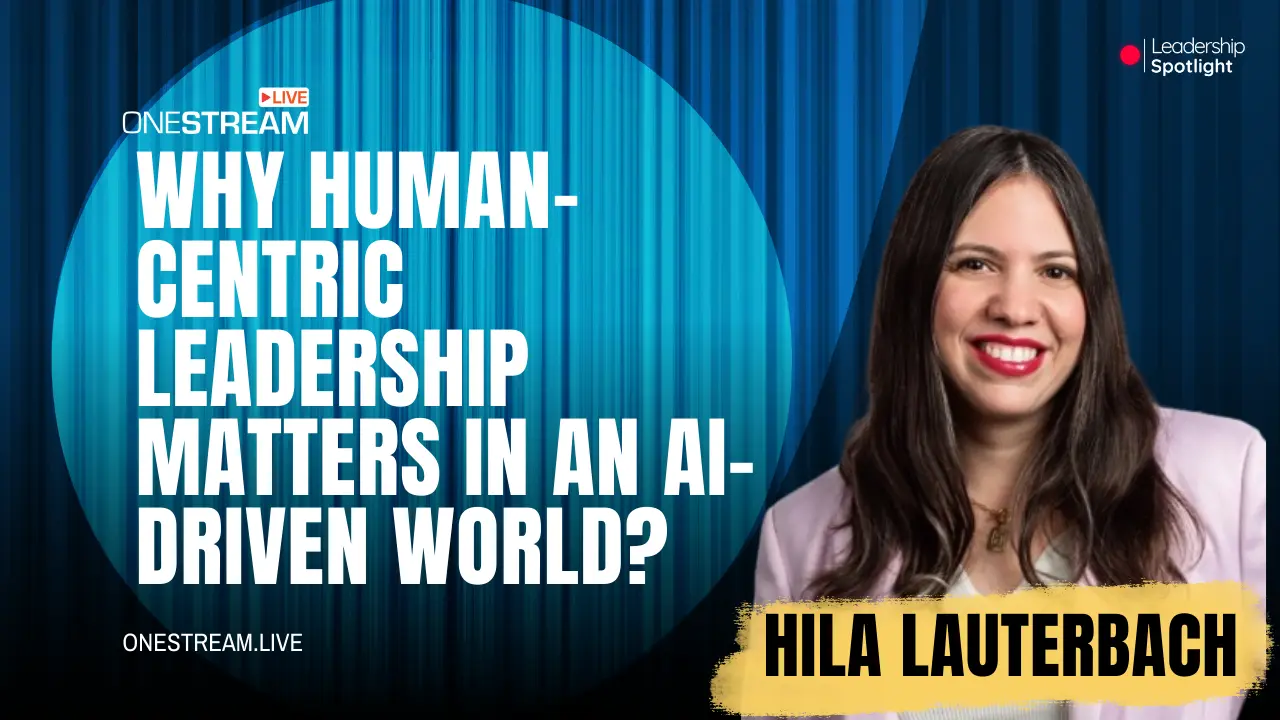
But just so you don’t let it slide, we launched the Leadership Spotlight series, where we talk with experienced leaders on such important topics. For episode 2, we invited Hila Lauterbach, co-founder of 10xGTM, three-time startup founder, AI marketing thought leader and advisor to high-growth SaaS and AI-native companies.
Considering that Hila has worked closely with founders, CROs, and CEOs, we asked her to share her insights about how leaders navigate through these challenges.
- Human-centric leadership enables sustainable scale, helping teams grow without losing trust, alignment, or accountability.
- Human-centric innovation happens when leaders prioritize people, judgment, and context—not just speed or efficiency.
- Scaling successfully requires leaders to shift from “doing” to enabling autonomy, ownership, and decision-making across teams.
- Data and AI can support growth, but leadership credibility still comes from empathy, clarity, and consistent values.
- A practical AI leadership framework supports better decisions, but its people-first thinking turns insight into lasting impact.
What Human-Centric Leadership Really Means
Human-centric approach isn’t being “soft.” Instead, it’s about bringing clarity, leading with direction and creating space for teams to perform at their best without being overwhelmed with the change.
In a world of KPIs and dashboards, leaders still need to:
- Set clear expectations
- Empower teams to own outcomes
- Build trust instead of enforcing control
- Encourage experimentation without fear
According to Hila’s experience with leaders, the strong leaders don’t waste their time on micromanaging execution. Instead, they channel their energy towards creating an environment where people can make smart decisions and take accountability for them.
What Human-Centric Leadership Looks Like in Practice – Hila’s Insights
If you couldn’t catch episode 2 live, we still have you covered. Here are some valuable lessons we got from Hila in the episode.
1. Scaling Breaks Leadership—Not Teams
This is the biggest insight from the conversion, which is simple but a little uncomfortable: most scaling problems aren’t operational – they’re leadership problems.
The early-stage leaders usually focus on speed, control and intuition. But as teams grow, these habits can actually slow everything down. That’s because leaders who are involved in literally everything end up creating unintentional bottlenecks that affect the trust in the workplace.
Hila says that growth often breaks when leaders are stuck in their role or when they try to manage the scale with the same playbook that worked at the start.
2. AI as a Growth Enabler—Not a Leadership Replacement
We tap AI (artificial intelligence) for almost everything today. The tools are now used for AI leadership strategies, experimentation, forecasting, and performance tracking. With all this happening, Hila emphasizes one point:
Artificial Intelligence in leadership can help with:
- Identifying patterns faster
- Testing ideas more efficiently
- Making data-informed decisions
But despite all this, the responsibility still sits with humans. That’s because if a leader starts hiding behind the tools, they risk losing context, trust and accountability.
3. Scaling Globally Requires Rethinking Leadership
There always comes a point where an organization is no longer about a single region or culture. The global talent is hired, and new cultures make the workplace, but this also brings some complexities for leaders. That’s because the human-directed mindset that once worked may not be effective in a global organization.
At this stage, Hila highlights common challenges leaders struggle with:
- Misaligned decision-making across regions
- Over-centralization that slows teams down
- Cultural blind spots
- Lack of leadership layers with real ownership
So you shouldn’t confuse scaling globally with adding more rules. Instead, as a leader, you should be focusing on better leadership structures, clearer communication, and shared accountability.
AI Challenges and Opportunities for Leadership
AI leadership effectiveness can’t be ignored; it can be useful only when used appropriately. Here’s what Hila pictures human-centered artificial intelligence in practice:
Key Opportunities for Leaders
- Better Decisions: AI helps analyze complex data and surface insights leaders might miss.
- Strategic Focus: Automation frees leaders from operational noise.
- Faster Experimentation: Ideas can be tested, refined, and validated quickly.
- Scalable Growth: AI enables efficiency across GTM, operations, and planning.
- Future-Ready Teams: Leaders who adopt AI thoughtfully build adaptable organizations.
Key Challenges to Watch
- Moving faster than leadership capabilities evolve
- Over-reliance on data without human context
- Treating AI as a shortcut instead of a tool
- Scaling systems without scaling trust
Final Verdict – The Right Human Centric Strategy for Leaders
Scaling becomes problematic not because of technology but because leaders are adapting. Our conversation with Hila has helped us understand: leaders who scale successfully are the ones who remain true to their values. They lead and empower teams with trust and clarity, and this helps them design a system that supports people instead of overwhelming them.
You can leverage the power of automation, data and AI to accelerate your decisions, but you can’t use it to replace judgment, empathy or accountability. These are leadership responsibilities and will always remain.
Watch the Full Leadership Spotlight Episode 2 with Hila Lauterbach.
FAQs
It’s leading with judgment, empathy, and accountability while using AI as a tool, not a substitute for responsibility.
Because AI can optimize tasks, but only humans can earn trust, set ethical boundaries, and make values-based tradeoffs.
Automate the repetitive, then spend the saved time on coaching, clarity, and real conversations that actually move people.
You get faster decisions, sure, but you also get bias, blind spots, and nobody to own the fallout when it goes wrong.
Strengthen critical thinking, emotional intelligence, and communication so you can translate data into directions people will follow.
OneStream Live is a cloud-based live streaming solution to create, schedule, and multistream professional-looking live streams across 45+ social media platforms and the web simultaneously. For content-related queries and feedback, write to us at [email protected]. You’re also welcome to Write for Us!