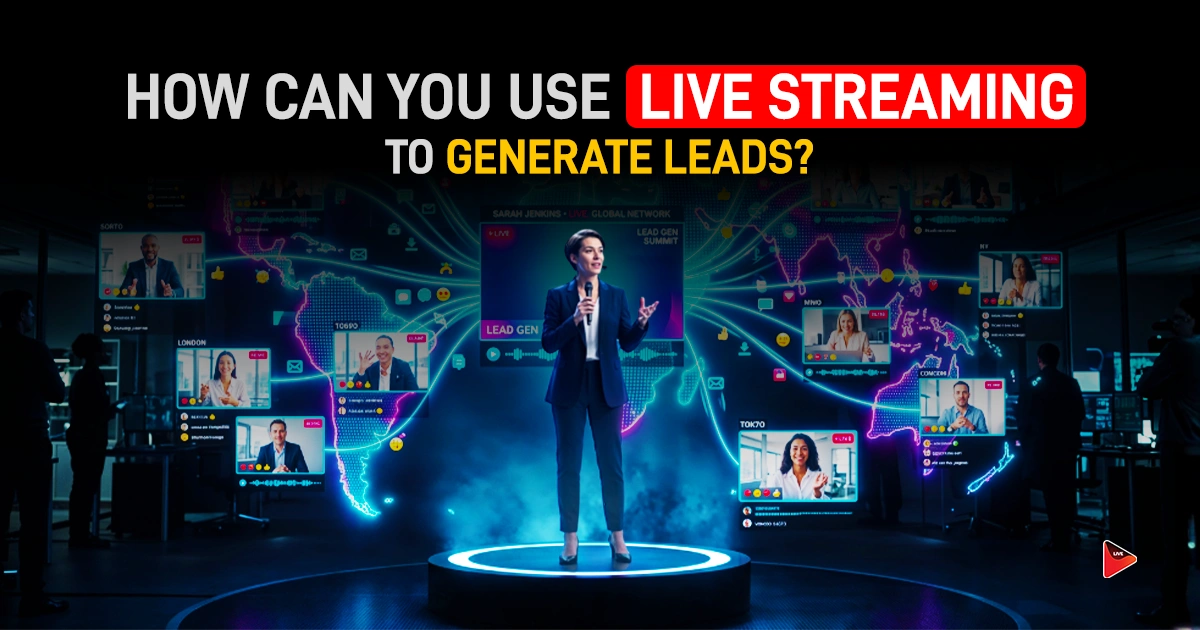

Many brands treat live streaming like a visibility play. They go live, talk for an hour, post the replay, and hope interest turns into revenue later. That rarely works on its own. If the goal is to generate leads, a stream needs more structure. A stream needs a clear topic, a defined audience, and a reason for viewers to take the next step. That is true for solo consultants, software companies, ecommerce brands, agencies, and educators alike.
A good stream gives sales teams something far more useful than cold names on a list. It gives them context. They can see who watched, who asked questions, who clicked, and who showed buying intent in public. When handled well, live streaming becomes less of a broadcast tactic and more of a pipeline builder.
Live streaming works best when it is designed to generate leads, not just increase visibility. A clear goal and a defined audience make every session more effective.
A focused topic that solves one specific problem attracts higher-quality viewers and improves conversion potential.
Strong calls to action guide viewers toward the next step and turn engagement into measurable results.
Real-time interaction, such as comments and questions, helps identify high-intent prospects and supports better lead qualification.
Consistent follow-up and multi-platform streaming increase reach, strengthen engagement, and help generate leads more reliably over time.
Proven Strategies to Generate Leads With Live Streaming
Live streaming becomes a reliable lead generation channel when it is built with clear intent and structure. These strategies show how to turn real-time engagement into qualified leads and measurable business results.
1. Treat Live Streaming as a Lead Qualification Tool
Many companies approach live streaming as a branding tactic first and a lead tactic second. That order usually limits results. A stronger approach is to build each stream around a sales outcome from the start. Teams that already invest in sales lead-generation services can use live video to attract warmer prospects, address common objections publicly, and give buyers a reason to raise their hand before a one-on-one sales conversation begins.
This also makes live content a smart asset for an outsourced sales agency. Sales reps perform better when they enter conversations with context, not just contact data. A live stream can reveal what prospects care about, which pain points get the strongest response, and which viewers show buying intent through comments, clicks, and follow-up questions. That creates a more informed handoff from marketing to sales and helps teams focus on leads that already show interest.
The key is to stop thinking of a stream as a standalone event. It should function like a live qualification tool. The topic should target a clear problem. The host should guide viewers toward a next step. The offer should match the discussion. When those parts line up, live streaming stops being a general awareness exercise and starts working as a practical way to bring better leads into the pipeline.
2. Start With a Lead Goal, Not a Content Idea
The live stream should begin with one business goal. That sounds obvious, but many teams skip this part. They pick a broad topic, go live, and then try to force a call to action into the last two minutes. Viewers can feel that.
A stronger approach is to decide what kind of lead you want before you plan the session. Do you want demo requests, newsletter signups, booked calls, webinar registrations, free trial users, or replies from qualified buyers? Each goal creates a different kind of stream.
That decision shapes the format. A product demo works well if your goal is trial signups. A live Q&A fits high-consideration services. A training session or mini-workshop can attract mid-funnel prospects who need proof before speaking with sales. A customer case breakdown can pull in buyers who need reassurance that your offer works in real-world conditions. The mistake is trying to make one stream do everything at once.
Once the goal is clear, build the session backward from the conversion step. If the stream should drive consultation calls, then your talking points should surface the pain, show the process, and remove friction around booking.
If the goal is email capture, then the stream should make the resource feel useful enough to claim right away. This kind of planning helps generate leads for business by keeping the content focused, relevant, and conversion-driven without feeling pushy.
Read More: How to Turn DMs Into Client Leads
3. Build the Stream Around One Specific Problem
Lead-generating streams perform best when they solve a narrow problem for a defined group. This is a core principle in live streaming marketing, where precision often leads to better engagement and higher conversions.
Broad titles attract broad attention, and broad attention often converts poorly. “How to grow your business online” sounds vague. “How local service brands can turn live video into booked consultations” sounds like it was made for a specific audience. Precision helps the right viewers show up and helps the host speak in a more convincing voice.
That focus also improves retention. People stay longer when they can tell the stream was built for them. A live audience does not need every answer. It needs the right answer to the right problem. That is why the most effective lead-generation streams often feel more like guided working sessions than polished presentations. They solve one issue, show a path forward, and create enough trust for the next step.
This is where your offer should naturally enter the conversation. Do not wait until the final seconds and suddenly switch into sales mode. Mention the result viewers can get by taking the next step. Refer to it when you explain the problem.
Refer to it again when you show the solution. Then close with a direct invitation that matches the stream topic. That rhythm fits well within both live streaming marketing and video marketing lead generation, and it feels more human and far less forced.
4. Expand Reach Without Splitting Your Team’s Attention
One of the fastest ways to waste a strong live event is to show up on only one platform when your audience is scattered across several. Prospects do not all watch in the same place. Some prefer YouTube. Some spend more time on Facebook or LinkedIn. Some discover brands through embedded video on a company website. If your team has to choose one channel every time, you shrink your own opportunity before the stream even begins.
Multichannel streaming does more than increase views. It creates more entry points into your funnel. A prospect who ignores your email may still catch your live session on YouTube. Another may find it on your site. Another may click in from Facebook because the timing happened to fit.
The strategic advantage is not only scale. It is efficiency. Instead of creating separate live plans for separate channels, you can run one strong event and distribute it broadly. That makes lead generation more repeatable. Your team spends its energy improving the offer, talking points, conversion path, and follow-up sequence instead of rebuilding the same event from scratch on each platform.
5. Use Hosted Live Pages and Calls to Action to Capture Intent
The biggest lead-generation mistake in live streaming is sending viewers away without a focused next step. If the stream ends and the audience has to hunt for the offer, many of them will disappear. Friction kills momentum. You want the path from interest to action to feel immediate and easy.
A smart way to fix that is to give the stream its own conversion environment. OneStream Live’s Hosted Live Pages are especially useful here because they let brands create a personalized page for the live event and add a clickable call to action that can collect emails, feedback, responses, or other lead details. That changes the role of the stream. It stops being only a content event and starts functioning more like a live landing page.
This is a strong fit for product launches, lead magnets, workshops, consultations, waitlists, and limited-time offers. You can promote the live page before the event, direct viewers there during the event, and keep the call to action aligned with the topic. That creates tighter message match. A viewer hears the pitch, sees the value, and clicks in the same environment. For lead generation, that is far better than sending traffic through a maze of profile links and generic homepages.
6. Treat Real-Time Engagement Like Sales Discovery
Most brands think of live chat as an engagement feature. It is more than that. Done right, it acts like real-time market research and early-stage sales discovery. The questions viewers ask tell you what they care about, what they fear, and what keeps them from moving forward. Those signals are gold. They reveal objections before a sales rep ever gets on a call.
That is why a fast, organized response matters. OneStream Live’s Unified Chat brings messages and comments from multiple platforms into one window. From a lead-generation perspective, that solves a serious problem. If your audience is spread across channels, scattered conversations can cost you real opportunities. A great question on one platform can go unanswered while your team watches another tab. Centralized chat reduces that risk and helps you keep the conversation moving.
Use that feature with intention. Flag repeated objections. Note the exact language viewers use. Watch for people asking about pricing, implementation, timing, or “can this work for my business?” questions. Those are not casual comments. They are signs of buying intent. After the stream, those patterns can shape your follow-up emails, sales scripts, retargeting copy, and the topic of your next event.
7. Use Pre-Recorded Live Streams to Build a Repeatable Funnel
A lot of teams assume lead generation through live video demands a fresh live appearance every week. That can work, but it is hard to sustain. The better long-term model is to build a repeatable system. One strong presentation can continue to generate leads if it is well-structured, updated as needed, and distributed with purpose.
This is where pre-recorded live streaming becomes useful. OneStream Live supports scheduling pre-recorded streams in advance, which gives marketers more control over timing, production quality, and campaign planning. That matters when your goal is lead generation, not casual engagement. A pre-recorded session lets you tighten the message, improve pacing, sharpen the offer, and place the CTA exactly where it belongs. Then you can schedule it for the times your audience is most likely to respond.
That strategy works especially well for evergreen topics. Think of onboarding sessions, product walkthroughs, training classes, FAQ events, and niche educational talks that stay relevant over time. You can promote the event like a live experience, route people to a focused landing page, engage in chat during the broadcast, and gather leads without reinventing the content every single time. For small teams, this can turn live streaming from a labor-heavy project into a reliable lead engine.
Read More: Using Pre-recorded Live Video Streaming for Business Growth
8. Follow Up Fast and Score Leads by Behavior
The stream itself is only part of the revenue story. The follow-up is where much of the real value shows up. Someone who watched for twenty minutes, clicked your CTA, and asked a detailed question is very different from someone who dropped in for thirty seconds. If you treat both contacts the same way, you lose the nuance that live content gives you for free.
A strong post-stream workflow should rank leads by behavior. Who stayed longest? Who clicked? Who commented? Who asked product questions? Who returned for a second event? That level of detail helps sales teams prioritize smarter. It also helps marketing write better follow-ups. A person who asked about pricing needs a different email from someone who only downloaded a checklist.
Speed matters here. Reach out while the stream is still fresh in their mind. Send the replay, the promised resource, or the booking link on the same day if possible. Reference the topic they joined for. Answer the question they raised. Keep the tone direct and useful. Live streaming creates a rare moment of attention in a crowded market. Good follow-up turns that attention into a real pipeline asset.
Generate Leads with Live Streaming
Live streaming delivers real results when it is built around a clear goal, a focused topic, and a strong next step. It is not just about showing up live. It is about creating a structured experience that moves viewers from interest to action. When done right, every session becomes an opportunity to generate leads with intent and context.
OneStream Live makes this process easier by helping you stream across multiple platforms, manage engagement, and guide viewers toward conversion in one place. Start using OneStream Live to turn your live streams into a reliable system that helps you generate leads consistently.

Frequently Asked Questions
Live streaming does more than build visibility. It gives you real engagement signals that help identify high-quality prospects. When viewers join, ask questions, and interact in real time, you gain insight into their needs and intent. This makes it easier to generate leads that are already informed and interested, not just passive viewers.
Start with a clear goal, such as demo bookings or email signups. Build the stream around that outcome and focus on one specific problem for a defined audience. Guide viewers toward a clear next step to improve engagement and conversions.
A call to action is essential in live streaming because it guides viewers toward the next step and helps convert engagement into leads. Without a clear CTA, even interested viewers may leave without taking action. A well-placed CTA that matches the stream topic can improve lead generation and drive measurable results.
Live streaming helps qualify leads by revealing real-time audience behavior and engagement. Actions like watch time, comments, and interactions indicate interest level and buying intent. These insights allow businesses to identify high-quality prospects and prioritize leads more effectively.
Follow-up plays a critical role in turning live streaming engagement into actual leads and conversions. Timely communication, such as sharing replays, answering questions, and offering next steps, keeps prospects engaged. Segmenting leads based on behavior also improves targeting and increases conversion rates.
OneStream Live is a cloud-based live streaming solution to create, schedule, and multistream professional-looking live streams across 45+ social media platforms and the web simultaneously. For content-related queries and feedback, write to us at [email protected]. You’re also welcome to Write for Us!