
Live streaming may not be new, but it’s growing more accessible and attractive all the time. Thanks to platforms like Instagram and YouTube, more and more businesses use live video to promote new products, highlight special events, or simply provide their customers with behind-the-scenes content. To do that safely, they need to know how to legally stream content.
If you’re looking to live stream content on behalf of your Limited Liability Company (LLC), there are a number of factors you’ll want to consider, including basic marketing and branding strategy. Don’t forget that there are legal implications to live streaming, as well. Indeed, live streaming introduces a range of legal complexities, from privacy concerns to the use of copyrighted material.
If you own an LLC, you’re no stranger to legal questions. The legality of streaming can be especially complicated, but in this post, we’ll highlight a few of the most salient considerations.
Key Takeaways:
- To legally stream content as a business, you need the rights or permission for the music and other copyrighted work in your stream, the people you feature, and the places you film.
- On YouTube, if your live stream is removed for copyright, your channel gets a copyright strike and can’t live stream for 7 days.
- Using someone’s face or name to promote your business without permission can break right of publicity laws.
- About 11 US states generally require everyone’s consent before a private conversation is recorded.
- An LLC protects your personal assets in most instances, but it won’t stop a takedown, a strike, or a lawsuit.

Streaming from Your LLC: Core Considerations
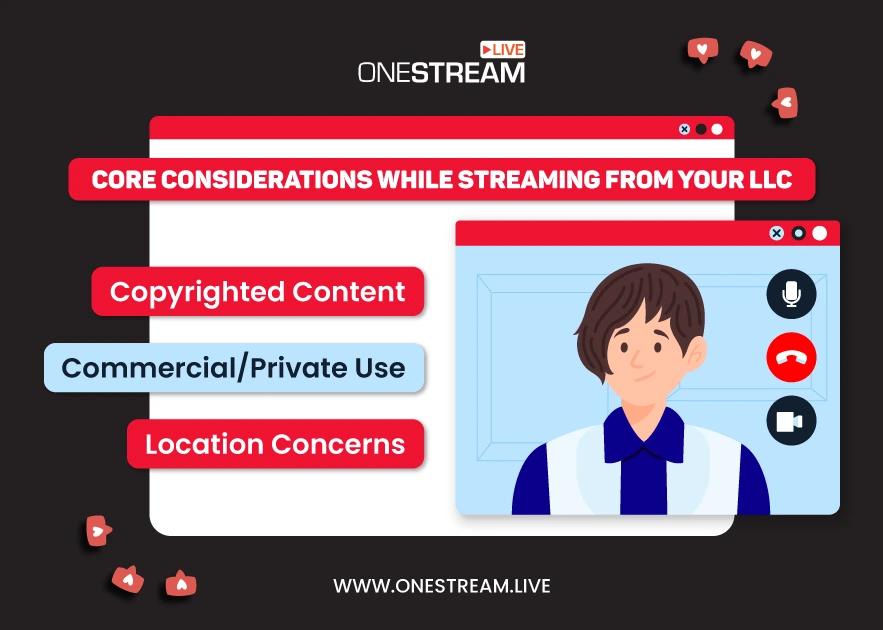
Copyrighted Content
No matter which live streaming service you use, whether Instagram or YouTube, you’re going to agree to terms of service promising that you won’t violate anyone else’s copyright.
What does this mean in practical terms? For one thing, if you use copyrighted music in the background of your live stream (without obtaining a proper commercial license), then you’re not only violating those terms of service, but you’re potentially breaching intellectual property laws, as well.
Music is the most obvious example of copyrighted material that may be used in a live stream, but there are plenty of other examples, as well. For example, LLC owners may not think much about copyrighted artwork, posters, or a TV playing in the background of their streaming content.
Of course, if you record something in advance and stream it later, you can edit out or pixelate copyrighted content. (You may see this happen sometimes on news broadcasts or reality TV programs.) With live streaming, however, there is no such option… and inadvertently displaying any kind of copyrighted content may expose your LLC to certain legal risks.
With OneStream Live, you can upload the edited video and schedule it as a pre-recorded live stream, so your audience still gets a scheduled live event.
Read More: A Complete Guide to Legal Issues in Live Streaming
Commercial/Private Use
If you’re streaming something for commercial use, there are a host of legal issues that can arise. These go beyond copyright materials to include privacy laws, publicity laws, location releases, and even laws related to loitering.
As businesses expand their use of live streaming across regulated operations, compliance obligations often extend beyond copyright to include privacy, data governance, and industry-specific regulations. In these situations, regulatory and compliance law experts can help organizations strengthen compliance programs and reduce legal and operational risk.
Additionally, live streaming something where there are other people in the background can potentially land you in legal peril. That’s one reason why TV shows and movies hire people to be “extras,” rather than just using actual passersby.
Again, it’s important to be aware that live streams offer no way to “edit” your content, which makes it important to do your due diligence and avoid streaming anything that could infringe upon another person’s rights.
Read More: 5 Ways Businesses are Using Live Streaming
Location Concerns
Irrespective of whether you’re streaming for personal reasons or for commercial use, it’s critical to ensure that you actually have permission to be at the location where you’re filming. If you’re streaming from your LLC headquarters or storefront, that makes things easy. But if you go on location elsewhere, there are some legal questions that may come up.
Even public locations can be tricky. For example, you can stream from a public street, but you are legally prohibited from obstructing traffic. Similarly, courthouses and schools are considered to be public spaces, yet there are legal limitations in place to safeguard the privacy and confidentiality of others.
For commercial use, many cities and municipalities require a film permit, especially once you bring more than a handheld camera. In New York City, for example, a handheld camera on a sidewalk doesn’t need a permit, but extra equipment, parking for production vehicles, or exclusive use of city property does. Running afoul of these permitting requirements may result in fines or even trespassing charges, so that’s something for every live streaming LLC to be aware of.
Privacy and Right of Publicity
In legal terms, privacy refers to the right to control information about yourself, irrespective of how it’s shared. Meanwhile, the right of publicity refers to every person’s right to protect their name and likeness from being used for exploitative, commercial purposes. In the US, the right of publicity is largely protected by state law, so the rules vary from state to state.
These rights sometimes overlap, but sometimes one is present when the other is not. For example, say you’re a customer, dining at your favorite local ice cream shop. You don’t necessarily have privacy rights in this scenario, as you’ve chosen to come to a public location, but you do have a right to protect your face and name from being used commercially without your permission. Meanwhile, if you went to use the ice cream shop’s restroom, you would obviously have the legal expectation of privacy, even though you’re technically in a public place.
These are important distinctions for LLC owners to keep in mind as they consider the possibility of live streaming from their place of business, especially if their live stream would involve customers in any way.
Get a Video Release Form From Anyone You Feature
If a customer, guest, or employee will be a clear part of your stream, ask them to sign a video release form first. Keep it short and cover:
- Who is giving permission
- Where the footage will appear (the live stream, replays, ads, or social clips)
- How long you can use it
- A signature and date, plus a parent or guardian’s signature for anyone under 18
Tell People Before You Stream a Conversation
Streaming a private conversation, like a customer call or a team meeting, can fall under recording laws. Most states only require one person’s consent, but about 11 states, including California, Florida, and Illinois, generally require consent from everyone in the conversation.
The easy fix is to tell everyone they’re live before you start. If you bring guests into OneStream Live Studio, the Guest Lobby keeps them waiting until you admit them, which gives you a natural moment to confirm they’re happy to go live.
How LLCs Offer Legal Protections
Any business owner can wind up streaming in a way that violates the law, often out of sheer ignorance or accident. Sometimes, this will involve people bringing lawsuits against the company, which can obviously be unwelcome.
This is an area where the LLC structure comes in handy. In fact, the LLC is one of the most popular business structures in the country, precisely because of the legal liability safeguards.
More specifically, an LLC creates a clear separation between the business and the business owner, meaning that you can keep your personal assets distinct from your business assets. Most states follow these general rules for LLC protections. For example, Florida LLCs benefit from a straightforward formation process, with no annual report fee required in the first year. If you’re still forming yours, you may also be wondering how long does LLC approval take? The answer varies by state.
The upshot is that, if somebody brings a lawsuit against your company due to a live stream (or anything else), an LLC protects you from personal liability in most instances. That keeps personal assets like your family car or the home you share with your spouse separate from the business. Keeping business and personal finances apart helps keep that protection in place. However, an LLC won’t stop a takedown, a copyright strike, or the lawsuit itself.
Streaming the Legal Way
From acquiring commercial permits to understanding right of publicity laws, there are countless ways for LLCs to protect against legal conflict as they live stream. Be sure you understand the legal dimensions of live streaming, and consult with your business attorney if you have specific questions or concerns.
Frequently Asked Questions
Is it illegal to film people in public for a business live stream?
Filming people in public is generally legal in the US, because there’s little expectation of privacy in public places. Featuring someone to promote your business is different, as it can fall under right of publicity laws. Get a signed release from anyone you feature, and never stream spaces like restrooms.
Can you play music on YouTube Live?
You can play music on YouTube Live only if you own it, it’s in the public domain, or you have a license that covers streaming. If YouTube removes your active live stream for copyright, your channel gets a copyright strike and loses live streaming access for 7 days.
What is a copyright strike?
A copyright strike is a penalty a platform like YouTube places on a channel after a valid copyright takedown request. On YouTube, a strike expires after 90 days if you complete Copyright School and have fewer than three strikes, but three strikes within 90 days can get the channel terminated.
Do you need a film permit to live stream in public?
It depends on your city and your setup. Many cities require a film permit for commercial filming once you use more than a handheld camera. In New York City, for example, a handheld camera on a sidewalk needs no permit, but extra equipment, parking for production vehicles, or exclusive use of city property does.
Does an LLC protect me if my live stream gets my business sued?
In most instances, yes. An LLC protects your personal assets, like your home and savings, from the business’s liabilities, and keeping business and personal finances separate helps keep that protection in place. It won’t stop the lawsuit itself, so clear your music, people, and locations before you go live.
OneStream Live is a cloud-based live streaming solution to create, schedule, and multistream professional-looking live streams across 45+ social media platforms and the web simultaneously. For content-related queries and feedback, write to us at [email protected]. If you have a story to share about your live streaming experience with OneStream Live, we would be glad to feature it. You're also welcome to Write for Us!