
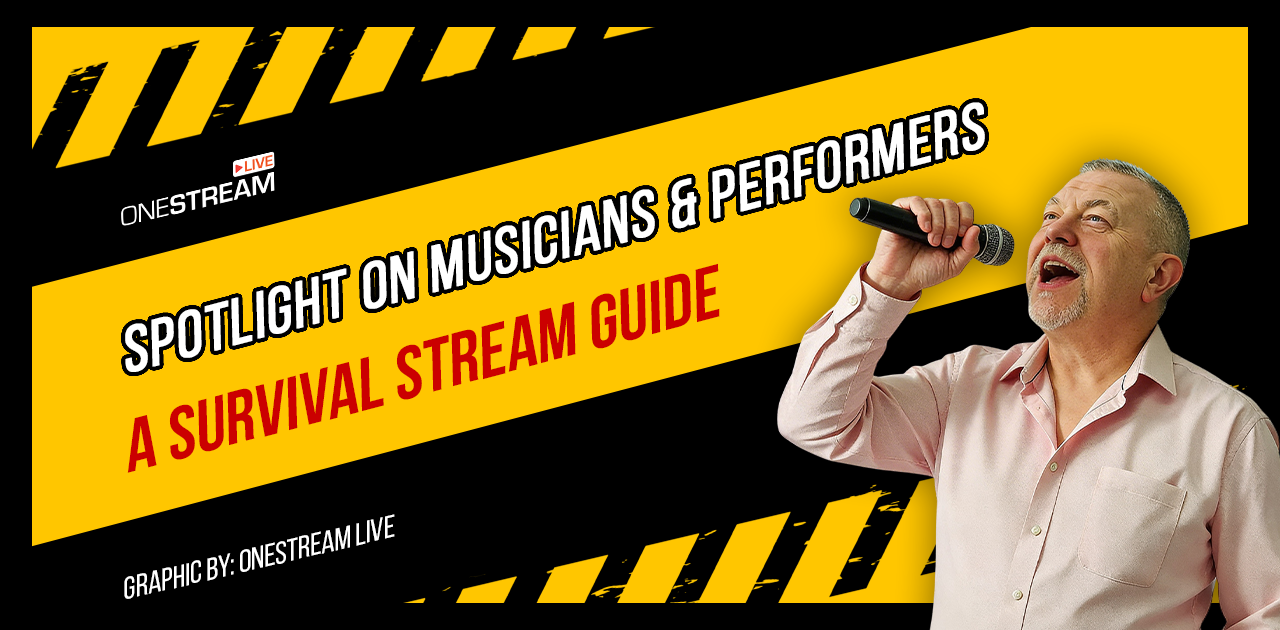
Musicians & performers love their craft, but in 2026, joy can turn into pressure. In Episode 3 of our Survival Stream series (courtesy of OneStream Live), Joe Sheppard talks with singer-songwriter Mark Tween about this very tension: how do creative artists stay visible without burning out?
It turns out the problem isn’t talent or stage presence, but the grind of constant streaming. We’ll explore why so many gifted musicians quietly step back from social media, and how to build a sustainable live streaming strategy. Along the way we’ll drop in real stats and success stories (like 80% of fans willing to pay for live-streamed gigs) to keep it practical, not theoretical.
The Hidden Cost of Constant Visibility
Live streaming for musicians can feel like juggling flaming torches while riding a unicycle. You’re expected to be always on with a new gig, new track, new TikTok, and if you miss one beat, someone might scroll past.
But the real toll is the relentless demand on creative energy. Berklee College of Music warns that digital burnout causes “mental, physical, and emotional exhaustion” for artists forced to constantly produce online content.
Talented performers don’t fail at streaming, they run out of steam. They may be at the top of their craft, but the passion dries up. This is actually a state psychologists call anhedonia, the loss of joy in something you used to love.
This is basically overload. Musicians juggling recordings, gigs, and 24/7 fan engagement are essentially on tour every waking hour. The lines between “work time” and “free time” vanish when your phone is live and your camera is always rolling.
As Joe noted with Mark Tween, it’s not about algorithms or tech—it’s about asking better questions: How can musicians stay visible and stay sane? That is the heart of survival in the streaming era.
Why Musicians & Performers Step Back: Mark Tween’s Story
Let’s take a look at Mark Tween’s journey. A pub singer by trade, he built a thriving online following during lockdown by streaming weekly gigs. His warm, acoustic performances lit up living rooms worldwide.
Yet at some point, Mark realized the grind of endless streams was killing the fun. He didn’t burn out from lack of audience, quite the opposite. He stepped away deliberately to recharge. Now, he’s completely off social media. No TikTok. No Instagram Live.
Mark’s story is a cautionary tale. He’s not a fringe case becausr many performers feel the same pressure. During our live chat, he admitted that constant visibility can feel like being under a microscope: “You love your music, but after months of streaming, it felt like I was chasing likes instead of notes.”
This is exactly the “quiet burnout” Joe talked about. It hides behind slogging through “consistency”: the advice to post daily, stream weekly, engage nonstop.
What’s rarely discussed is the emotional cost of that “more is more” mindset. Artists start editing videos late into the night, they compare their numbers to others and feel inferior, they worry any break means they’ll be forgotten. The content creator’s life can become so overwhelming that even a sell-out digital concert can feel empty if it means another 10 tabs open in a browser and zero rest.
OneStream Live’s own data suggests creators choke under “platform overload.” Across niches, folks juggle editors, schedulers, analytics, and six different social accounts. No wonder many wish they could just hit pause.
Simplify to Survive: One Setup Beats Many
The answer is to streamline. Instead of 10 streaming tools, pick one reliable workflow. Instead of reinventing the wheel each week, stabilize your setup.
OneStream Live has built-in features for this: you can multistream to 45+ platforms at once (YouTube, Facebook, Instagram, your own site). That means one stream, one setup, everywhere. Forget obsessively switching encoders or looping through sites. The time-saved can be spent on songwriting or just sleep.
For example, OneStream Live’s advanced scheduler lets you pre-record a high-quality set and broadcast it later as a “live” concert. Bands have started booking virtual shows in advance, then recording in a good take and letting the platform handle the rest.
Multistreaming is another sanity-saver. Instead of streaming on just one channel, go live on all your channels at once (even embed on your website).
Creators report it maximizes exposure and builds a larger audience while using the same single-camera setup. Joe’s message in Episode 3: simplify.
Build one reliable streaming rig (camera, mic, lighting, OBS or OneStream Live dashboard) and stick with it. When you hit “Go Live,” you should know the next three hours won’t involve technical surprises.
Practical gear tip: you don’t need Hollywood equipment. As an audio engineer user noted:

Similarly, any decent webcam or phone, a USB mic, and a basic lighting rig can do wonders. The key is consistency: once you have a setup that works, keep it. Taglines like “one setup, one process, one rhythm” are survival strategy.
Community Over Algorithms: Grow Fans, Not Frustration
Here’s what this really means: focus on your fans, not chasing some ever-moving trend. In 2026, community trumps algorithm. Why? Because algorithms shift constantly, but a real community sticks.
Data backs this up: Luminate’s U.S. music survey found that 46% of Gen Z men say livestreamed performances are a great way to connect with an artist they like. Meanwhile, 59% of “super fans” (the hardcore supporters) said they’d attend a virtual show, vs only 24% of general audience. In short: those fans will show up for you, even if the algorithm doesn’t drop you on every feed.
So instead of staring at likes, talk to your crowd. Use features like OneStream Live’s unified chat to engage everyone at once. For example, answer song requests, give virtual shout-outs, or do mini Q&As mid-show. These connections build a fanbase that feels personal. And once you have those fans, they’ll promote you for free – the most authentic word-of-mouth there is.
Another tip from the first Survival Stream episode is to piggy-back on big events. If there’s a music festival, holiday, or pop culture moment coming up, theme your stream around it.
It could be as simple as “Live gig on Record Store Day” or “Valentine’s Day acoustic love songs.” These hooks give people an extra reason to tune in and share (everyone’s talking about the Super Bowl or Eurovision anyway).
Finally, repurpose your streams. Each live show isn’t just a one-off. Clip the best moments and post them as teasers on TikTok, Reels or YouTube Shorts. These bite-sized videos draw new eyes to your full concerts.
Read 9 Creative Ways to Repurpose Your Live Videos for New Audiences
Pro Tip: virtual gigs often spark clips more than IRL shows, because fans watch from home with phones at the ready.
Remember, survival means consistency beats complexity. You’re better off streaming once a week on a set schedule, with a solid mini-plan, than winging it every day with burnout looming. Your audience will learn to expect you, and that regular hook-up does wonders for growth.
Practical Setup & Monetization Tips
How do you turn this strategy into practice? Start with your live streaming setup. You don’t need to break the bank. Even a mid-range USB mic and a smartphone on a tripod can deliver good audio/video.
OneStream Live’s Hosted Live Pages feature can embed your stream into a custom webpage, giving it polish and making it easy to share everywhere (even direct email blasts). This reduces headaches: you can send people one link that streams to all platforms.
Use background visuals to keep it interesting: a simple backdrop or your actual living room can feel intimate and authentic. Chat with your viewers as they type questions. If you want lyrics on screen or visual flair, tools like OneStream Live’s teleprompter or multi-camera support let you switch angles or slides easily. That way the tech hums along quietly, and you do what you love: perform.
Monetization deserves a dedicated paragraph. Live music streams can pay the bills if done right. Fans are eager to support artists: one survey found 80% of music fans would pay to watch a livestream if it helps their favorite musician.
Indeed, during lockdowns, over 20% of artists considered charging via ticketing or tipping for their streams. Today, many platforms make it easy: YouTube and Facebook allow ads or donations on music streams. Bandcamp and even Bandcamp’s new ticketing tool let you sell virtual show tickets. Twitch and Patreon fans tip generously too.
The key is to be fair and transparent. If you want to monetize, try a mix: one free stream a month to engage new listeners, and one paid concert where you deliver something extra – maybe a setlist of hits or a VIP Q&A.
Platforms like Maestro or StageIt specialize in ticketed shows for indie artists. Whatever route you choose, do your homework on licensing (covers and sync licenses apply online just like offline). Also remind viewers that every ticket or tip directly funds your next creative project.
As Joe emphasizes, the right solution here is repurpose-first: record that killer live performance and slice it into content. Sell the main event once, then reuse clips, stories, and longer footage across your channels.
Thriving Beyond the Stage
Looking ahead to 2026, the “survival shift” for musicians & performers is clear: simplify your tech, stabilize your workflow, and lean into community. In the music world, people connect over melody and rhythm. When you focus on that human core, you sidestep burnout traps.
OneStream Live is not a silver bullet, it’s just a tool to remove friction. Its multistreaming and scheduling features mean you won’t rebuild your setup from scratch for every stream.
A solid plan and a single, repeatable workflow give you breathing room. That’s how the truly sustainable artists operate: one setup, one process, one rhythm and not dozens of fleeting trends.
As Mark and Joe discussed, survival is about protecting your creative energy. An artist who preserves her joy can build a career that lasts, even if the stage lights are virtual.
So set a schedule you can keep (even if it’s just twice a month), pick reliable tech (like a platform that handles the streaming for you), and engage each fan deeply. By the end of the year, you may find that “going live” feels as natural and rewarding as playing a local gig.
In short: make your live streams a sustainable part of your art, not a second job. The gigs, fans, and yes – the income – will follow.

Frequently Asked Questions
Yes, live streaming is worth it for musicians in 2026 if it is structured properly. Musicians using OneStream Live with multistreaming and scheduling tools can reach global audiences without touring costs, provided they maintain a sustainable schedule.
Musicians grow audience online by reducing frequency and increasing structure. Instead of streaming daily, follow a rhythm: one live performance, one highlight clip, and one short per week. Platforms like YouTube Live, Facebook Live, and OneStream Live Hosted Live Pages allow controlled distribution without constant posting pressure.
The best live streaming platform for musicians depends on control and distribution needs. For multistreaming concerts to YouTube, Facebook, LinkedIn, and a website simultaneously, OneStream Live offers browser-based Studio, RTMP integration, and Hosted Live Pages. For single-platform streaming, native YouTube Live is sufficient but limits reach.
To stream live music online with professional audio, musicians should use an external microphone, an audio interface or mixing desk, and connect through RTMP tools like OBS or directly via OneStream Live Studio. Conduct private sound checks before broadcasting. Audio clarity influences retention more than camera quality.
Yes, musicians can monetize live music streaming through ticketed virtual concerts, Patreon memberships, digital tip jars, and merchandise links. Using OneStream Live Embed Player with a CTA button allows direct monetization without relying solely on platform algorithms.
OneStream Live is a cloud-based live streaming solution to create, schedule, and multistream professional-looking live streams across 45+ social media platforms and the web simultaneously. For content-related queries and feedback, write to us at [email protected]. You’re also welcome to Write for Us!