
If you’re a live streamer, you’ve probably heard the term “stream key” more times than you can count. But what exactly is it, and why does it matter so much? Whether you’re gearing up for a live stream on Twitch, YouTube, TikTok, or Instagram or planning to use RTMP streaming, understanding how a streaming key works is crucial.
In this ultimate guide, we’ll walk you through everything you need about stream keys, how to get one for various platforms, and how OneStream Live, a versatile platform that provides a middle ground for live broadcasting to multiple destinations simultaneously, can make your streaming experience seamless.
What is a Stream Key?
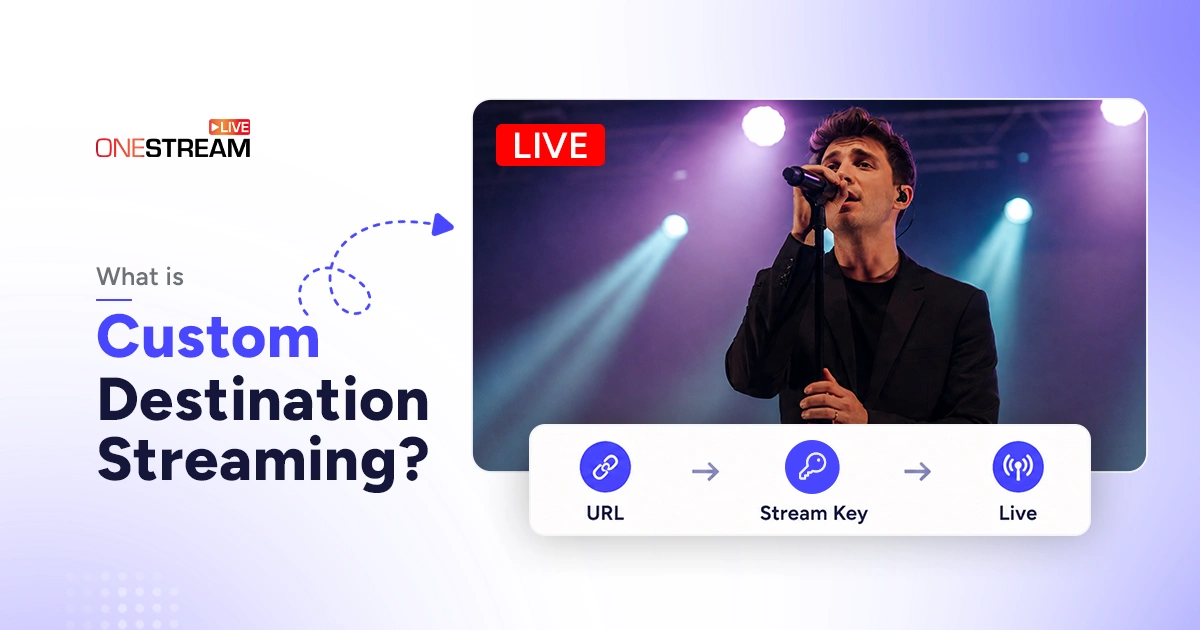
A stream key is a digital handshake between your streaming software and the broadcasting platform. It becomes your unique language that conveys to the platform that a stream is about to arrive.
Once you input the key into your streaming tool, the platform receives your video and audio feed, making your live content viewable. Without a stream key, your live streaming software wouldn’t know where to send the data.
It’s like dialing the correct phone number to make a call. You would need the exact key to connect to your desired social platform.
How to Get a Stream Key for Different Platforms
1: Stream Key for Twitch
Getting your Twitch streaming key is a straightforward process. Simply log into your account, open the “Creator Dashboard” from your profile, head to the “Settings” section, and click “Stream.”
Here, you’ll find your streaming key. Copy the key and ingest it into your streaming software.
Twitch provides a permanent stream key, meaning you can use the same key for multiple streams unless you reset it for security or other reasons.
2: Stream Key for YouTube
Obtaining a streaming key from YouTube is a different yet simple process. Firstly, log in to your YouTube channel and open the YouTube Studio. Next, it is time to click the “Create” button and choose the “Go Live” option.
Under the “Stream Settings” section, you’ll find your key. Fetch the key and paste it into your streaming software.
YouTube grants you flexibility depending on your preferences, giving you a reusable key for regular streams or generating a unique key for individual live sessions.
3: TikTok Live Stream Key
TikTok does not randomly give everyone with an account access to the streaming key. Instead, it has specific requirements that may vary from region to region.
This criteria includes having a minimum number of followers and an age limitation. Once your requirements are met, you can open TikTok Live Studio and log in to your account.
Navigate to the settings section to find your TikTok live streaming key and server URL. These details can then be used to set up your live stream through streaming software.
4: Instagram Stream Key
To get your Instagram stream key, log into your Instagram account on a computer. Click the “Create” button (the plus sign) and select the “Live Video” option.
After that, give your live video a title and choose your audience settings. Once done, click “Next,” and you’ll see your Instagram Stream URL and Streaming Key displayed on the screen. You must fetch a fresh key from Instagram every time before going live since it generates a new key for each live broadcast.
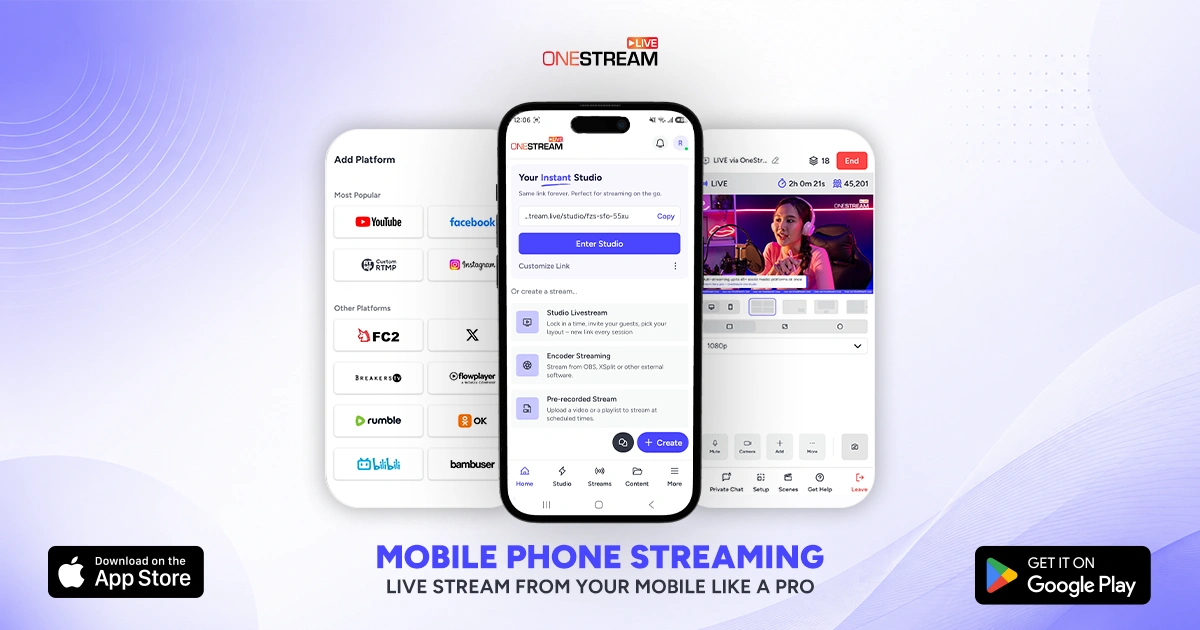
After obtaining the server URL and the key, use OneStream Live to connect multiple Custom RTMP accounts and multistream to them simultaneously.
Using Stream Keys with OneStream Live
OneStream Live provides a middle ground for live broadcasting to multiple destinations simultaneously, with a Stream Key feature built for third-party encoders like OBS, XSplit, and Zoom.
Every account starts with a Default Key, and you can create and manage additional keys for different streaming needs, each one editable by name and protocol.
Stream Key section gives you:
- Multiple keys: create and manage multiple stream keys, alongside your Default Key.
- Protocol flexibility: choose RTMP, RTMPS, SRT, or WHIP to match your encoder setup.
- Real-time monitoring: check the status, signal state, and associated events for each key directly from the page.
- Instant regeneration: need a new key? Regenerate it on the spot, with the option to update your encoder configuration right away.
- Backup Stream Key: Users can add a backup key that runs alongside the primary. If the primary connection drops, the backup automatically takes over, keeping the broadcast running with minimal interruption.
Read More: Video Streaming Protocols Explained: RTMP(S), SRT & WHIP
1
How to Find Your Primary Stream Key
Log into your OneStream Live dashboard.
2
Click Encoder Streaming.
3
Your Primary Key and Server URL are displayed on the main panel. Copy both into your encoder (OBS, XSplit, Zoom, etc.).
1
How to Use Your Backup Stream Key
Log into your OneStream Live dashboard.
2
Click Encoder Streaming.
3
Open Settings beneath your default key and go to Advanced Settings.
4
Copy the Backup Key and the Server URL together and paste them in your encoder.
Closing Thoughts
Understanding the whole stream key phenomena might seem overwhelming initially; however, you can make the best use of it and make your live streaming journey much smoother. The possibilities are limitless; for one minute, you’re broadcasting to Twitch and YouTube, while for another, you are shifting to TikTok and Instagram or using RTMP to stream on custom platforms. Having the right stream key is essential. With platforms like OneStream Live, managing your streams becomes a breeze. Whether you prefer using a permanent streaming key for recurring streams or a unique one for added security, OneStream Live can meet all your streaming needs.
Ready to go live? Grab your streaming key, fire up your streaming software, and let the world see what you offer!
Frequently Asked Questions
What is a stream key and why do I need one?
A stream key is a unique code that links your streaming software, such as OBS or XSplit, to your account on a platform like Twitch or YouTube. Without it, your encoder has no idea where to send your video and audio, so your live stream never reaches your audience.
Is it safe to share my stream key?
No. Anyone with your stream key can broadcast directly to your channel, and viewers will assume the content came from you. Keep it private, hide it when you share your screen, and regenerate it right away if you think it leaked, then paste the new key into your encoder before your next stream.
Does my stream key change every time I go live?
It depends on the platform. Twitch keeps the same stream key until you reset it. YouTube lets you pick a reusable key or a new one per stream. Instagram creates a fresh key for every broadcast, so you must copy it again before each session. Checking this before you go live saves you from a failed connection.
Can I use one stream key to go live on multiple platforms?
Not directly, since each platform’s key only sends your feed to that one destination. The easier route is to connect your encoder to OneStream Live with a single key, then let it push your broadcast to 45+ social platforms and custom RTMP destinations at the same time. You manage everything from one dashboard.
What happens if my stream disconnects during a live broadcast?
With a standard setup, your stream simply stops until you reconnect. OneStream Live solves this with a Backup Stream Key that runs alongside your primary key. If the primary connection drops, the backup takes over automatically, so your audience keeps watching with minimal interruption. You set it up under Advanced Settings in Encoder Streaming.
OneStream Live is a cloud-based live streaming solution to create, schedule, and multistream professional-looking live streams across 45+ social media platforms and the web simultaneously. For content-related queries and feedback, write to us at [email protected]. If you have a story to share about your live streaming experience with OneStream Live, we would be glad to feature it. You’re also welcome to Write for Us!