
Live streaming is the future of brand management and marketing. Marketers have adopted this strategy to connect with the target audience and present their brands and products more personally. The previous culture of creating fast-paced ads and flashy billboards as a marketing strategy has evolved. The digital marketing landscape today is characterized by live streams as a mainstream tool for brand building, and for all the good reasons.
Live streaming has become the number one medium for brand awareness. As per statistics, 89% of people confess that videos persuade them to purchase a product from the brand. It has been witnessed that companies that use videos for marketing experience an increase in dwell time by 88% and organic search traffic by 157%.
However, live streaming is not an elixir that will boost your brand or product overnight. A foolproof content strategy is required to achieve the marketing goals, and a content plan is the key ingredient of that content strategy. In this blog, we will help you learn how to plan the best content for live streaming to amplify viewership and achieve the marketing goal.
- A well-structured content plan helps you stay consistent, organized, and aligned with your brand goals.
- Using smart live stream planning tips ensures your sessions are high-quality, engaging, and relevant to your audience.
- Choosing the right equipment, platforms, formats, and timing maximizes reach and promoting live streams becomes easier.
- Understanding the best times to go live stream enables better visibility and audience engagement.
- Tools like OneStream Live streamline scheduling, multistreaming, and automation to help you scale your live streaming efforts effortlessly.
Why Most Live Streams Fail (And How Planning Fixes It)
You need a solid content strategy to promote your product, brand, or online show. A roadmap to your brand or organization’s live streaming content will assist in producing quality content in less time.
Formulating a content plan ahead of time will enable you to keep up with the objective of the live streams and stay organized. Your content plan will define your marketing goals and help you reach them.
Imagine that your favorite show was broadcasted without planning. It would be chaos. The same effort must be put into promoting your live performance, and a proper content plan must be prepared in advance to accomplish it.
A live streaming content plan will help you stay consistent. Live streaming regularly by following a proper schedule helps with the reach of the content and boosts viewership in a short period.
How to Plan Live Stream Content
Creating a live streaming content plan is not as complex as it seems. Here are a few tips to help create a powerful live streaming content plan.

Select the Best Equipment for Live Streaming
After the entire effort, delivering a high-quality live stream is the optimum goal. The execution of your content planning depends largely on the quality with which it will be delivered. You must invest in gadgets with excellent results to achieve a high-quality stream. The live streaming equipment does not have to be pricey to get a perfect result; intermediate-quality live streaming equipment will do the work.
The most important pieces of equipment required for live streaming are:
- Laptop or Computer
- Camera
- Microphone
- Audio mixer
- Lighting
- Live streaming solution
Know your Audience
The most important tip is knowing the audience’s demands. You should deliver content that resonates with your audience. You can lose views on live streams and prospective clients if the content does not speak to the audience. To have the proper knowledge about this, you can start stalking your competitors. Dig into their comments sections and find out what they aren’t answering. This will give you ideas of what needs to be included in your content.
Pro-Tip: Do proper research on the target audience and use that data to create content around it.
Formulate Live streaming Content Ideas
Create live streaming content ideas that answer your audience’s questions and deliver the key point of your brand. Live streaming aims to connect with the audience and prove your product works in real-time. But staying consistent is crucial, so good live streaming content ideas must be put in a draft beforehand. Some of the best content ideas are:
- Live Q&A Sessions
- Hosting webinars and Interviews
- Presenting your product during the live stream
- Live Shopping
- Product Demos
- Reaction Videos
- Behind The Scenes
Pro-Tip: Plan the best content ideas that match your brand’s or organization’s tone and include useful insights your audience demands.
Choose the Best Live Streaming Platform
You must analyze which social platform provides you with more reach. Live streaming on a social platform that does not have the maximum target audience is burning daylight, and each platform can offer you a different audience. Choose any one live streaming platform or go live on multiple social platforms using the multistreaming feature offered by OneStream Live.
Here are a few points that will help you in choosing the best live streaming platform:
- Specify your niche and the type of content that you will be live streaming. This will help you find your target audience and, in return, assist you in choosing a platform for live streaming.
- Choose the most used live streaming social platforms like YouTube, Facebook, X(Twitter), Twitch, Instagram, TikTok, etc. LinkedIn Live is also a great option if you have B2B audience, its currently the highest ROI platform for business.
- Choose a service that allows you to go live on multiple social platforms at once.
Pro-Tip: Vouch for OneStream Live as the most optimal live streaming solution that allows multistreaming to more than 45 social media and the web simultaneously.
Know the Ideal Time & Rate for Live Streaming
Identify the time zone of your audience and broadcast your live streams during active hours. Check the analytics to learn when your audience is active and engaging on your live streams to select the ideal time.
Your live stream should be delivered at least once a week on a set day and time. Going live daily can be impromptu but requires more preparation and less quality content.
Pro-Tip: Divide your target audience into time zones and devise your content plan accordingly.
Read: Tracking Social Media Engagement Analytics for your Live Streams
Follow a Schedule and Be Consistent
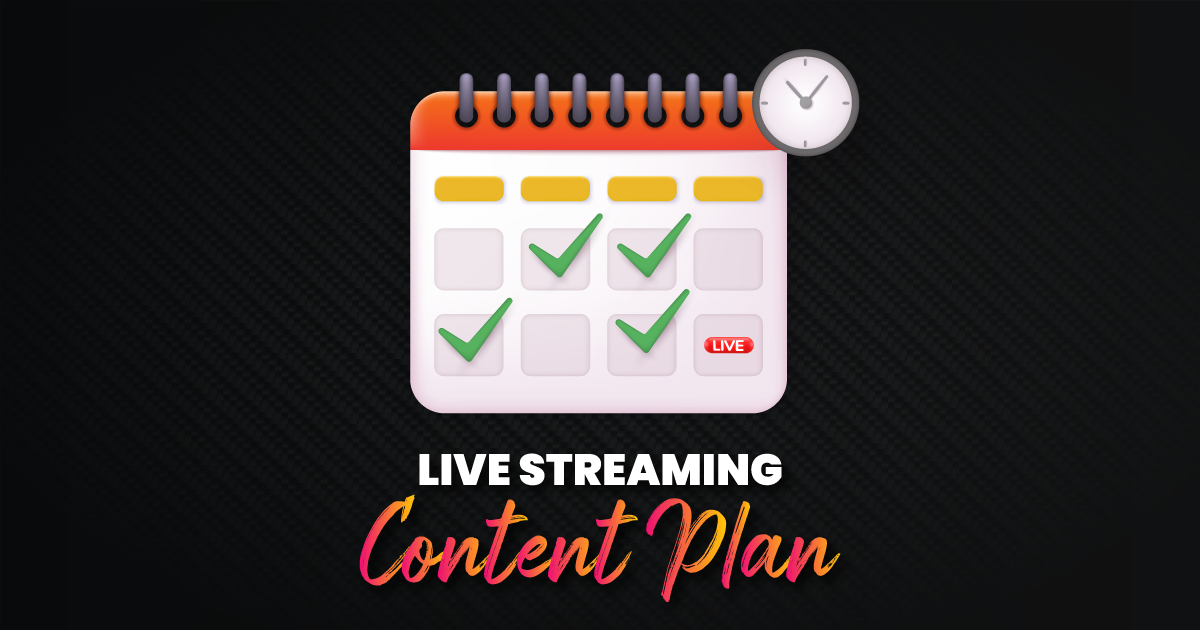
Once you have formulated live stream content ideas, You need to have a live streaming calendar in front of you. No matter what live streaming frequency you decide, consistency is actually a game changer. It trains the algorithm to recommend you because every platform wants creators who are consistent. This will help your live stream audience engagement and prevent you from losing views on the live streams. With live stream scheduling tool in OneStream Live, you can schedule recorded videos or live events. This eliminates the need to do everything manually and streamlines your processes.
Pro-Tip: Scheduling the live streams in advance is a great hack to stay consistent, and it helps in saving time and effort.
Check the Duration of the Live Stream
You don’t want to lose your viewers because of boredom, do you? Make your live streams fun, engaging and precise. Refrain from adding vague and unnecessary information to the live streams. Here are some ideal durations for top platforms:
- TikTok/IG: 15–30 mins.
- YouTube/Twitch: 60+ mins
- LinkedIn: 30–45 mins
Check Live Stream Formats and Platforms
Your live stream strategy needs to be aligned with live stream formats and platforms where your audience is most active. Choosing the wrong format and platforms would mean waiting forever to get good results. Ask yourself a few questions like: is your stream educational? Is it product-focused? Or conversational? This is important to figure out because each format may perform differently on the live stream platform you choose: Here a few examples to help you understand:
- Instagram and TikTok work well for casual, short, interactive streams.
- YouTube and Facebook favor long-form sessions with structured segments.
- LinkedIn is best for industry-focused lives, expert talks, and thought leadership.
However, the real challenge is when your audience is scattered around multiple platforms. Then to get the most out of your live sessions, you need to go live to multiple destinations. Fortunately, with OneStream Live, multi-platform live streaming isn’t an unsolved mystery anymore. Through this you can expand your brand reach and maintain a consistence presence everywhere.
Deliver the Purpose of your Live stream
Regardless of the plan, your live stream content should include the key message that you want to deliver to your audience through live streaming. Remember the objective of the live stream and provide it to your audience wrapped up in engaging and helpful content.
Pro-Tip: Repurpose your live streams to deliver maximum value for your audience.
Read: Repurpose your Live Streams: Restream Old Videos for Better Audience Outreach
Best Times to Live Stream
Best times to live stream
There’s no single perfect time to go live, but recent studies give useful starting windows for each platform and suggest that you should always confirm and refine these using your own analytics.
YouTube
Survey data from HubSpot shows many creators get their best results on YouTube between 6 PM and 9 PM, with 12 PM to 3 PM also performing strongly, especially on Fridays and weekends. A good approach is to focus your uploads and premieres in these afternoon–evening slots, then use YouTube Analytics to see exactly when your viewers are most active.
For Facebook Live, multiple guides recommend going live on weekdays in the afternoon or early evening, with strong engagement often seen mid‑week (Tuesday to Thursday). Start by testing streams around 1 PM–4 PM or after 6 PM in your main audience time zone and then adjust using Facebook Insights (reach, peak live viewers, and watch time by hour).
On Instagram, engagement tends to be higher on weekdays, with good performance in midday and early evening. For Instagram Live, many brands and creators see success around 12 PM–3 PM and again from about 7 PM–9 PM, particularly mid‑week and on Fridays, but your own Instagram Insights should guide final timing.
Twitch
Twitch data suggests that overall viewer traffic is strong from roughly midday to evening, but smaller channels can benefit from streaming in lower‑competition windows. Try mixing prime hours (for example, 12 PM–7 PM or evening slots in your audience’s time zone) with some off‑peak windows (such as late night or early morning), then use Twitch analytics to see where you gain the most concurrent viewers and growth.
Final Takeaway
Create a live streaming content plan that is engaging, helpful, and delivers the key message of your brand or business to your target audience. The content plan works as the map that navigates you and helps you reach your marketing goals smoothly. Remember, the content plan must include live streaming pre-recorded videos, and real-time streaming both. Apart from RTMP streaming, OneStream Live also allows live streaming of previously recorded videos. You can even schedule your live events to keep your live streaming consistent.

OneStream Live is a cloud-based live streaming solution to create, schedule, and multistream professional-looking live streams across 45+ social media platforms and the web simultaneously. For content-related queries and feedback, write to us at [email protected]. You’re also welcome to Write for Us!