
AI (artificial intelligence) is everywhere, and it feels loud, fast, and slightly overwhelming. This can often make you feel that you’re further off than everyone else, but this isn’t true. The problem isn’t AI itself; it’s just the noise surrounding it. We see it everywhere, from our work to social media feeds. Considering all this, people often rush in without clarity, make reactive decisions, and end up missing the real value AI has to offer.
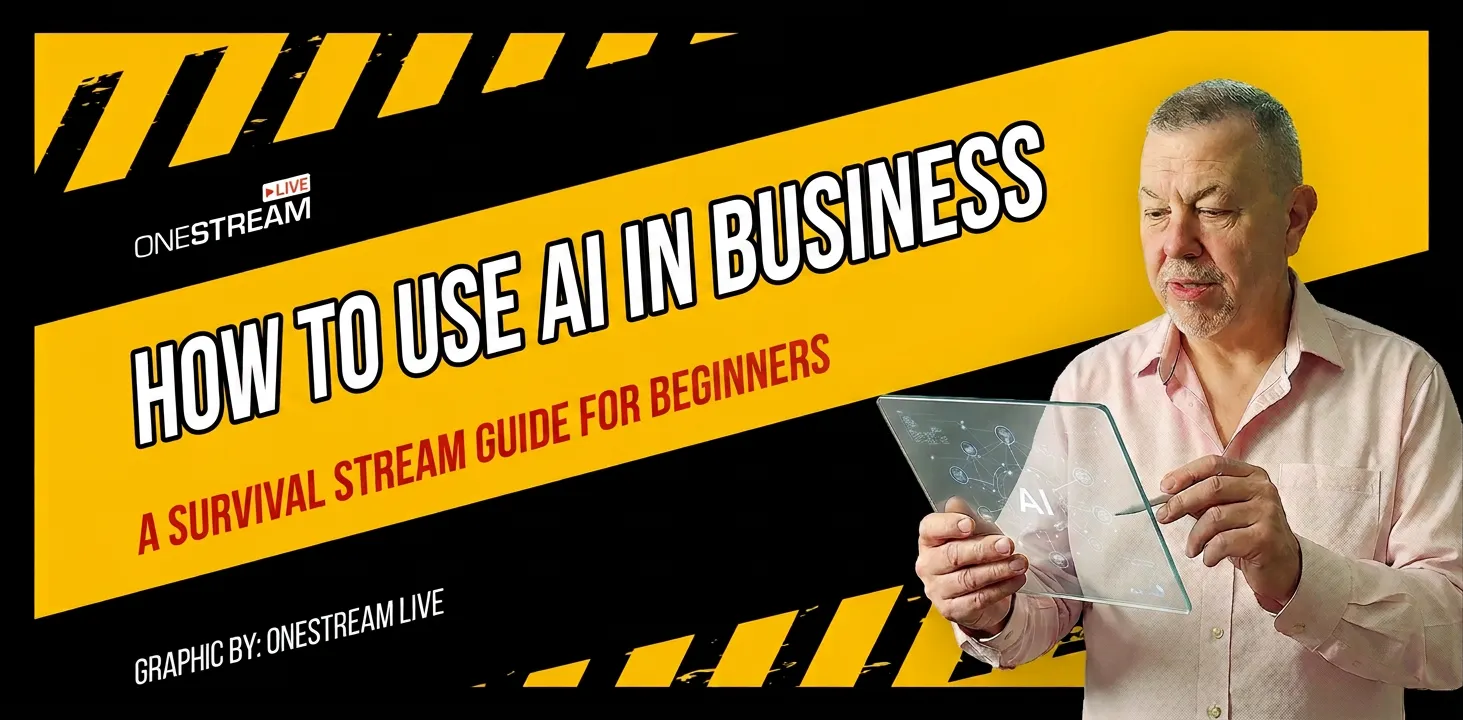
In episode 5 of Survival Stream, our host Joe Sheppard sat with Suzi Manley to give you a complete breakdown of what AI is, how to use AI in business, and where most people go wrong.
Why AI Feels So Overwhelming Right Now
The numbers are hard to ignore:
- Generative AI reached 53% population adoption within three years, faster than the personal computer or the internet
- 78% of global companies report using AI in their operations, as of late 2026,
- Private investments in 2026 reached $344.7 billion in 2025, an increase of 127.5% from 2024.
But the real overwhelm doesn’t come from the stats; it comes from your social media feed. Every scroll brings another “I made $20,000 in four hours using AI” post, another new platform launch, another expert telling you you’re already behind. The truth? Most of that is noise. And noise is not the same as progress.
What AI Actually Means in Business
AI in business simply means a support system for you and your teams. The one that helps you think smarter, work faster, and do more with less. Think of it this way:
“AI is a mechanism where I can get 10 people without paying for 10 people.”
It’s not about replacing humans; it’s about giving yourself a kind of backup that most small business owners could never afford. It can be your researcher, a copywriter, a strategist, or a partner for predictive analysis who’s available around the clock. The technology is here to influence your business efficiency positively. However, the real pressure comes from the comparison game. It makes it feel bigger than it needs to be.
The Biggest Mistake People Make with AI
Chasing every new tool that drops. Suzie Manley pictures the current AI landscape as a food court where you have dozens of options, competing for your attention and none of them clearly better than the rest. And all this leads to: decision fatigue, wasted time, and no real progress.
Every week, we see new AI tools promising to be smarter, faster, and cheaper. And every week, people abandon what they were learning to go and start again from scratch. But what everyone keeps ignoring is this: If you’re constantly switching between different AI applications means you never get good at any of them. An AI tool you haven’t trained is about as useful as a new hire you’ve never briefed.
How to Choose the Right AI Tools for Your Business
Start with two platforms, and that’s it. You don’t need ten tools overwhelming you; you need two that you actually know how to use well. Here’s how you can pick between the top ones according to your needs:
- Claude: strong for writing, reasoning, and nuanced content
- Gemini: ideal if you’re already in the Google Workspace ecosystem
- Perplexity: great for research and fact-checking
- Grok: worth exploring if real-time data matters to your work
If you are ready to move from experimenting with chat tools to running AI in production—especially for customer support workflows that might eventually include phone calls—use this buyer’s guide to OpenAI alternatives for inference to compare your options.
Pro Tip from Suzie: When a new platform launches, go on and ask it two things: “What do you do?” and “How can you help someone like me?” Then decide if it’s worth your time. If not, move on without guilt.
How to Train Your AI (And Why It Changes Everything)
Most people don’t realize that the quality you get from AI totally depends on what you put in. Untrained AI for customer service will freeze just like a human who doesn’t have enough of your product knowledge. Here are some examples to understand this better:
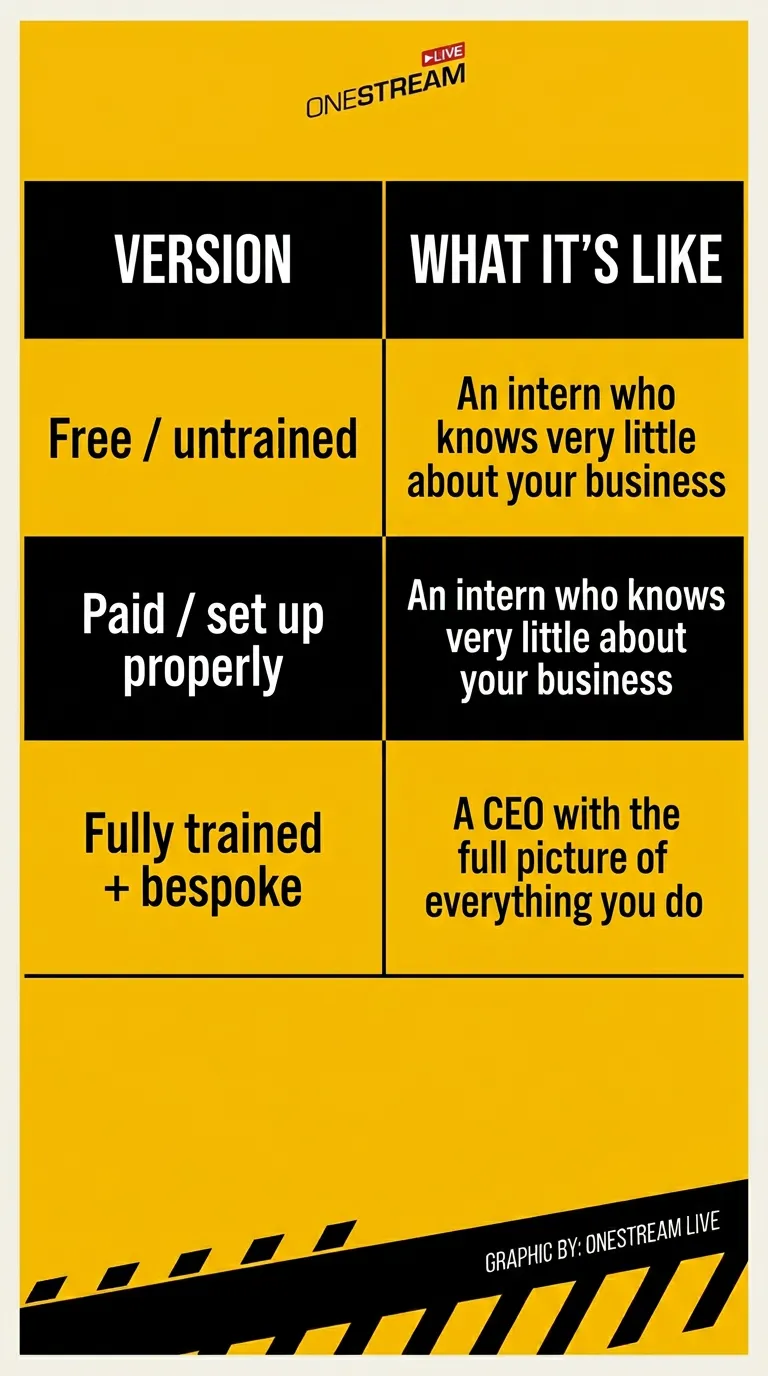
Training your AI means telling it who you are, what your business does, who your audience is, how you communicate, and what you’re trying to achieve. Once it has that context, everything changes.
What to feed your AI
Feeding the right data decides the outcome. Here’s what’s important while training your AI:
- Your bio and business background
- Your tone of voice and writing style
- Your products, services, and goals
- Your audience, who they are, and what they need
- Past content examples that sound like you
Don’t copy-paste blindly because AI might not verify. After you’re done feeding the data, always read the output, edit it, and add your own personality back in. Your quirks, your phrases, and your examples, literally everything that makes it sound like your brand. This is exactly what makes people connect with it.
The Human Element You Can’t Ignore In Business Automation
All that noise on the internet is “noise” because it misses the important thing: AI only works because humans are driving it. The ideas, the judgment, the relationships, the creativity, all that still comes from you. While AI definitely gives you speed and capacity, it can’t give you instinct, lived experience, or the ability to genuinely connect with another person.
What AI can do is free you up to do more of the things only you can do. Less time on repetitive tasks and more time on the work that actually matters.
Final Thoughts on AI in Business
Suzie built a fully functional app in under a week using AI tools. Joe turns a single livestream into blog posts, social content, and thought leadership pieces without a team behind him. Neither of those outcomes replaces the human; they amplify it. AI isn’t going anywhere. Don’t rush and overwhelm to just be a part of the noise. Pick the right tools, feed the data, and train your AI properly so you’re actually able to get the most out of it.

FAQs
AI in business refers to the use of artificial intelligence technologies to automate processes, improve efficiency, and make data-driven decisions.
AI enhances customer service by providing chatbots, personalized recommendations, and fast response times to customer inquiries.
AI tools for businesses include software and platforms that leverage machine learning and automation to streamline tasks such as data analysis, customer engagement, and marketing.
Yes, AI can assist in decision-making by analyzing data and offering insights that support more accurate and timely business choices.
Predictive analytics in AI uses historical data and machine learning algorithms to forecast future trends and behaviors, helping businesses make informed decisions.
OneStream Live is a cloud-based live streaming solution to create, schedule, and multistream professional-looking live streams across 45+ social media platforms and the web simultaneously. For content-related queries and feedback, write to us at [email protected]. You’re also welcome to Write for Us!