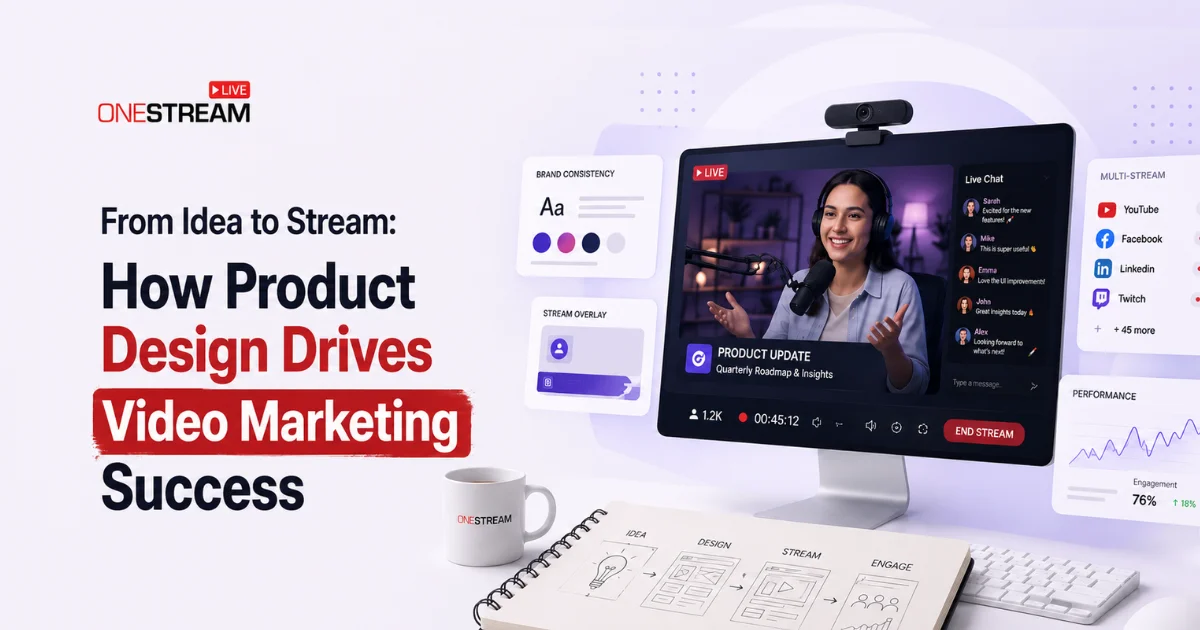
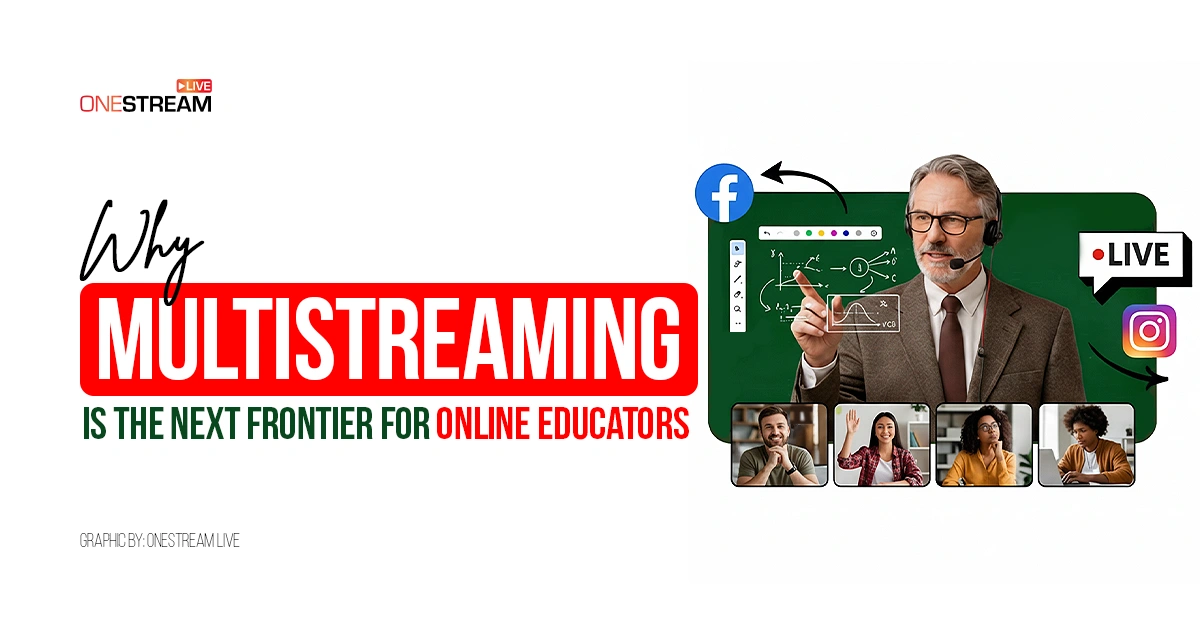

How to multistream in online education means delivering one live class to multiple platforms at the same time, such as YouTube multistream, private learning portals, or other broadcast channels. This is done using multistreaming software that supports simulcasting and coordinated distribution.
Educators use this approach to stream to multiple platforms without repeating lessons or splitting attention. It allows live participants, passive viewers, and replay-focused learners to access the same session in different ways. For programs serving global or part-time students, multistreaming platforms support consistent instruction while adapting to varied schedules, devices, and connectivity limits.
1. Why Single-Stream Delivery Fails at Scale
Here’s the reality most online educators bump up against: teaching online isn’t hard once. It’s hard every time. Reach grows, learner contexts diverge, and one platform no longer fits all. Replicating sessions across platforms without proper tools is a design flaw.
Learner Contexts Vary More Than Ever
According to recent data, about 63% of students in the U.S. engage in online learning daily, a clear signal that digital education is now routine rather than fringe. At the same time, nearly half of learners globally participate in some form of online education, showing this is a structural shift, not a temporary trend.
Now imagine trying to serve all these learners through a single live video link. That’s a bottleneck.
Where learners watch matters. Different platforms have different discovery features, interaction models, and expectations.
For example, a student watching on YouTube might expect a searchable replay. Someone catching a session embedded in an LMS or private page needs consistent timing and access control. A synchronous learner in a global cohort wants low latency and discussion options. A single stream can’t meet all these criteria without compromise.
Engagement Isn’t Uniform
Engagement isn’t a simple number. It varies by population, subject, and delivery mode. Across the industry, online retention and performance measurements signal opportunity and risk:
- Online learning can improve retention by up to 50% compared with traditional formats, showing the potential of well-designed digital delivery.
- The global online education market is projected to reach more than $370 billion by 2026, reflecting not just growth in users but in expectations and investment in digital learning tools.
- Daily participation rates in online learning remain high, suggesting learners value flexibility. But that’s only part of engagement, not the whole engagement story.
These figures tell us something practical: learners are online, they’re participating, and they’re not going back to a one-size-fits-all model. What’s missing is reliable delivery and consistent engagement, which are the very things single-stream approaches struggle with.
2. How Multistreaming Shifts the Educator’s Role
Traditional online teaching assumes one audience, one platform, one mode of engagement. That model collapses when learners want different things at the same time. What multistreaming brings to the table is a more complete way to perceive and respond to learner engagement, rooted in research on how people interact with streamed content.
Here’s the hard data piece most people skip: multistreaming (simulcasting) broadcasts the same session to multiple platforms simultaneously, so you reach more learners with one broadcast. That’s useful for visibility and reach, but it doesn’t guarantee that learners are engaging meaningfully with your content. True engagement in online education comes from how learners interact with the material, the instructor, and each other.
Educational research into multimodal learning analytics has shown that integrating multiple data sources — such as visual, audio, interaction data — yields richer insights into engagement than any single channel alone.
This isn’t speculative. Review work synthesizing findings from 177 peer-reviewed studies confirms that multimodal analytics gives educators a much better view of learning behaviors and outcomes than unidimensional tracking alone.
Simulcasting vs Coordinated Multi-Destination Delivery
Simulcasting saves time and extends reach. It’s broadcasting one feed to many places at once. That’s like putting a lecture on multiple billboards — everyone sees the same message at the same time.
Good. But it doesn’t adapt to how people engage once they’re watching.
Coordinated multi-destination delivery, the real form of multistreaming, layers structured interaction, context-sensitive access, and participation analytics atop that broad broadcast. It brings learner behavior back inward to inform teaching decisions.
Here’s the practical takeaway: with coordinated delivery, an educator doesn’t just teach “live once and hope it sticks.” They can observe, measure, and respond to engagement signals across platforms. For example: live chat on one, passive replay access on another, and embedded interactions in a course portal — all tied back to a single structured session outline.
This shift has real implications:
- Educators become curators of participation pathways, not just presenters of content.
- Engagement becomes observable across contexts, not fragmented by platform.
- Decisions about pacing, interaction design, and follow-up activity are informed by actual learner behavior rather than guesswork.
3. How Institutions Operationalize Multistreaming at Scale
At a small scale, multi-streaming can be improvised. At the institutional scale, improvisation breaks.
Research from EDUCAUSE consistently shows that the biggest failures in online delivery are not content-related but operational: fragmented tools, inconsistent access control, and disconnected analytics. In its digital learning studies, EDUCAUSE notes that institutions struggle most when learning data and delivery systems operate in silos rather than as coordinated infrastructure.
This is where multistreaming stops being a broadcasting tactic and becomes a systems problem.
Why platform stacking fails
Many institutions attempt to scale by stacking tools: one platform for live delivery, another for replays, another for analytics, another for access control. Studies on learning platform adoption show that tool sprawl increases faculty workload and reduces instructional consistency, especially in hybrid and professional programs where attendance patterns vary.
Simple simulcasting can push video to more destinations, but it does not coordinate:
- who can access which stream
- how participation differs by context
- how engagement data is interpreted across platforms
As programs grow, these gaps become visible to learners. Trust erodes when experiences feel uneven or disconnected.
The infrastructure shift institutions make
To operate multistreaming platforms at scale, institutions move away from generic setups and toward integrated systems that treat streaming as part of the learning architecture. This is where many rely on custom edtech apps to coordinate multi-destination delivery, permissions, scheduling logic, and learner data without forcing instructors to manage complexity themselves.
This approach aligns with findings from large-scale reviews of digital learning systems, which show that coordinated environments improve engagement measurement and instructional decision-making compared to single-channel delivery. When delivery and data flow are unified, educators gain visibility into how learners actually participate, not just where a video was viewed.
What operational maturity looks like
At scale, effective multi-streaming systems allow institutions to:
- stream to multiple platforms from a single control layer
- vary interaction models without duplicating sessions
- maintain consistent access rules across cohorts
- view engagement signals together rather than in fragments
The educator teaches once. The system absorbs the complexity. This is the difference between using multistreaming as a workaround and designing it as part of the learning infrastructure.
Conclusion
Multistreaming is not a visibility trick or a growth hack. For online education, it’s an operational response to how learners actually show up. Different schedules. Different platforms. Different ways of paying attention. Trying to force all of that into a single stream creates friction that has nothing to do with teaching quality.
When educators teach once and distribute intelligently, they protect instructional focus while expanding access. When institutions treat multistreaming as infrastructure rather than improvisation, they gain consistency, insight, and resilience.
If you’re ready to apply this model in practice, platforms like OneStream Live are built specifically for coordinated multistreaming. Its multistreaming feature allows educators to deliver one session across multiple platforms while keeping scheduling, access, and replays under control. That makes it easier to teach once, reach widely, and keep the learning experience intact.

FAQs
No. Simulcasting sends the same video feed to multiple platforms simultaneously. Multistreaming includes simulcasting but adds structure, access control, and unified oversight so the learning experience remains coherent across destinations.
Educators stream to multiple platforms because learners access content differently. Some attend live, some watch quietly, others rely on replays. Multistreaming supports these patterns without increasing teaching workload.
Yes. YouTube multistream is commonly used for long-form educational content and searchable replays. Many institutions combine YouTube delivery with private or embedded destinations to support different learner needs.
At scale, institutions rely on integrated systems or custom edtech apps to coordinate streams, permissions, scheduling, and learning data. This prevents tool sprawl and keeps delivery consistent across cohorts.
Yes, when designed correctly. Multistreaming is widely used in professional education, certifications, and global programs where attendance patterns vary, and learning continuity matters more than platform uniformity.
OneStream Live is a cloud-based live streaming solution to create, schedule, and multistream professional-looking live streams across 45+ social media platforms and the web simultaneously. For content-related queries and feedback, write to us at [email protected]. You’re also welcome to Write for Us!