
Live streams have become a powerful and effective way of gaining popularity for brands, influencers, and businesses. I personally associate live streams with gaming streamers on Twitch, but in the past decade, streaming has expanded to various fields. They can be used for live shopping, webinars, or social events, and their interactive and instant nature makes them incredibly valuable, but vulnerable. Fraudsters can exploit streamers by stream sniping, harassing them, or attacking the platform itself. That’s why many now rely on anti-fraud tools to spot threats early and protect their content.
In this article, we’ll explore the common threats facing live streamers, the dangers these pose to brand reputation, and how anti-fraud tools help prevent them. The sooner the anti-fraud tools are implemented, the sooner live streams can be protected.
How Anti-Fraud Tools Defend Your Brand
Fraud prevention is as much about protecting bad actors as it is about protecting one’s brand reputation. We’ve broken down a few ways in which anti-fraud tools can help defend your brand, but there are also numerous other benefits.
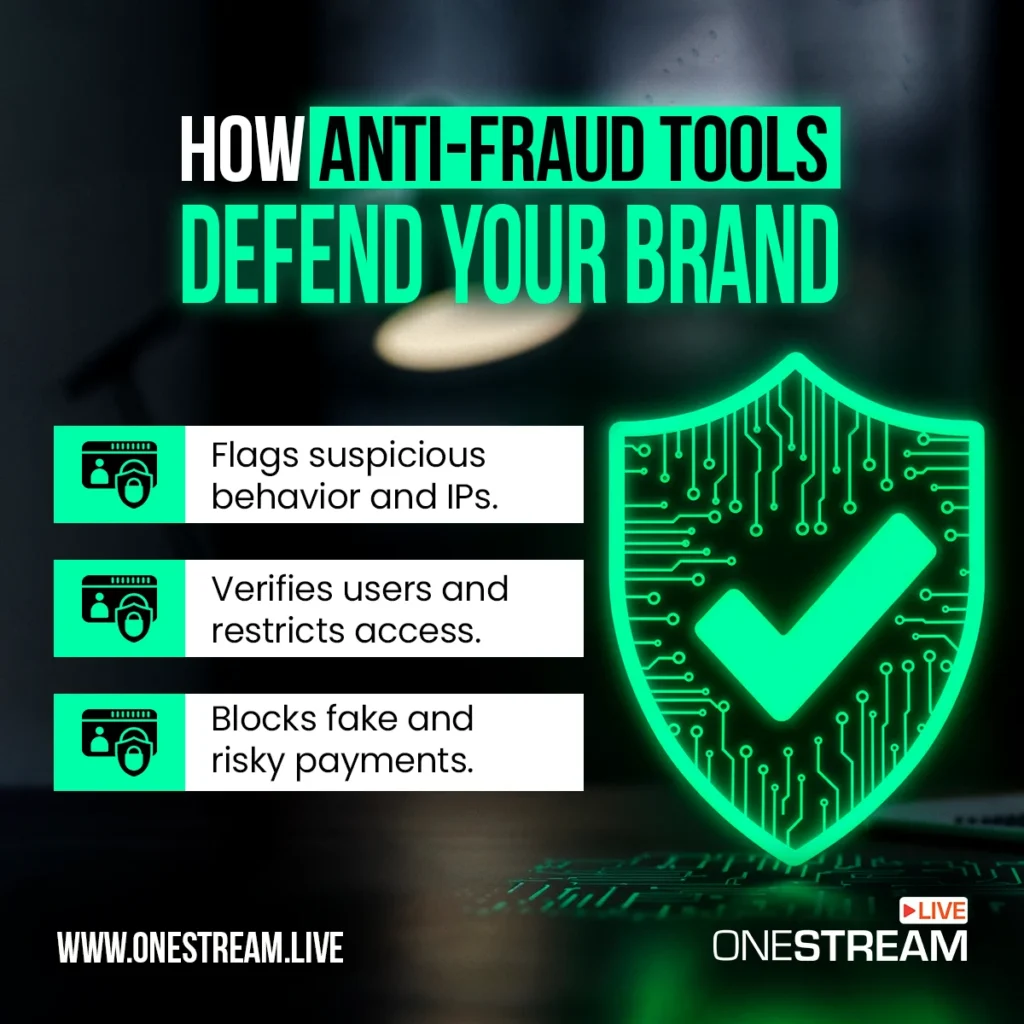
Behavioral and IP-Based Fraud Detection
Fraudsters commonly leave digital footprints. Some of them don’t even pay attention to staying anonymous, as they sometimes want the publicity. However, in technical terms, there are some traces that are left by their actions.
For example, unusual behaviors such as repeated logins from multiple devices, rapid-fire comments, or irregular session durations can all ring a bell that something isn’t right. Anti-fraud tools can monitor these activities and flag them as risky behavior.
This allows companies that run the streaming platforms to prevent scammers from taking harmful actions, instead of mitigating their outcomes. However, it can be challenging to distinguish between legitimate and risky behaviors.
In this case, artificial intelligence and machine learning can be helpful in recognizing these behaviors. Another way to locate scammers is through an IP Geolocation API, such as IPinfo, which helps determine the true origin of suspicious traffic.
This can be quite helpful in certain scenarios, such as with fake viewers using masked locations, bot farms, or proxies to conduct attacks. By analyzing geolocation data, you can set access rules, detect anomalies, and improve stream security with location-based controls. Anomalies can be activities like 100 logins from one IP in a foreign country.
On the viewer side, using the best VPN for streaming is a legitimate way to protect personal data and bypass geo-restrictions, though platforms should be aware that VPN traffic may appear as anomalous in geolocation reports.
Identity Verification and Access Control
For monetized or private events, verifying who joins your stream is essential. Identity verification tools allow for enforcing one-time passcodes, providing stream access only for those who can verify their identity.
This can be done through personal documents, email, SMS, or by having a QR code on digital or physical tickets. For some events, biometric authentication can also be used, further enhancing live stream security.
However, it’s important that these measures are implemented properly and that there is no way to avoid them. Access control can help with managing guest lists and conducting actions, such as restricting entries after a certain time, preventing re-use of access links, and even blocking multiple devices from joining with the same IP address.
Fraudsters commonly resell access links, and these two methods can significantly help with minimizing these activities.
Transaction and Payment Monitoring
Live commerce events, donations, and tipping can seem like lucrative targets for fraudsters and hackers. Without proper transaction monitoring, you risk fake purchases, stolen card use, or chargebacks.
All of these fraud types can directly harm the company responsible for live-streaming or collecting donations. SEON offers a number of anti-fraud features, like real-time analytics to scan for suspicious transaction patterns, verification of payment sources, and flagging of high-risk behaviors.
Solutions like this don’t directly help with better live streams, but they prevent a crucial problem associated with online transactions. If someone makes a donation using a stolen card, then the company responsible for the live stream will suffer the consequences.
This can harm brand reputation, leading to a lower number of viewers and customers. Anti-fraud tools are also quite helpful for transactions and activities outside of live streams. They can help e-commerce stores and finance businesses with preventing fraud.
These platforms can recognize politically exposed persons, or PEPs. This means that individuals with high-ranking positions in the government are properly identified and flagged based on the risk they pose.
Why is this important for live streaming platforms and live streamers? In some cases, donations on live streams can be used for money laundering or financing illicit activities. This is because PEPs often have significant funds and power. Flagging these individuals properly and recognizing them on time can prevent future problems.
Common Threats for Live Streamers
Numerous threats live streamers and live streaming platforms can face. These threats can lead to more problems down the line, causing harm to the brand’s reputation and finances.
Bot Traffic and Fake Viewership
Artificial viewership is one of the most common forms of manipulation in the live streaming world. This is even a larger problem in the AI era, as these bots can act like real human beings on some occasions.
Bots are deployed to inflate view counts, comments, chat messages, likes, or follower numbers, which creates an illusion of popularity. People might wonder why streamers worry about having more viewers.
There are a few main reasons, including platforms flagging this as their fault, being spammed, or being harassed in the chat. Fake traffic also distorts analytics and can hurt ad performance, which directly leads to lowered profits.
In some cases, fake viewership can be used to manipulate ranking algorithms, which gives certain streamers an unfair advantage over others on the platform.
However, fake traffic never leads to meaningful results. Genuine growth and engagement come only through consistent effort and the right tools. With OneStream Live, creators can effortlessly multistream to over 45 social platforms and websites at once, broadening real reach without relying on artificial numbers.

Account Impersonation and Spoofed Streams
Like previously mentioned, stolen credit cards and impersonation scams can be quite problematic. Fraudsters can create fake profiles or copy a legitimate streamer’s branding to mislead viewers.
This can steal a portion of the real streamer’s viewers, lowering their viewership and revenue. However, this can be even more dangerous if the impersonator creates incriminating content against the streamer.
With AI videos and voice, there are endless ways of creating problems for legitimate streamers. Today, I watched a YouTube reel about Sharon Osbourne talking about her late husband, Ozzy, and if I had not checked the comments, I would have never guessed that it was fake.
Spoofed streams can also be used to promote phishing links, crypto and gambling scams, or fake giveaways. All of these actions can cause serious problems for streamers. Sometimes, the damage caused can be permanent.
Chat and Engagement Manipulation
Live chat on streaming platforms helps streamers build their communities and engage with the audience. However, it can also be used for promoting scams or harmful content. Although large streamers often have dozens of mods, those with smaller platforms often suffer from these problems.
Previously mentioned automated bots or paid comment farms can flood the chat with spam, which can cause a lot of trouble for their viewers. In some cases, streamers pay automated bots or encourage their viewers to “raid” the streams of other streamers.
These malicious actions can negatively impact the mental health and reputation of streamers and even scare off their audience. Of course, bots and paid comments also disrupt the regular conversations that viewers have with each other.
Dangers of Fraud in Live Streams
Although we’ve already mentioned a lot of problems associated with fraud in live streams, let’s conclude. Different types of threats that streamers face can impact their reputation and the trust they have among their audience.
Sometimes, these threats can be a slow burn, gradually lowering viewership and revenue for streamers. In other cases, they can have an immediate and direct impact on the streamer’s or audience’s finances.
Anti-Fraud Tools are Essential for Streamers
No business or influencer is too small to be harmed by cyber action. This is why it’s important to fight against fraud and threats at all times. While some anti-fraud tools can be expensive, the costs of becoming a victim of an online threat can be much higher.
If a fraudster snipes the stream, the individuals participating in it can get scammed, or they can even get physically harmed. Besides that, someone can overtake their stream, harming their reputation.
Of course, not all circumstances can be controlled or problems prevented, but it’s always important to implement as many measures as possible to minimize problematic outcomes.
Using a trusted and secure platform like OneStream Live is one of those steps that can help you avoid unwanted trouble and grow faster by streaming to multiple platforms at once.

OneStream Live is a cloud-based live streaming solution to create, schedule, and multistream professional-looking live streams across 45+ social media platforms and the web simultaneously. For content-related queries and feedback, write to us at [email protected]. You’re also welcome to Write for Us!