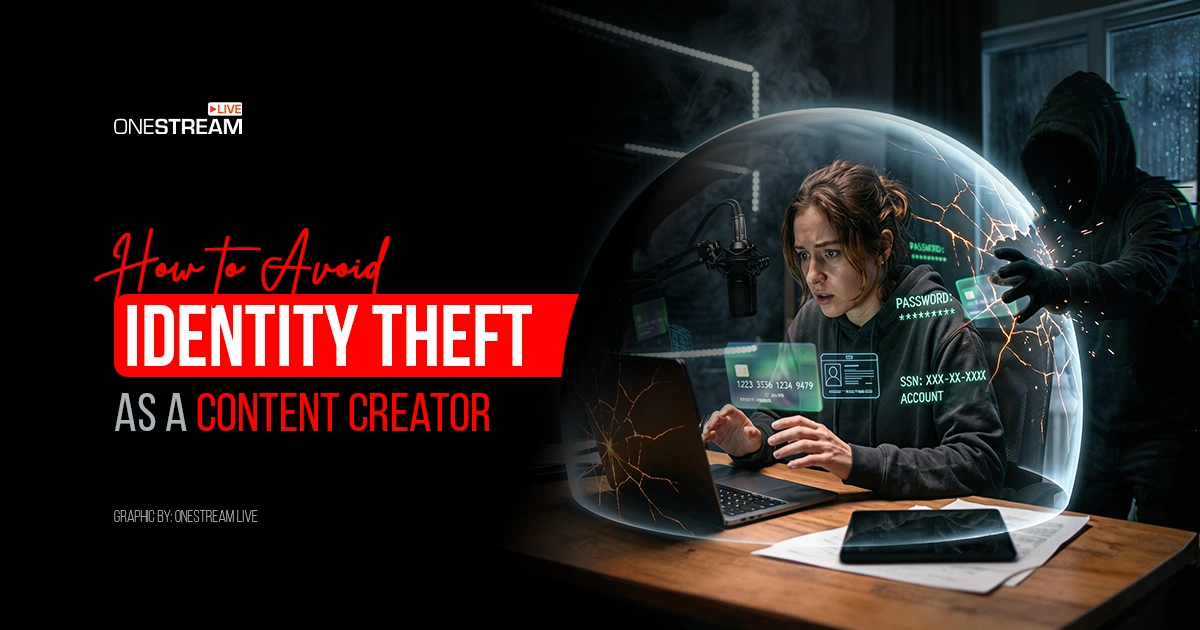

Content creators are making careers out of personal branding on social platforms. But this kind of visibility comes with risks. The larger your audience, the more you’re exposed to online threats. However, it doesn’t stop here; your audience can also get under attack through your hijacked accounts. In this blog, we’ll explore the common risks creators face online, the warning signs of identity theft, and how to avoid identity theft as a content creator.
Most creators are concerned with the number of followers and brand partnerships, but securing your digital identity can be an even more daunting task. Hackers, scammers, and data thieves often target public figures with poor cybersecurity practices. That’s why every content creator should develop a digital safety strategy.
Content creators are common targets for identity theft and account hijacking.
Strong passwords and two-factor authentication help protect your accounts.
Early warning signs include suspicious logins and impersonation accounts.
Separating personal and creator accounts reduces security risks.
Use OneStream Live to manage team access without sharing passwords.
Recent Identity Theft Data Shows a Growing Global Risk for Creators
Recent data from the US, UK, and Australia shows that identity theft is getting worse, and content creators are exposed because their names, profiles, and business activity are public.
In the US, the Federal Trade Commission (FTC) reported that the Consumer Sentinel Network received 6.5 million reports in 2024 across fraud, identity theft, and other consumer problems. In the same year, the FTC said consumers reported losing more than $12.5 billion to fraud (a 25% increase over the prior year), and fraud reports remained roughly steady at 2.6 million. There were 1,157,317 identity theft cases reported in the first three quarters of 2025 alone.
In the United Kingdom, more than 217,000 fraud risk cases and 118,000 identity fraud cases were recorded in just the first half of 2025, after 421,002 total fraud cases were filed in 2024.
In Australia, 255,100 people experienced identity theft and 433,000 people faced online impersonation in 2023–24. Global data also showed 12,195 confirmed data breaches across 139 countries. For creators, these figures show that identity theft is not isolated; it is a real and growing threat to income, trust, and reputation.
What Happens if You’re Compromised?
Imagine waking up and receiving a notification that your credit score is plummeting, or you’re being charged for a product you never purchased. You’re in disbelief because these actions can damage your chances of getting a loan, renting an apartment, or even a car. Your mind is racing and you’re probably thinking: “Someone has opened an account in my name.”
Here’s an equally scary scenario: someone takes over your account, spams your followers, and people stop trusting you. That hurts on a professional level as well as a personal one.
Red Flags that You’re at Risk
Although you might not be targeted directly, these are warning signs that could indicate your data is at risk:
- You receive random bills, collection notices, or credit inquiries.
- Your followers report fake accounts trying to impersonate you.
- You’ve shared sensitive information by email or DMs using public Wi-Fi.
- You receive alerts from odd login activities or changes on the apps you’re connected to.
- Your name has appeared in a data breach.
The sooner you notice these red flags, the more likely you are to put a stop to identity theft before it turns into financial fraud.
7 Cybersecurity Protocols Every Content Creator Should Follow
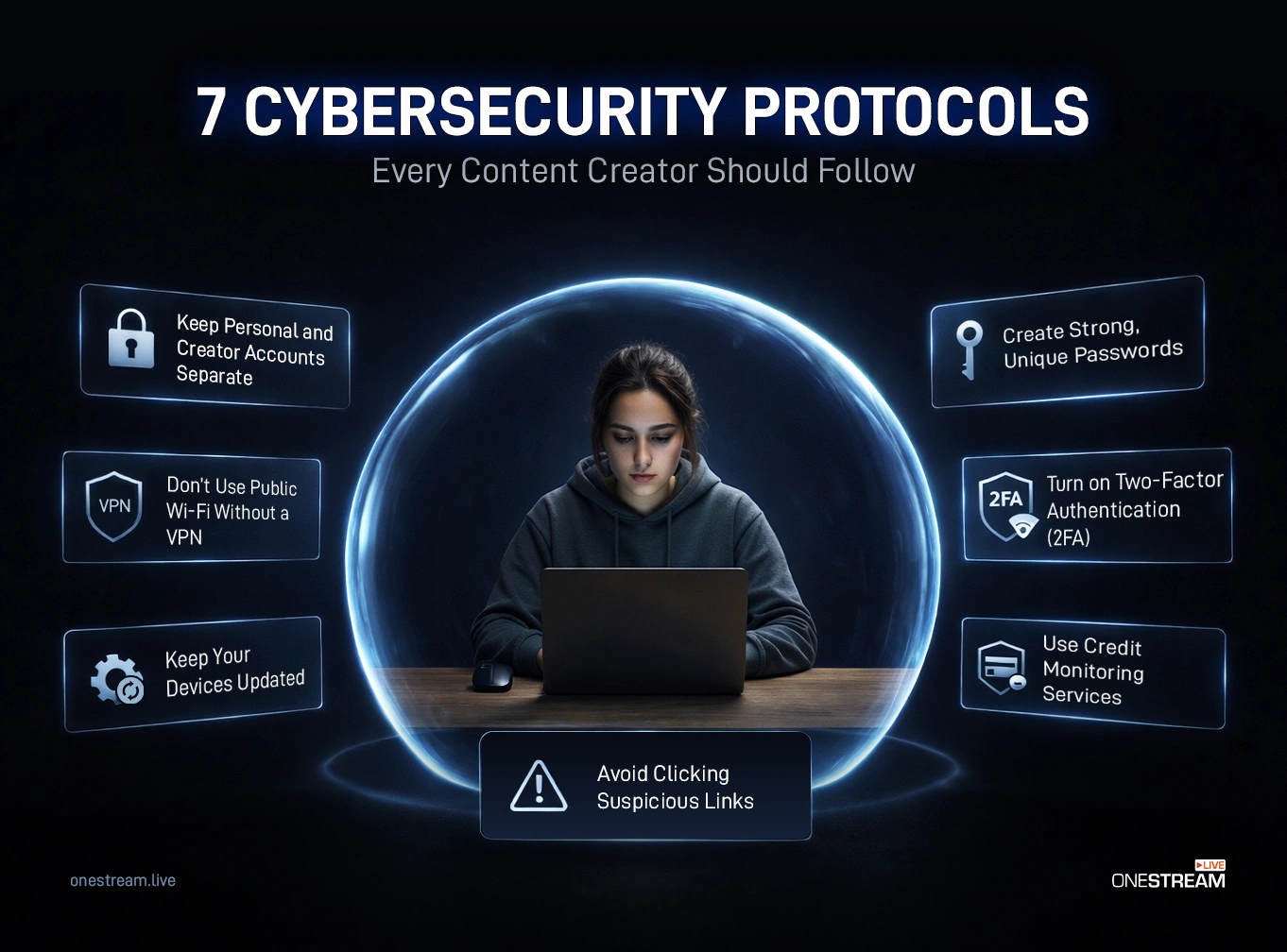
Besides keeping an eye on your credit, here are some of the best identity theft protection practices content creators can follow to stay safe online:
Keep Personal and Creator Accounts Separate
For your content business, use a different email address. For your personal life, your creator sites, and your banking, use different logins. No matter what happens with one account, the others will still be safe.
Turn on Two-Factor Authentication
Use 2FA on all sites that offer it, like Instagram, Gmail, YouTube, TikTok, and more. So, even if a hacker breaches your password, this extra step, like a code sent to your phone, keeps them out.
Don’t Use Public Wi-Fi Without a VPN
Don’t use public Wi-Fi, like in coffee shops or airports, for access to your important accounts. If you have to, you can use a VPN to protect your data and stop hackers from snooping on your connection.
Use a Password Manager
Don’t use the same password everywhere for all of your accounts. A password manager helps with generating strong passwords for each account and remembers them so you don’t have to.
Keep your Gadgets Up to Date
Keep your phone, PC, laptop, and browser always up to date. Content creators sometimes fall victim to cyberattacks because they fail to install necessary security patches.
Don’t Click Sketchy Links
Always verify the sender and don’t click on unsolicited links—even when they come with an offer from a specific brand. Content creators often fall victim to phishing attacks coming from fake brands.
Turn to Credit Monitoring Services
Social media platforms can help if someone’s trying to hack your account, but they don’t protect your financial identity. Credit monitoring can help you get ahead of the worst-case scenario. Credit monitoring tools can let you know when someone is trying to use your identity without you knowing. These services track your credit report and flag any strange activity, such as starting new accounts, changing your name, or hard inquiries.
If you receive an alert, you can act fast. You can freeze your credit, report the fraud, and prevent the damage before it’s too late. Being fast is crucial, especially if you provide personal or financial information online, collaborate with third-party services, or have your name on open registers (as is the case with many creators when they’re registering their business accounts or LLCs).
Keep an Eye on Your Payment and Business Accounts
When making money from brand deals, affiliate links, ads, or payment processors, those accounts should get as much attention as your social media accounts. A small change can cause money to start moving in the wrong direction. Make a habit of regularly checking your dashboards, even when nothing appears wrong. View recent payments, related applications, and account preferences. Fraud does not necessarily appear as a giant red flag at first.
Huge corporations take cybersecurity seriously, but so should individual content creators, no matter how famous they are. All it takes is one person being hacked to damage everything you’ve worked for.
We hope our tips will find a place in your routine. As you plan what to post and reply to comments, you should also check your online security regularly. Since you’re creating a long-term brand, protection should always be a part of your strategy.
How to Work With a Team Without Sharing Your Social Media Passwords
As your content grows, you may start working with editors, moderators, or assistants who help schedule streams and manage your content. The common mistake many creators make is sharing their social media passwords with team members. This can quickly become a security risk, especially if multiple people have access to your accounts.
Instead, you can use the Team Management feature of OneStream Live to collaborate safely. It allows you to invite team members to help manage your streams without giving them access to your social media credentials. You can assign specific roles and control what each team member can do, such as scheduling streams, uploading videos, or managing stream settings.
This way, you stay in full control of your accounts while your team can still help you keep your content running smoothly. For creators building a professional streaming workflow, secure collaboration is just as important as strong passwords and two-factor authentication.
Read More: Stream Key Leaks: How Live Streams Get Hijacked and How to Prevent It
Conclusion
Building a creator brand means sharing more of your work and identity online. While this visibility opens new opportunities, it also increases the risk of scams and account misuse. By now, you’ve seen the common risks creators face and how to avoid identity theft as a content creator by following simple security practices.
Habits such as enabling two-factor authentication, using strong passwords, monitoring financial activity, and separating personal and creator accounts can strengthen your identity theft prevention strategy. These steps help protect both your accounts and the trust you have built with your community.
If you collaborate with a team, it is also important to manage access safely. OneStream Live allows you to assign roles to team members so they can help manage streams without needing your social media passwords. This keeps your accounts secure while your team supports your content workflow.

FAQs: How to Avoid Identity Theft
Identity theft happens when someone steals your personal information and uses it without permission. This can include your name, email, financial details, or social media accounts. Criminals often use stolen identities to open accounts, make purchases, or impersonate someone online for scams or fraud.
If you become a victim of identity theft, report it immediately to your local authorities and the relevant financial institutions. You should also notify the platform or service where the fraud occurred, change your passwords, and monitor your accounts. In many countries, you can also file an official identity theft report through government consumer protection agencies.
You can prevent identity theft by using strong passwords, enabling two-factor authentication, avoiding suspicious links, and keeping your devices updated. Regularly monitoring financial accounts and credit reports can also help detect suspicious activity early and reduce the risk of fraud.
To prevent online identity theft, avoid sharing sensitive information publicly, use a password manager, and enable two-factor authentication on important accounts. Be cautious when using public Wi-Fi and verify emails or messages before clicking links, especially those asking for personal or financial information.
OneStream Live is a cloud-based live streaming solution to create, schedule, and multistream professional-looking live streams across 45+ social media platforms and the web simultaneously. For content-related queries and feedback, write to us at [email protected]. You’re also welcome to Write for Us!