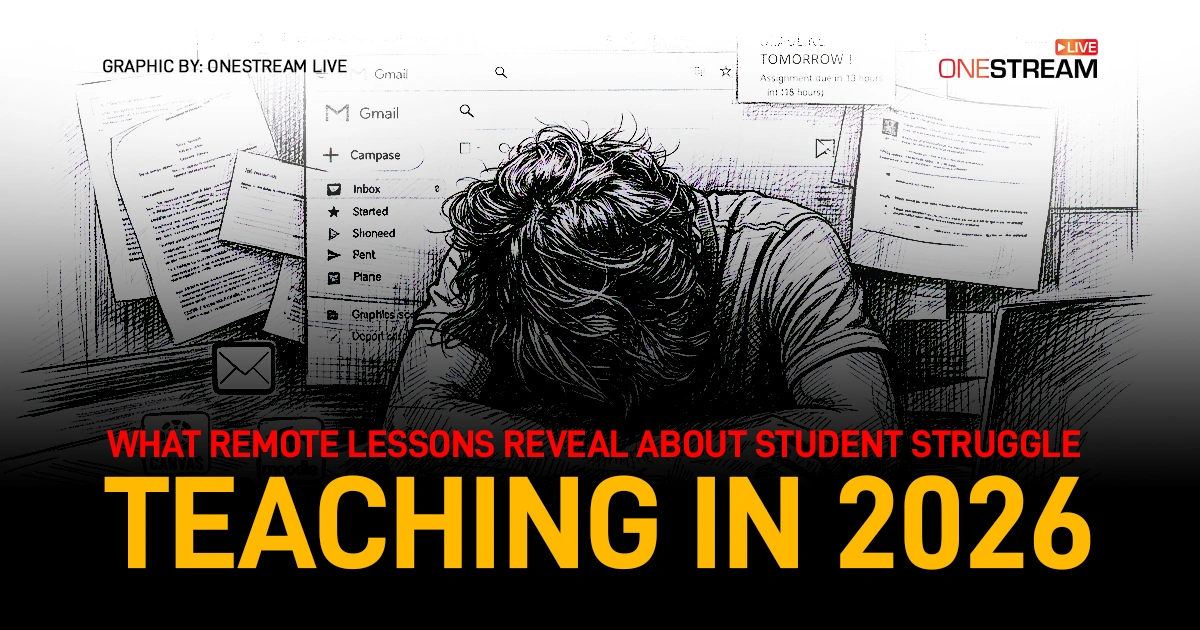

Many parents noticed something uncomfortable during remote learning. Their child attended lessons, submitted work, and appeared to cope on the surface. Yet confidence dropped, frustration increased, and certain subjects, especially maths, became a source of stress. These were clear signs of student struggles with online learning that often went unnoticed in a busy classroom.
Remote learning made students’ struggles more visible at home, highlighting various online learning challenges for students. Parents could directly observe hesitation, avoidance, and emotional shutdown in their children. This experience revealed how differently today’s students process information, pressure, and feedback.
As we approach 2026, remote learning has become commonplace, and the challenge is no longer access to learning. Instead, it is recognising where students struggle and responding in ways that support understanding, focus, and confidence. For teachers, remote teaching challenges include adapting lessons to virtual formats and ensuring students remain engaged through a screen.
This article looks at what remote learning revealed about modern student struggles and what parents and teachers can do to support students more effectively.
Remote learning exposed learning challenges more clearly at home.
Student struggles with online learning are often caused by lesson structure, not effort.
Remote teaching challenges showed the need for better virtual classroom design.
Student engagement in online classes improves through interaction and clarity.
The future of remote teaching focuses on flexible and supportive learning models.
Remote Learning Revealed Changes in Student Thinking
Remote learning gave parents insight into how their children think during lessons. It showed that having information available is not the same as being able to process it well.
Smartphones, tablets, and laptops give students instant access to answers. This supports research skills and interactive learning, but it also shortens attention cycles. Research suggests that over the past couple of decades, the average time a person can focus on one task has dropped from about 2½ minutes to around 45 seconds. This raises concerns about students’ ability to sustain focus during learning.
Many students struggle to stay with a single task long enough to fully understand it. In subjects like maths, where each concept builds on the last, gaps in focus quickly turn into gaps in understanding. This lack of focus shows how maintaining student engagement in online classes has become one of the biggest virtual classroom challenges for teachers.
Educational apps and online simulations can strengthen problem-solving and critical thinking skills. They work best when students are guided to focus on one task at a time and complete it fully before moving on.
Read More: 10 Creative Ways to Use Live Streaming for Hybrid Learning Models
What We Now Know About How Students Learn
Taking what we’ve learned from remote learning, we can better support students’ needs and help them succeed in 2026.
Individual Online Tutoring Unlocks Student Confidence and Understanding
Remote learning highlighted how many students need more individual attention than traditional classrooms can offer. Busy schedules, large class sizes, and fixed lesson pacing make it difficult to address every student’s learning gaps.
This is especially clear in maths. If a student misses a foundational concept, future lessons become harder to follow, and confidence often drops.
Private online maths tuition has become a practical support for many families, particularly when it is delivered through flexible online platforms. One-to-one sessions allow students to:
- Work at a pace that suits them
- Ask questions freely
- Revisit topics they did not fully understand
Platforms like FindTutors help parents connect with qualified tutors across many subjects, including maths, science, and languages. This makes it easier to find support that fits a student’s specific needs rather than settling for a one-size-fits-all approach. When tutors combine live explanations with interactive delivery tools such as OneStream Live, lessons feel more structured and engaging for students learning remotely.

Online individual tutoring works because lessons adapt to the student. Tutors can identify strengths and gaps, adjust explanations, and focus on problem areas until understanding improves.
Learning from home also reduces pressure. Students can revisit recorded sessions, practise skills in familiar surroundings, and build confidence over time.
Learning Style Mismatches Highlight Student Needs
Remote learning made learning differences more visible. Students do not all process information in the same way, and education research shows these differences are significant.
Some students learn best through visuals such as diagrams and videos. Others prefer listening, discussion, or hands-on activities. When teaching methods do not match how a student learns, confusion builds even when effort is high.
This mismatch often leads to frustration and disengagement. Technology made these differences more visible by allowing students to choose formats that felt more accessible, including short videos, interactive tools, or written step-by-step guides.
Teachers face significant remote teaching challenges when trying to create lessons that meet different learning needs without overwhelming the class. When lessons account for different learning styles, students stay engaged, understand concepts faster, and feel more confident in their abilities.
Survey Apps Provide Real-Time Insights Into Learning
Survey apps have become an important tool in modern education, especially in remote and blended learning environments. They help teachers understand how students are coping without relying only on test results.
Short polls, quizzes, and feedback forms allow teachers to see:
- Which concepts are unclear
- Where engagement drops
- How students feel about lessons
This information helps teachers adjust lessons before small gaps become larger problems.
For students, survey tools offer a way to share feedback privately. This is especially helpful for students who struggle to speak up in class. It creates a more responsive learning environment where student input shapes teaching decisions.
If you want to explore tools in this space, you can review the best survey apps used in education today, including:
- Attest
- Typeform
- Google Forms
- Survey Monkey
- Survey Sparrow
- Qualtrics
- Pollfish
The right survey app depends on whether the goal is quick feedback, deeper insights, or ongoing progress tracking.
Working Together Improves Student Learning Outcomes
Remote learning showed that students struggle more when learning feels passive. Collaborative and project-based learning encourages active participation and deeper understanding.
Instead of memorising information, students work together to solve problems, create presentations, or complete shared tasks. These activities reflect real-life situations where communication, planning, and responsibility matter.
Collaborative learning also helps students feel more connected. Shared goals and group progress increase motivation and make learning feel meaningful.
Personalized and Self-Directed Learning Boosts Ownership
If there’s one thing that remote education has made possible, it’s personalized and self-directed learning, which is reshaping how students take ownership of their education.
Instead of following the same pace and path as everyone else, students today have more freedom to choose how, when, and even what they learn. Digital tools, adaptive learning platforms, and flexible lesson structures make it easier for teachers to tailor content to each student’s strengths, weaknesses, and interests.
This approach works because no two students learn in the same way. Some need more time to master complex topics, while others are ready to move ahead quickly.
Personalized learning lets students progress at a pace that feels right for them, reducing frustration and boosting confidence. It also leads to higher engagement by giving students a sense of control over their learning journey, which is especially important when learning remotely.
Self-directed learning takes this a step further. Students learn how to set goals, manage their time, and evaluate their own progress.
Critical Thinking and Creativity Unlock Deeper Understanding
Remote education is shifting away from simple memorisation and toward building stronger critical thinking and creative problem-solving skills. With information available everywhere, students no longer need to memorise large amounts of content; they need to know how to use it.
Today’s classrooms encourage students to explore different solutions, think independently, and make connections between subjects. Creativity also plays a bigger role, helping students develop new ways of approaching challenges instead of relying on rote answers.
Regardless of what they’re trying to solve, students learn to think beyond the surface and understand the “why” behind what they’re studying. This shift prepares students for the modern world, where jobs increasingly reward people who innovate and are strategic thinkers.
The Role of Social-Emotional Learning (SEL)
Social and emotional learning, often referred to as SEL, plays a significant role in how students handle learning challenges. Today’s students experience higher levels of pressure, distraction, and comparison than previous generations.
SEL helps students develop skills such as emotional regulation, self-awareness, communication, and perseverance. Research shows that students who develop these skills perform better academically and feel more confident in class. In fact, one analysis found about an 8 percentage point increase in academic performance for students who participated in a year-long SEL program.
Students who can manage stress and recover from mistakes are more likely to stay focused and keep trying. These skills are especially important in subjects like maths, where errors are part of the learning process.
As information becomes more accessible, emotional skills play a larger role in long-term success. Teaching students how to understand themselves and work with others supports both academic learning and personal development.
What Remote Learning Changed for Today’s Students
Remote learning changed how students engage with education, and the impact of remote learning on students was significant. It brought learning into the home and made day-to-day learning behaviours more visible to parents and teachers. Differences in focus, confidence, and learning needs became clearer, especially when students had to manage their attention and understanding more independently.
Many students struggled with structure, pacing, and sustained focus, while others responded well to flexibility and personalized support. These differences showed that learning challenges are often linked to how lessons are delivered rather than effort alone. Gaps in understanding, particularly in cumulative subjects like maths, became easier to identify.
As parents and educators rethink education, they are focusing on addressing the problems with remote education that became apparent, rather than returning to old routines unchanged. Understanding student struggle allows adults to provide targeted support, adjust expectations, and create learning environments where students can build confidence and continue progressing.
As we look to the future of remote teaching, integrating these insights and new technologies will be key to improving student outcomes.
OneStream Live provides an easy way for educators to live stream or schedule classes online, helping overcome these challenges and keep students engaged in any virtual classroom.

Frequently Asked Questions
Remote learning brought lessons into the home environment, where parents could observe focus, confidence, and emotional responses. Daily behaviours that were hidden in classrooms became easier to notice. This helped reveal learning challenges and the real impact of remote learning on students.
Virtual classroom tools help teachers deliver structured and interactive lessons. Live teaching, feedback features, and clear lesson flow reduce confusion and improve understanding. These tools address virtual classroom challenges by supporting student engagement in online classes.
Student engagement improves when lessons feel interactive and predictable. Clear explanations, real-time interaction, and consistent schedules help students stay focused. Addressing remote teaching challenges requires adapting lesson delivery rather than increasing workload.
Remote learning in 2026 focuses more on flexibility, live interaction, and personalised support. Teachers use insights from past problems with remote education to design lessons that support different learning styles. This shift defines the future of remote teaching.
OneStream Live is a cloud-based live streaming solution to create, schedule, and multistream professional-looking live streams across 45+ social media platforms and the web simultaneously. For content-related queries and feedback, write to us at [email protected]. You’re also welcome to Write for Us!