Live streaming didn’t just grow in 2025. It settled in.
If you’ve been tracking video streaming trends, you’ve noticed the shift. What was once treated as a campaign tactic or a pandemic workaround has now become infrastructure. People don’t “try” live anymore. They expect it. They plan around it. They return to it.
After spending the past year studying platform updates, audience behavior, and real-world streaming industry patterns, one thing is clear: 2026 will not reward novelty. It will reward systems.
This article is a preview of our research whitepaper, Live Streaming Trends to Watch in 2026, which breaks down where the industry is heading and what creators, brands, and organizations should realistically prepare for next.
1. The Live Streaming Market in 2025: A Year of Normalization
By the end of 2025, the live streaming market crossed an important threshold. It stopped being “special” and started being standard.
Live streaming statistics paint a clear picture: nearly one in three internet users now watches live streams weekly. Average live viewing sessions stretch past 25 minutes, significantly longer than most on-demand video formats.
Engagement tells the rest of the story. Live consistently outperforms pre-recorded video when it comes to comments, reactions, and repeat attendance. Why? Because live delivers what polished content often can’t: presence, immediacy, and participation.
Audiences don’t just watch live streams. They show up for them.
2. Streaming Industry Updates: Platforms Didn’t Stand Still
Across 2025, every major player in the streaming industry quietly reinforced the same idea: live video is not optional.
- YouTube invested deeper into ultra-low latency, live shopping, and AI moderation. Read More.
- TikTok Live leaned hard into real-time interaction and commerce-driven formats. Read More.
- LinkedIn Live matured into a serious channel for professional thought leadership. Read More.
- Instagram signaled a shift toward more intentional, structured broadcasts. Read More.
- X (Twitter) doubled down on video replies, blending conversation with live visuals. Read More.
Also Read: The Social Media Updates That Change Everything for Creators in 2025
Individually, these updates looked incremental. Collectively, they sent a clear message: the future of live streaming is being optimized for retention, not experimentation.
3. Live Streaming Formats That Defined 2025
While tools evolved, the real change came from how people used them. Several formats consistently dominated the video streaming trends chart:
- Live gaming and esports, driven by community loyalty and repeat viewing
- Short-form vertical clips, acting as discovery engines for longer live sessions
- Live events and webinars, now standard for launches, education, and internal communications
- Entertainment and music streams, offering shared, time-bound experiences
- Personal and community-driven lives, prioritizing conversation over production polish
The common thread?
Consistency beats spectacle.
Audiences rewarded creators who showed up on schedule, built recognizable formats, and treated live as a relationship, not a spike.
4. The Future of Live Streaming in 2026
Looking ahead, the most important shift isn’t a new feature. It’s operational. The future of live streaming in 2026 looks like this:
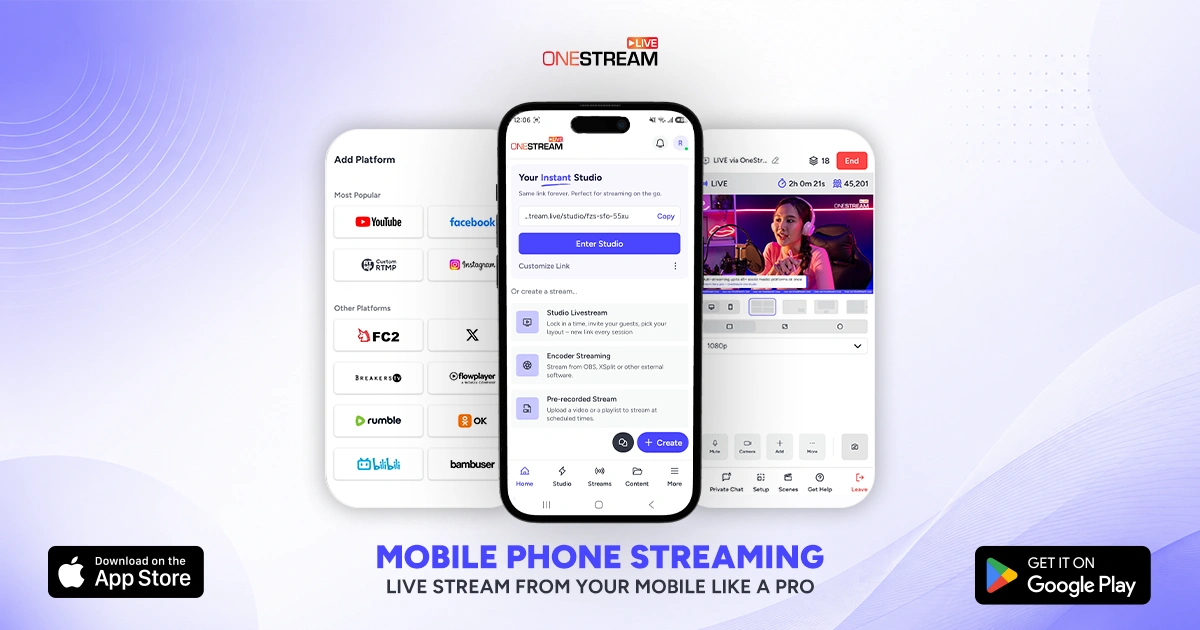
- Multistreaming becomes the baseline, not an advanced tactic
- Short-form clips act as feeders, not replacements, for live content
- 24/7 and always-on streams move mainstream, especially for global audiences
- Live commerce matures, shifting from impulse buys to structured programming
- AI quietly augments production, reducing friction without replacing creators
Live streaming starts to resemble broadcasting again, just without the gatekeepers.
5. Quick Look: The State of Streaming in 2026
How big is the streaming industry? The streaming industry has shifted from a growth phase to an infrastructure phase. In 2026, success is defined by three key pillars:
- Fragmentation: Audiences are everywhere; multistreaming is the only way to reach them.
- AI Integration: AI is no longer a novelty but an invisible layer handling production and moderation.
- Community Retention: Interaction rates are now a more valuable metric than raw view counts.
Final Word
Live video streaming trends in 2026 don’t require you to do more.
It’s about doing it deliberately.
The tools will keep changing.
The platforms will keep adjusting.
But the principles remain steady:
Show up consistently, meet audiences where they are, and design live experiences people want to return to.
The full research explores what that looks like in practice.
OneStream Live is a cloud-based live streaming solution to create, schedule, and multistream professional-looking live streams across 45+ social media platforms and the web simultaneously. For content-related queries and feedback, write to us at [email protected]. You’re also welcome to Write for Us!